
We can reduce the Toxic CO2 Exhaust Emissions in the yard around the home where we, our children plus pets live, play & put things in their mouths plus the welfare & well being of the Elderly & Neighbours.
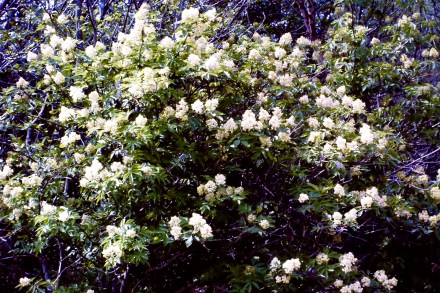
The Native Elderberry Shrub In Full Bloom About The Time The Schools Of Caplin Fish Migrate Into The Shore Along The Atlantic Coast Of Newfoundland & Labrador .
Consider the following Objectives:
- To reduce the contamination in the air, water & soil or lawn & garden,
- To maintain & improve the Quality of the Environment in the yard around our Home & in the neighborhood,
- To improve the health & safety of ourselves, our Young & Older Dependents plus to lessen the risk to the neighbours,
- To reduce the risk of suspect allergies, autism & mental challenges on the increase in our society, from continual exposure to Cosmetic Use Pesticides & Toxic Exhaust Emissions especially in the elderly, young people, newly born & soon to be born children.
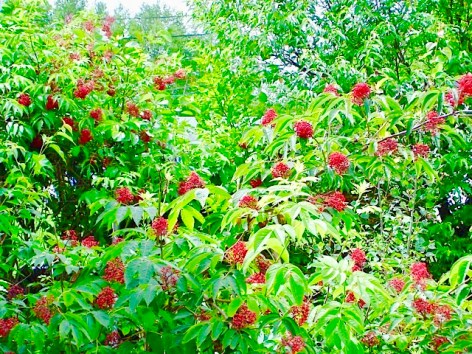
Ripe Red Elderberries On A Healthy Native Shrub Free Of Pesticides, A Favoured Food Of Local & Migrating Song Birds In Mid August, Central Newfoundland.
Continual Exposure of Poisons & Toxins is Problematic to measure accurately. In the case of Pesticides or other Toxins, the Oral LD.50 & Dermal LD.50 are used to measure The Lethal Dose that Kill 50% of the rats in the sample from a single dose of the Poisonous Chemical from ingestion through the mouth as an oral dose or the single lethal dose absorbed through the skin as a dermal dose.
Continual Exposure of a Poisonous Chemical, includes applying a Pesticide without Protective Clothing & Equipment or with children & pets putting things in their mouths from the ground after it has been sprayed or dusted with a poisonous chemical over a period of time but is not measured.
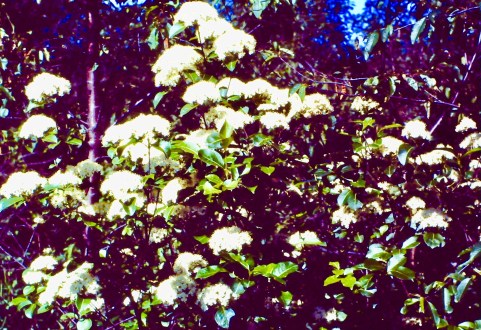
Native Northern Wild Raisin In Full Bloom As Part Of The Ecological Sustainable Plantscape Program, Central Newfoundland.
Even though a chemical is considered Safe & Non Carcinogenic by the Single Lethal Dose Methods, The Continual Exposure Rate is left out of the Analytical Diagnostic picture for the chemical !
The Safe & Non Carcinogenic Chemical over the long term could become Hazardous to the Health of Humans particularly to young children, pets & older people or to the Environment. For Example the wide spread use of DDT for Mosquito Control to reduce Malaria in Africa & in the Lake Country of Central Ontario where the diminishing populations of the Eagles, high on the Food Chain, was attributed to the spraying of DDT for Mosquito Control.
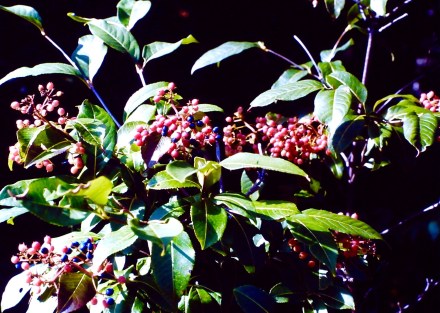
Berries Of The Native Northern Wild Raisin Ripening From Green To Red, To Very Dark Blue. The Song Birds Enjoy The Abundance With Many Missing Long Before the Berries Are Fully Ripened.
The accumulation of DDT in Mother’s Milk even in the Arctic where there has been no spraying of the Insecticide is a deleterious side effect.
In addition, the side effects to the Target Species plus to the Environment may not become Fully Known until wide spread use shows what can happen & brings out the adverse consequences.
For example, thalidomide, a chemical taken for morning sickness in pregnant woman caused deformities in children whose mothers had taken the readily available chemical. The adverse effects did not show up in the beginning but when they did, it was catastrophe as many mothers & children were affected around the world.
Are We Making Substantial Noticeable Sustainable Improvements To The Environment In Our Lawn & Garden Plus In Our Neighbourhood & Community For A Healthier Pesticide Free Next Generations ?
For many years this Drug, Thalidomide, was initially considered a safe chemical.
The Ways & Means that we can Reduce the Carbon Dioxide & the other Toxic Pollutants in the Exhaust Emissions are as follows:
- Increasing the cutting height of the lawn mower to the highest setting & prevent the grass from being cut too short in the hot weather of summer,
- By not cutting the lawn at a fixed time each week regardless of the soil moisture & plant growing conditions,
- Only cutting the lawn when there is adequate moisture from rainfall in the soil for the grass to regrow after cutting,
- Allowing the grass to grow between the cuts to its proper plant height for adequate leaf growth so the lawn does not turn yellow or brown after cutting,
- By not cutting the grass in the hot weather of summer as it is not growing under dry or drought conditions,
- Reducing the number of cuts per growing season over the lawn,
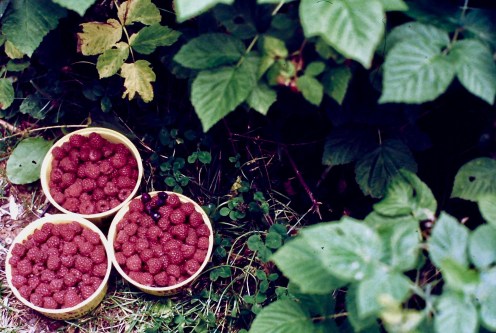
Raspberries Ripe Red & Native Saskatoons Ripe Deep Blue Are Produced From Shrubs With Clover Living Mulch & Ground Cover That Add Nutrition To The Soil & The Neighbouring Fruiting Plants.
- By spreading Organic Mulch Material around the base of trees & shrubs, out to the drip line or branch extremities, there by reducing the surface area of total lawn to be mowed,
- By planting Native Fruiting Trees & Shrubs around the lawn & garden plus Native Ever Green Trees along the North side, North West & North East corners of the yard shelter & protect from cold winter Arctic Winds .
- The absorption of Carbon Dioxide & the release of Oxygen is dramatically increased

The Many Leaves Of The Native Maple Trees Exhibiting The Characteristics Fantastic Fall Colours Add Significantly To The Ecological Sustainable Plantscape.
by the expanded number of trees & shrubs through the Life Leaf Process Of Photosynthesis with the greatly increased amount of plant leaves in the vertical plane in addition to the horizontal ground level plane.
- The Additional Trees, Shrubs & increased foliage greatly aids in Purifying The Air In The Garden around the Home & Play Ground from the constant contamination of neighbouring Air Pollutants especially the ones referred to above associated with Manicuring The Lawn !
Refer To The Key Section: Under The Category, The Sustainable Lawn, “The Objectives And Benefits To Positively Affect Climate Change And Health”
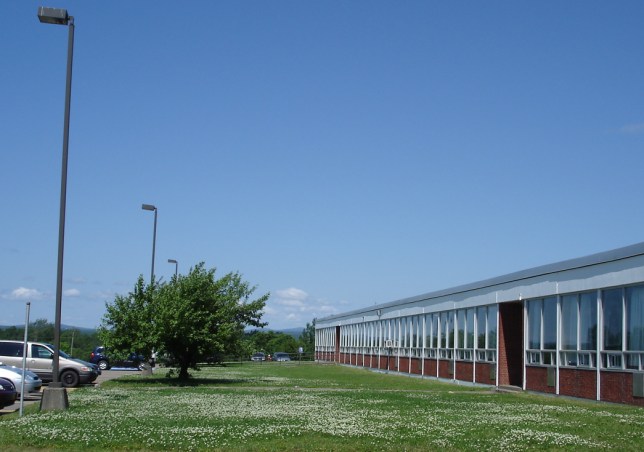
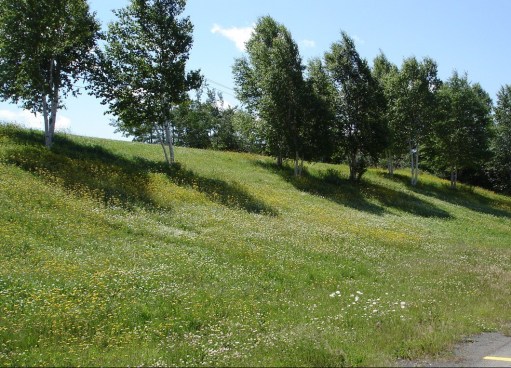
 The Sustainable Lawn