
Say Yes To Organic Lawns
Say Yes To Organic Lawns is the title of a letter to the Editor by Linda C. King In the Grand Falls-Windsor Newspaper, Advertiser, Thurs. June 12,1997. Ms.King was Head Physiotherapist & Owner of Aspen Physiotherapy. With a medical background she has reviewed the Medical Literature. She is alarmed & very concerned with the common practices to make the lawn prettier with Cosmetic Use Pesticides causing greater incidence of people becoming sick & dying. Ms. King quotes, Dr. June Irwin of Pointe Clair, QC.”Your Neighbour can kill You & it is legal !”
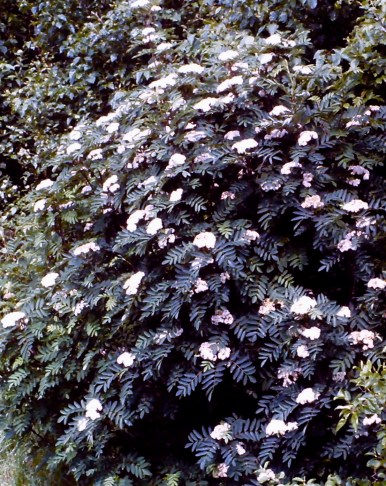
Mountain Ash, Dog Berry NL., In Full Bloom
Her research has led to the following startling revelations:
- Children in families of lawns treated with Cosmetic Use Pesticides have a 61/2x greater incidence of leukaemia verses those that are not exposed to the lawn Cosmetic Use Pesticides.
- The following Medical Diseases & Disorders have been linked to Cosmetic Use Pesticides: Allergies, Asthma, Genetic Mutations, Neurotoxic Reactions, Liver & Kidney Dysfunction, Chemical Sensitivities, Birth Defects, Non-Hodgkins Lymphoma, Cancer Clusters in Communities.
Not Satisfied That Pesticides Are Safe
A Letter To The Editor, titled, Not Satisfied That Pesticides Are Safe, in the Advertiser Newspaper, Grand Falls-Windsor, NL. April 2,1998, by Ms. Linda C. King, Head Physiotherapist & Owner Of Aspen Physiotherapy wrote;
A Natural Lawn free of toxic chemicals, like Cosmetic Use Pesticides, is less expensive, just as beautiful & more satisfying, especially when you know that you have not been responsible for poisoning your family & neighbours according to Linda King.
Her son worked with a lawn care company. He was not trained in the use of these potentially dangerous chemicals. Jonathan was told, that,
- The Pesticides used on lawns were virtually harmless,
- Not to wear protective clothing as it would frighten the lawn clients.
Linda King stated emphatically, “Nobody can convince me that my son was not a victim of pesticide poisoning which led to his death!”
Jonathan King died Jan.1997 of leukaemia. A tribute was paid to him by a best friend & her sister in an article from the Advertiser, Mon.Jan.12, 2012.
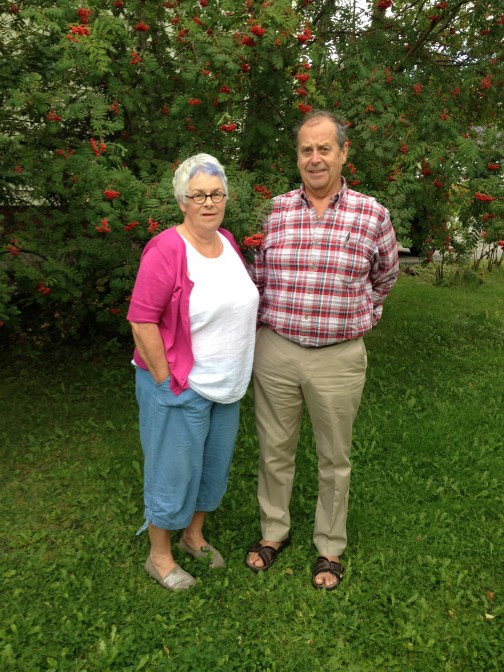
Linda & Wayne King, Community Activists For The Banning Of
Poisonous Cosmetic Use Pesticides On Manicured Lawns, Grand Falls -Windsor, NL.
A Better Tomorrow, At First Glance
The following Chemical Pesticides, according to the Department Of Environment & Conservation, are no longer permitted for use on lawns in Newfoundland & Labrador as of May 1, 2012. The active ingredients include 2,4-D, Mecoprop, Dicamba, MCPA & Carbaryl or the chemical insecticide Sevin.
The regulations apply to everyone, including:
a] residences, houses, apartments & condos
b] commercial business & cemeteries
c] government office buildings, ball fields & parks
d] institutions of schools, recreational centres, hospitals & long term care facilities.
The news release of April 30, 2012 in the Grand Falls-:Windsor Advertiser indicated that the Department of Environment & Conservation, Government Of Newfoundland Labrador wants to reduce the unnecessary use of pesticides on lawns.
Not Yet Out Of the Woods
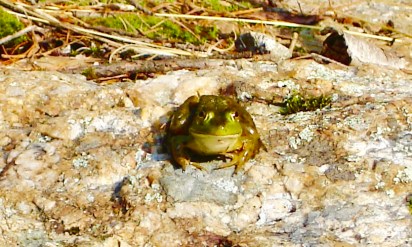
Amphibians Like Frogs Above Or Toads Represent ‘The Canary In The Coal Mine’ In Terms Of The Quality Of The Soil, Air & Water. Is the Environment Safe For Our Children & Pets Which Put Things In Their Mouths From The Lawn & Garden ?
Herbicide Use Is Unacceptable, The Provincial Government Has Other Options, is the title of a letter to the Editor of the Advertiser, Grand Falls-Windsor, NL. Mon. Aug.13, 2012 by Dr. David Saltman, Chair, Oncology Discipline, Faculty Of Medicine, Memorial University of Newfoundland, St. John’s. He states that The Newfoundland & Labrador Government’s decision to continue with an indiscriminate spraying program using 2,4-D to control woody plants along roadsides is irresponsible & illogical. This is in the light of the recent amendment of the pesticide bylaws to ban the same chemical for Cosmetic Lawn Use in the province. The continued use by utility companies to control plants on utility right of ways is of equal concern. The government’s response is that the chemical is being used in a safe manner.
If the rationale is to ban the same chemical from the use on lawns because there are safety concerns, then why is the road side spraying a chemical with known carcinogenic potential that has the ability to negatively affect the health of many species, including our own, any less of a concern, questions the Oncologist.
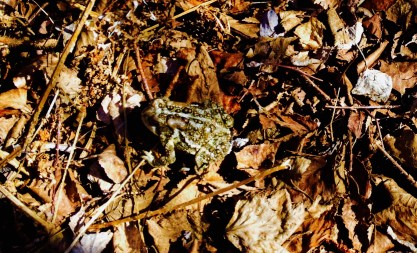
The Toad Population Seems To Be On The Come Back In The River Valley Of Central Newfoundland In 2016, Since the Banning Earlier Of Cosmetic Use Pesticides On Lawns In The Province.
Herbicides, including 2,4-D have tremendous drift potential, which can result in the chemical showing up in food & feed producing areas, rivers & streams plus urban areas far from the initial road side applications.
This particular herbicide, like many others, has the ability to negatively impact hormone levels & the immune system in exposed humans. It is a suspected cancer causing agent or carcinogen, according to the concerned Cancer Researcher.
The same chemical, when used on lawns, has been associated with bladder cancer & lymphomas in dogs & would be expected to have similar effects on foraging wild animals in & around the forests, according to the Oncologist.

Snow Shoe Hare Having At His/Her Feet An Abundance & Variety Of Nutritious Greens Including Low Growing Clover As Part Of The Sustainable Lawn. In The Farming Community This Is Termed ‘Strip Grazing’ Where The Fence Is Moved Around To Keep The Grazing Animals Well Supplied With Fresh Greens, Forage Or Feed.
Although there is not a strong association between 2,4-D & toxicity in birds, it can impact the avian species by destroying plants they use to feed on, for nesting & shelter.
Other species that have been shown to be negatively affected by this chemical herbicide are fish & amphibians.
There are enough concerns regarding the effects the 2,4-D herbicide can have on our health & the health of other species, states Dr. Saltman, for the government to immediately halt this spraying program & start to look at less toxic & more innovative strategies to responsibly manage our road ways & utility right of ways.
 The Sustainable Lawn