
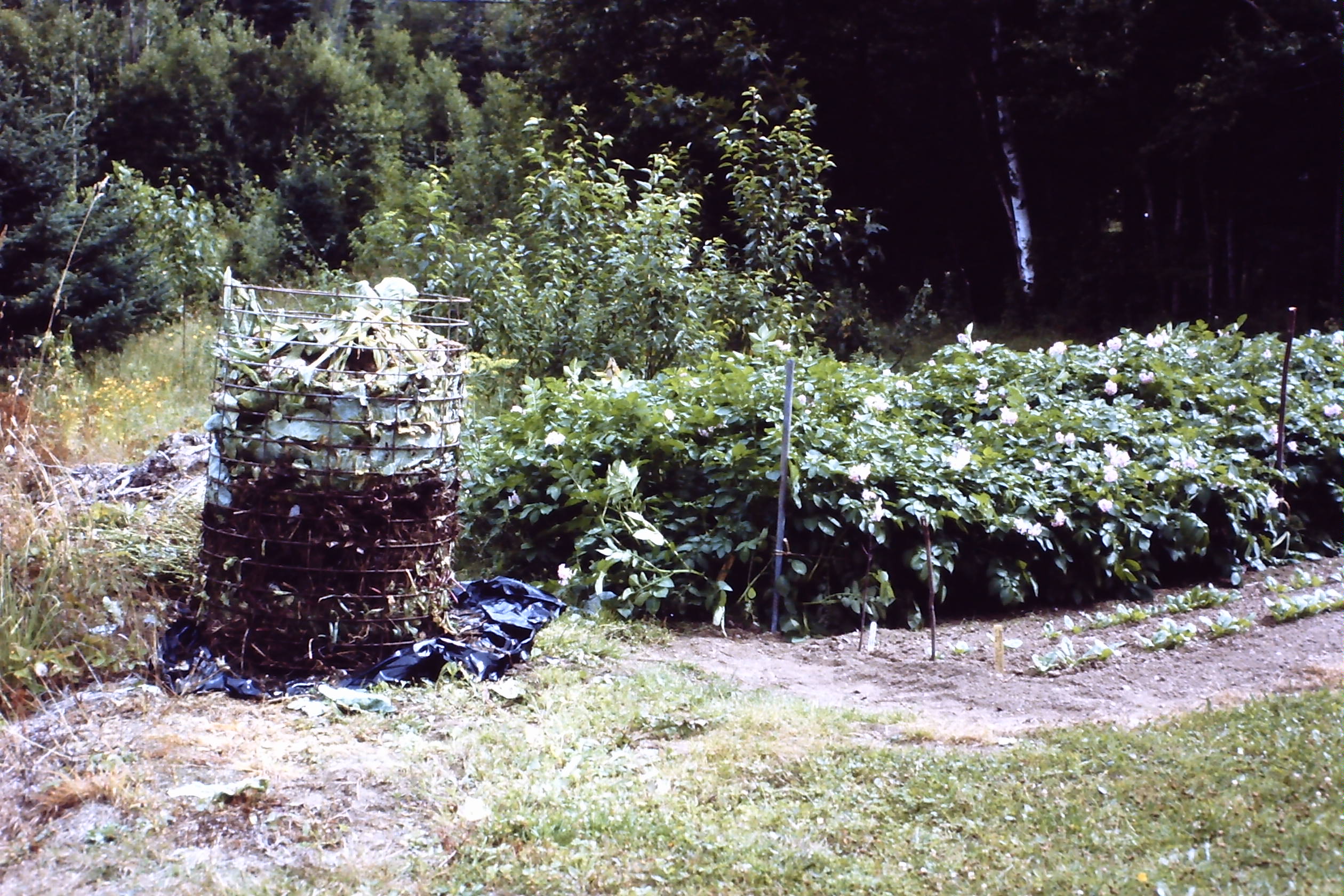
Composting Leaves, Weeds & Vegetative Material In A Wire Mesh Bin.
Why Reduce, Reuse, Recycle & Recover By Composting, Mulching & Side Dressing ?
- About 1/3 of the household waste is Biological & Organic in nature. The Biological Organic Material can be reused & recycled into the soil or composted to be utilized as free plant food. This translates into more than a half of a metric tonne of Biological Organic Material produced each year per house hold from a family of four.
- The common fertilizer material or plant food before 1940 in food and feed production was Organic in nature; that is, blood and bone meal from livestock processing, algae/ vegetative material from the sea, animal and poultry manure from the barn or farm yard, crushed lobster, oyster, clam, mussel shells, whole fish and fish parts left over from processing.
- Some of the Biological Organic plant food products were mixed with hay or straw, sawdust, peat moss, or wood and bark chips as in animal bedding from the barn or the livestock pen.
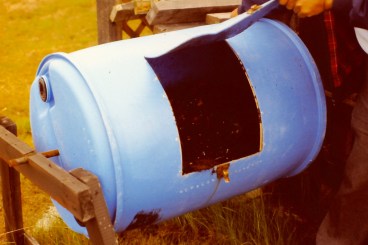
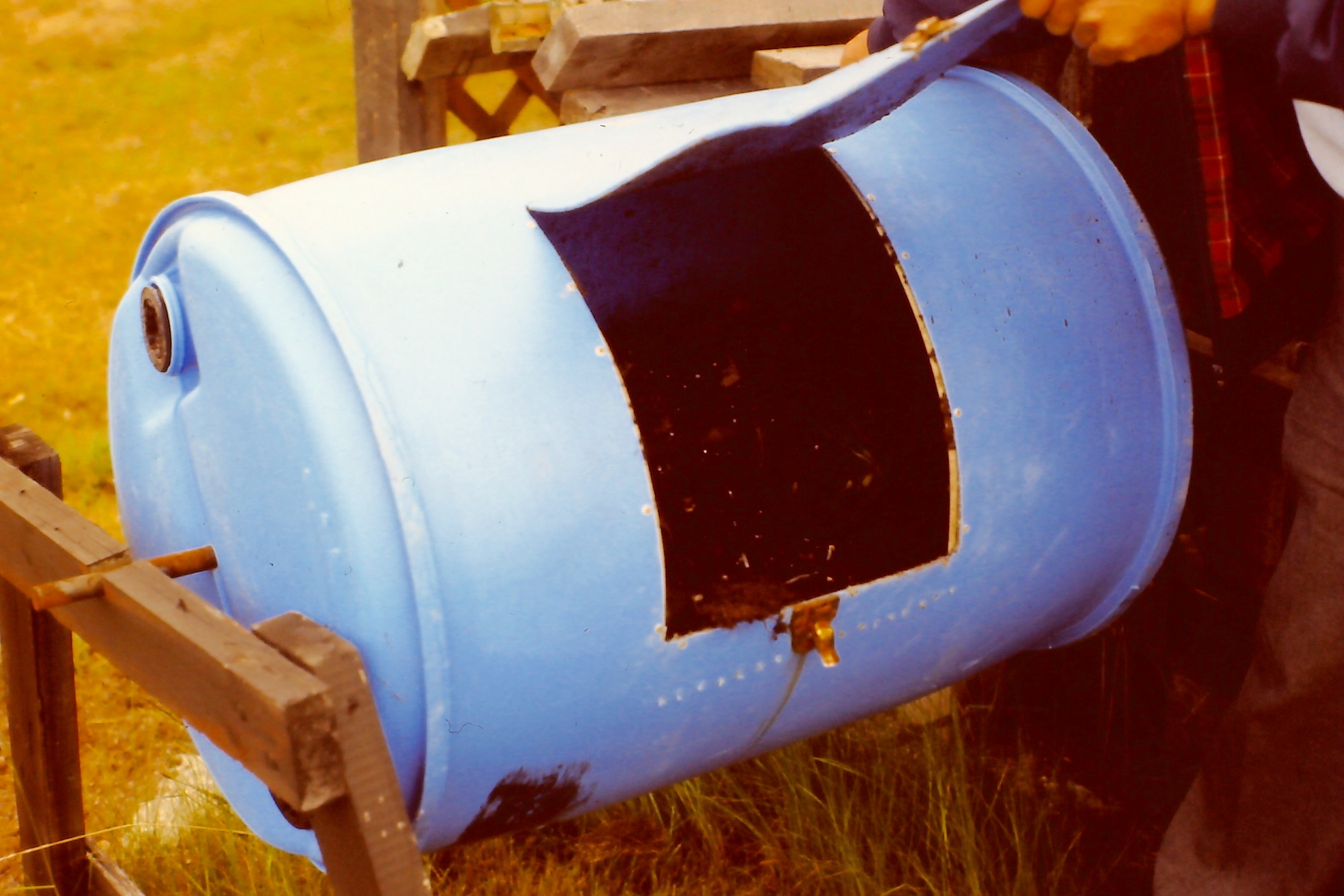
Rotating Compost Bin With Handle & Flexible Lid For Easy Aeration In The Decomposition Process.
- The addition of Organic Fibre provided a bonus to the Organic Plant Food as Organic Matter to enhance the physical capabilities of the soil, known as a Soil Conditioner. The off the shelf commercial fertilizers do not contain this added component.
- In addition to the Major Nutrients of Nitrogen, Phosphate & Potash in the Organic Plant Food, there are the Minor Nutrients like Calcium, Boron & Magnesium. They are called minor because they are needed in lesser amounts but are just as important for healthy plant growth. The standard off the shelf commercial fertilizers do not contain any of the Minor Nutrients.
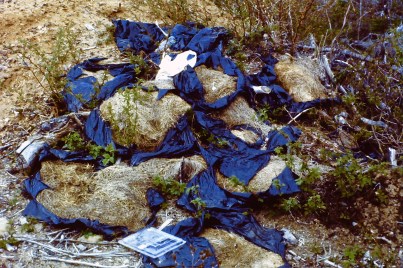
Compostable Lawn Grass Clippings Dumped In The Woods Could Instead Be Well Utilized To Enrich The Soil For The Growing Of Vegetables, Fruits & Herbs .
- Organic Matter or Fibre that comes as a bonus with the Organic Plant Food is a valued Soil Conditioner, improves moisture retention, enhances nutrient availability & up- take by the plants. The added Organic Matter/Fibre conditioned soil is especially beneficial for plant growth during dry or drought periods.
- The costs of buying fertilizers are saved by turning leftover garden, kitchen and workshop wet & dry Biological Organic material into Organic Plant Food.
- Garden soil can be organically replenished with Plant Food & Fibre from home gown compost. The rich and crumbly chocolate-cake like product of decomposed Biological Organic Matter is highly prized. No enterprising resourceful gardener would turn down the gift of free plant food. That is what we do when we place a bag of kitchen scraps & yard trimmings at the curb-side as waste!
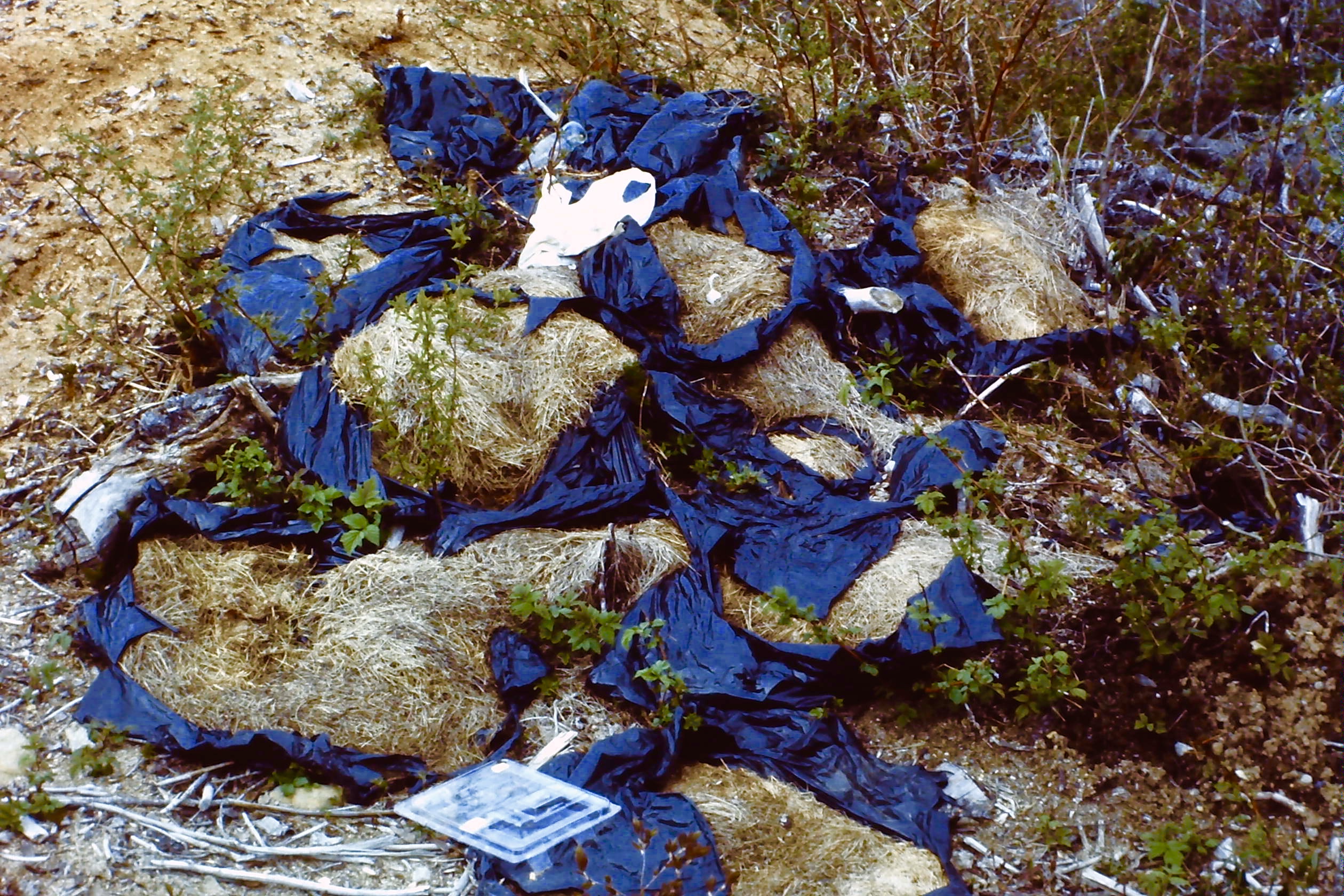
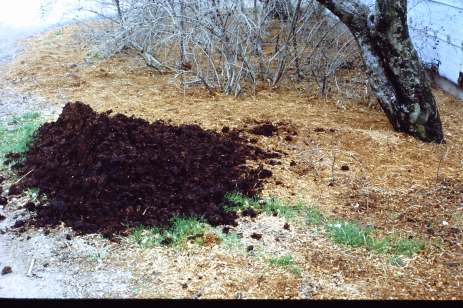
Composted Animal Manure Being Mixed With Saw Dust Mulch Around The Plants & Shrub.
Composting Discarded Bio-Degradable Material Has A Number Of Advantages:
1] Reduces the space, waste and contamination of land for disposal sites.
2] Reduces the labour & energy consumed by the elimination, transportation and disposal of discarded material.
3] Reduces the need & costs for the manufacture, production, distribution and use of commercial fertilizer in the Lawn & Garden.
4] Significantly reduces the Climate Altering Toxic Carbon Exhaust Emissions by reducing the energy spent on the elimination, transportation & disposal of discarded material.
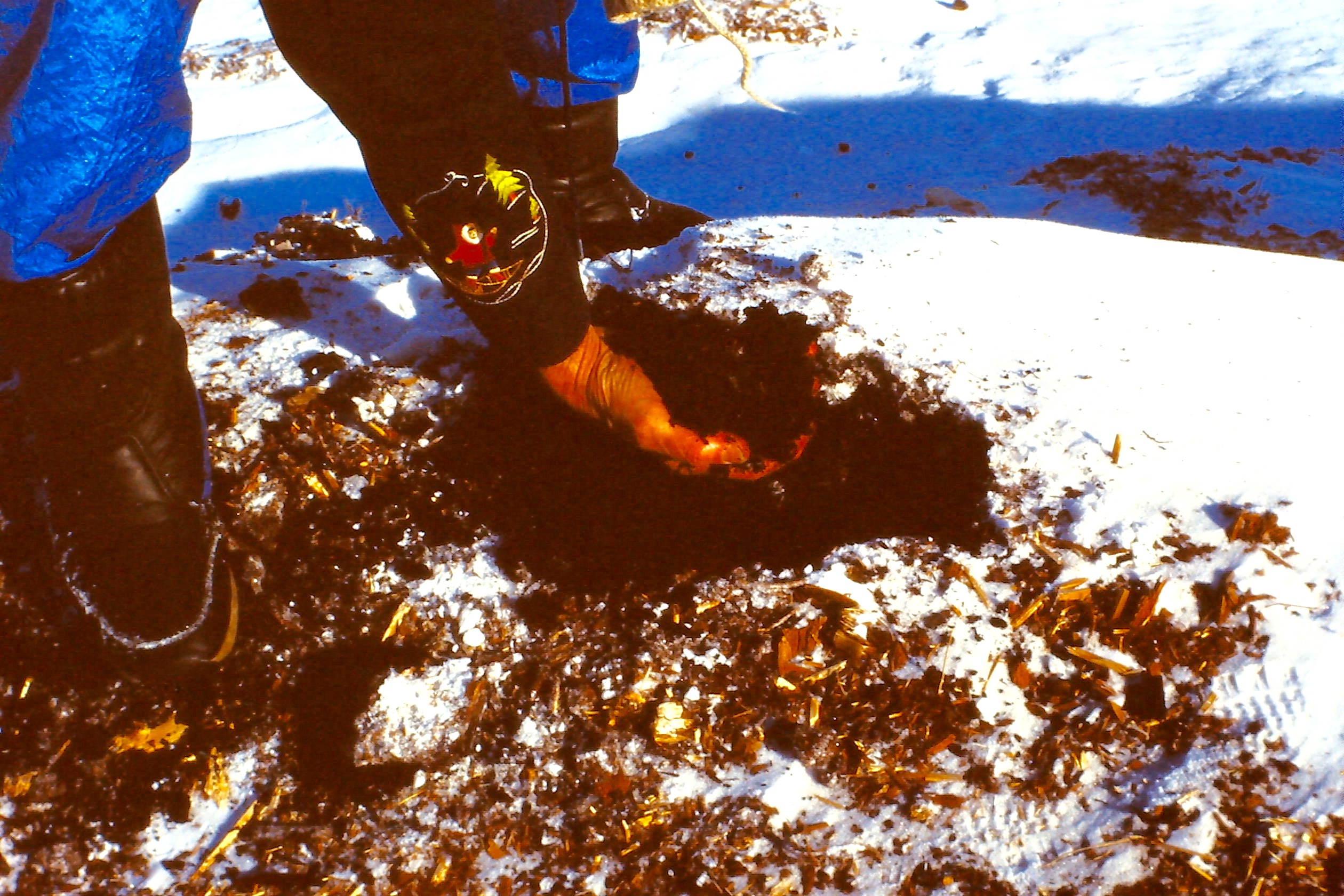
A Large Compost Pile Of Bark Chips & Fish Meal, Working In The Winter With Steam Coming Off The Pile.
5] Contributes to better growing conditions for plants by:
a] Enhancing the micro-organism activity in the soil.
b] Speeding up the natural breakdown process of the biological organic material into soil particles and nutrients.
c] Loosing heavy clay soils plus giving fibre content and organic matter to light sandy, medium silty & heavy clay soils.
d] Stabilizing & balancing the soil with adequate moisture, air, mineral & organic matter content.
e] Increasing the nutrients in the soil and their availability to plants.
f] Producing stronger plants that are less likely to suffer the damaging effects of the stress & stunted growth from drought.
g] Producing Healthier More Robust & Resilient Plants, Trees & Shrubs that are able to withstand to a greater degree the weakening effects & set backs from disease & insect pest attacks.
![Composting Spent Hens [after laying period] With Peat & Top Soil](https://thesustainablelawn.com/wp-content/uploads/2015/10/soil-compost-peathens-spent-27.jpg)
Composting “Spent Hens” [after laying period] With Peat & Top Soil.
- A warm sheltered site can be selected in partial sunlight that is well drained, close to the garden and household kitchen, with adequate working area and storage space for brown or high carbon materials of leaves, branches, twigs, shredded paper, wood and bark chips, sawdust, wood ashes and newspaper[ black & white].
- Some bulky material of straw, hay, branches and twigs can be placed on the bottom to provide drainage and aeration.
- To the pile can be added small pieces of brown or high carbon material of leaves, grass, plant stalks, stems, twigs, branches, wood and bark chips, sawdust, shredded paper, tissues, paper towels, rags, wood ashes, vacuum and dryer lint.
- A layer can be added of wet green or high nitrogen biological organic material from the kitchen & garden of grass, leaves, vegetable material, orange and banana peels, broken tea bags, coffee grounds, crushed lobster, mussel and egg shells, broken with a shovel, animal, fish and chicken bones .
- The pile can be moistened to make the contents damp but not soggy, to the degree of a squeezed out sponge.
- Adequate air and ventilation is needed for proper decomposition by the beneficial insects and microorganisms like earth worms, centipedes, millipedes, ground beetles, sow bugs, and mites.
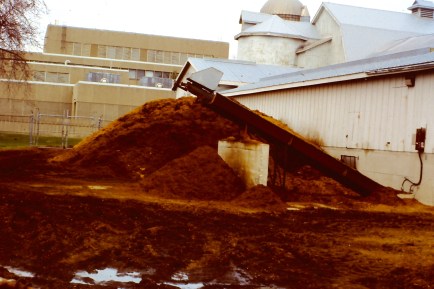
Animal Manure With Straw Bedding Composting Outside Of The Dairy Barn.
- The dry brown woody Carbon Material of branches To the wet Nitrogen material from the kitchen or The Carbon-Nitrogen ratio is at least 3 or more to 1.
- A thin layer of animal or poultry manure and dark soil can be added to enhance the decomposition process with microorganisms and high nitrogen organic material.
- The layers in sequence are repeated starting with the brown or high carbon material followed by the wet green or high nitrogen material with manure and dark soil on top.
- After two weeks the pile can be turned with the contents being mixed to aerate the compost ingredients. Decomposition with air ensures the compost is able to work properly, producing heat as it is cooking and breaking down the biological organic material. There is no odour or smell associated with the cooking or aerobic process of decomposition as just described.

Poultry Manure & Bedding Of Wood Shavings, Dried, With No Smell !
- Under good aerobic conditions of the decomposition or cooking process, temperatures of 55-75C are achieved in the bottom centre of the compost pile. Temperatures of over 55 C in the compost pile kill weed seeds, insect pests and plant diseases. The cooking or decomposition process with lots of air, breaks down the animal products to neutralize & eliminate any smell or attractant for scavenging animals & rodents.
- With the use of a garden or pitch fork the wet fresh green biological organic material from the kitchen plus some brown or high carbon material is added to the bottom centre of the compost pile so it is instantly covered and the cooking or decomposition process can resume.
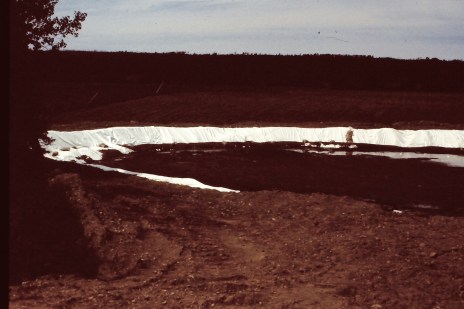
Liquid Dairy Manure With Soapy Wash Water After Milking In The Lined Storage Pit For Manurirrigation On Forage Fields.
- The wet fresh green biological organic material can be chopped into small pieces with a garden shovel and incorporated directly into the garden soil. Available fish parts or vegetative sea algae/ plant-like vegetation are especially good alongside the plants or rows of vegetables & fruits as a side-dressing of plant food part way through the growing season to stimulate enhanced plant & fruit growth.
- Soapy dish water contains Phosphates which are important for root growth. Thus the liquid can be added; a] after the application of the organic plant food side dressing. b] after trans planting of seedling plants, shrubs & trees as a starter fertilizer.
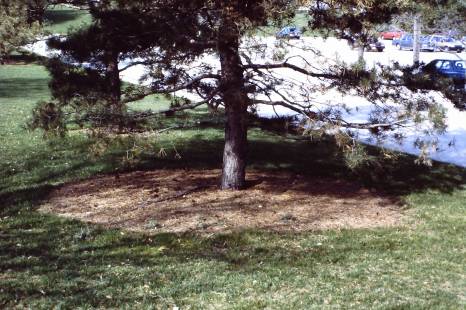
The Mulch Of Bark Chips & Saw Dust Extended To The Branch Extremities Or To The ‘Drip Line’ Of The Pine Tree That Maintains Soil Moisture For Better Soluble Plant Food Uptake By The Feeder Roots Particularly In Dry Soil Conditions.
- Mulch Material is used around the base of trees, shrubs, between rows of plants and in pathways. Such Material includes wood and bark chips, leaves, twigs, branches, shredded paper, wood shavings, sawdust & newspaper[black & white].
- The wet green biological organic plant food is applied first underneath the mulch at the base around the trees, shrubs & plants. The organic plant food is mixed carefully into the top layer of soil on the surface, often by hand, so as not to damage the feeder roots of the perennial trees & shrubs which are shallow & not very deep.
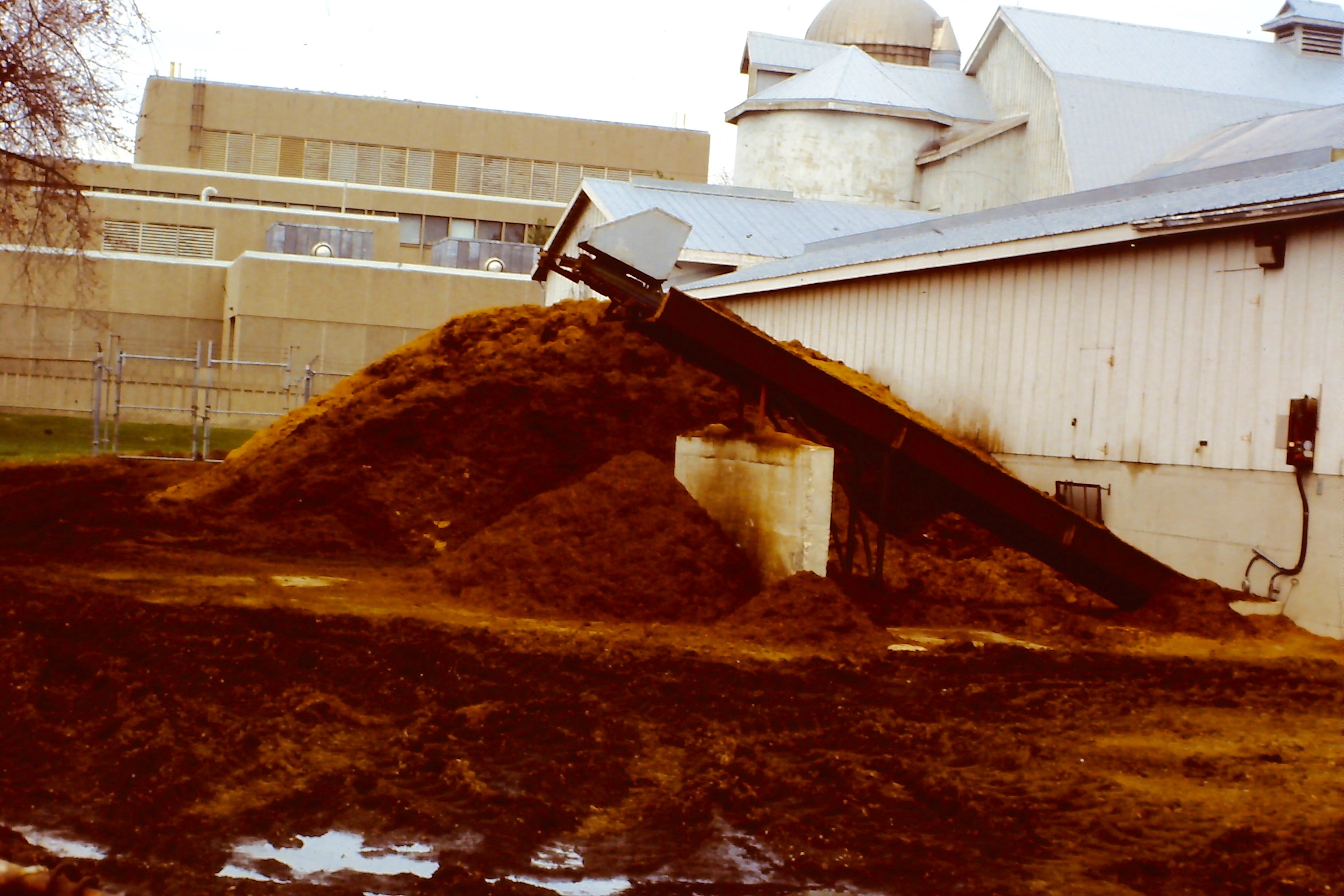
Refer To The Key Section: Under The Category, The Sustainable Lawn, “The Objectives And Benefits To Positively Affect Climate Change And Health”
 The Sustainable Lawn