Archive for November, 2016


Ed,   The information on the Web Site, thesustainablelawn  is excellent and I really like the pictures to help explain everything.  I am pleased to see that my lack of lawn manicuring is a good thing, as I never water my lawn using  potable drinking water and only mow the Lawn when necessary.

Question: I love The Creeping Low Clover Lawn and wonder if I can over seed my lawn with the Creeping  Low Growing Clover without bringing in more top soil. I am looking for the least expensive way.                                                                                                                                              Victoria Ades,   Calgary, AB.

Answer: Hi Vicky,  In terms of Mowing The Lawn, it is better to delay or procrastinate. It is not a hospital floor or does not have be manicured. It is not a Golf or Bowling Green for  Sports or  Recreational Use ! The reason being on many occasions the lawn is cut too short, too often, especially in the hot weather of summer. The result is when the lawn is cut too short or scalped, it suffers severely, struggles to survive, turns yellow & brown leaving week & bare spots where dandelion seeds, on light floating parachutes, easily find bare soil to settle on & become established. Many people take Vacation in the summer months. The lawn needs to be resilient, self-sustaining with low maintenance, particularly  under these circumstances.

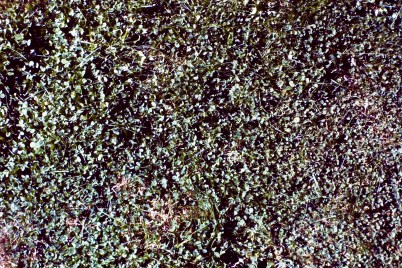
CloverLow GreenSpreading

Creeping Low Clover As A Low Maintenance, Non Polluting Green Sustainable Lawn


You are definitely on the right track with delaying the mowing, not manicuring the lawn & investigating the incorporation of Creeping Low  Clover into the unstable Grass Monoculture Lawn. The Creeping Low Clover  feeds the soil & grass so additional fertilizer is not needed. The Creeping Clover is low growing, does not need frequent mowing & with low maintenance, is Non-Polluting. Congratulations on Proceeding To Develop A  “Sustainable Lawn”  with & Emphasizing Creeping Low Clover ! 

To obtain Creeping Low Clover in the Unstable Grass Monoculture lawn by the least expensive way, extra top soil is not needed. The Creeping Low Clover/ White Dutch Clover is sold in small packages that fits in the palm of the hand. One or two packages would do most neighbourhood or urban lawns. The Clover Seed can be mixed in a pail of dry sand, when seeding, to obtain a uniform distribution of the Clover Seed on the Lawn.

Seeding Creeping Low Clover can be done in the late summer, early fall after the hot dry weather of summer when seasonal rains are more prevalent or in the late fall just before the ground freezes or becomes covered with snow, which ever comes first, called Dormant Seeding.

My beautiful picture

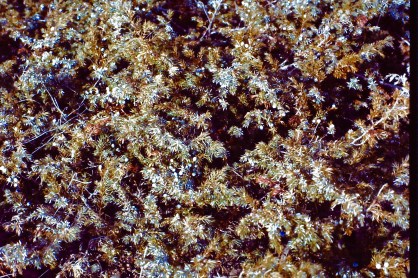
Creeping Low Juniper Shrub With White Berries As A Low Maintenance, Non Polluting Ever Green Sustainable Ground Cover, Especially Useful On The Slope

If seeding is done in the growing season after the snow melt in the spring, it can be done just before a substantial rain to lodge the seeds downwards to come in contact with the top soil. Seeding just before or during the hot summer weather is risky & can be avoided. Canadian Tire & the Farmers Coop Outlet handles The Creeping Low Growing White Clover Seed in our Community of Newfoundland & Labrador.

All The Best & Good Luck in the establishment of your Sustainable Lawn & Garden Activities !

Ed Kayler  PAg.  Ecological Horticulturist For The Environment


Dandelion  5July14

Question: Hi Ed, Very interesting

BloomDandelionBeePollinating

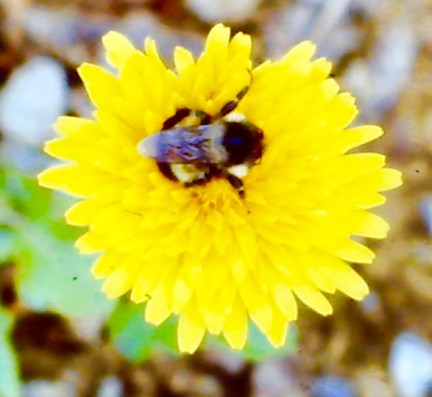
Native Bee Pollinating The Flower Of The Medicinal & Food Plant, Dandelion.

website, gives lots of food for thought. It’s not always easy to live with dandelions when they choke everything out. What is the best solution?                                                                           Janet Killawee,   Truro,  NS.

Reply: Hi Janet,   Attached are some Recommendations concerning The Infamous Dandelion Plant that you so aptly categorized plus including information on how to deal with it ! I trust the information attached sheds some light & interest on the subject !  Some additional information is provided on naturally occurring & seeded plants for Salad Greens Fresh From The Garden, especially selected for a Home Economist interested in Food & Nutrition ! There is more to a lawn & garden than grass & Dandelions.

Reply: Here are some alternatives attached, right in keeping for a Home Economist Specializing in Food & Nutrition ! Shall we call it, “The Home Maker’s Challenge With The Mac Grad Class Of ’64?”😀

After The Post, ReplyThe Request from Janet Killawee helped prompt the development   of  The  Published Post,  Titled,   The Dandelion Fix”  under  The Category,  “Working With Weeds & Beneficial Plants.”  on The Web Site,   thesustainablelawn.com     Thank You,  Janet. Look What Happened After You Asked About  Dandelions  !

My beautiful picture

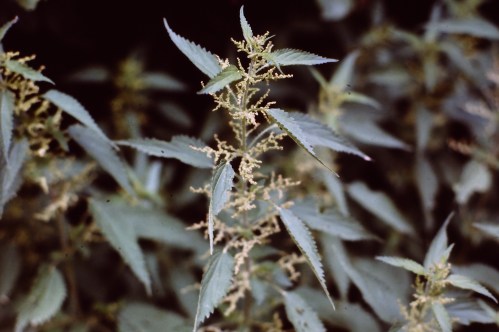
A Robust Stinging Nettle Plant In Full Bloom, A Very Valuable Food & Medicinal Plant. Beware Of The Tiny Fussy Nature Or Stinging Nettles Along The Stems & Leaves.

Thank You Letter:  Thanks Ed...lots of “Food For Thought” there. We do quite a lot of the things mentioned but I know we could do more. I like the bread bag trick to “cook” the seeds, among other things. We certainly have to learn to live with them and I don’t mind a few. I didn’t realize there were so Many Medicinal Uses.                    Janet Killawee,   Truro, NS.

Reply: Some More “Food For Thought”. Another Import From Europe, That Some Consider A Weed. The Dried Leaves Of The Stinging Nettle Plant Plus Green Tea, Mint, Lemon & Honey Are Helpful During  A Cold, Sore Throat & Or The Flu Season  With Its  Iron Content & Invigorating Properties.

Ed Kayler  PAg.

Refer To The Key Section: Under The Category, The Sustainable Lawn“The Objectives And Benefits To Positively Affect Climate Change And Health”

Thanking You Letter:                                                                                                                                                                                                    For The Visit To The Garden & Providing The Recommendations For Growing  Healthy Fruiting Trees & Shrubs Plus Other Plants & Food.                                                                                                                                           Thank you Uncle Ed for sharing your beautiful appreciation For Living Systems. A glimpse of my Garden With Fruit & Ornamental Trees through your eyes was an incredible gift.                                                                🙂 Elisha, Kelly, Olivia & Zakk Kittson 🙂                                               Okanagan North,  BC

Reply: Greetings: Elisha, Kelly, Olivia & Zakk Kittson,   Okanagan North, BC.                                                               Orchard, Vegetable, Berry Fruit & Ornamental Plant Growing Recommendations                                                                                                                                                                                                                                                                                                                                                                                  Part A]  In The Tree Fruit Orchard~ Nutrition First                                   May 30,2013   2 pages  P1

BarkWoodChipsFishBitsCompost

Bark & Wood Chips Plus Fish Meal & By Products Are Composted For High Fibre  & Organic Matter Soil Enhancement Plus Nutritious Plant Food.

           By far, the most important item on the to do list, is to build up the nutritional capacity around each Fruit Tree. Some of the Fruit Trees are having a struggle in extremely dry conditions. If the Tree is not healthy, the capability of the Fruit Tree to continue to grow plus develop & hold fruit is low. A Healthy Fruit Tree is able to withstand the pressures of Disease & Insect Pest Attacks.This Nutritional based system is the first course of action verses applying pesticides. Much like for humans, Nutrition comes first well before drugs.

Leaves>Compost

Decomposing Leaves & Grass Make The Rich Soil.

 The Main Objective is to improve & increase substantially the Health & the Fruit Capacity of each Tree. Feeding the Fruit Trees with locally produced Organic Plant Food  as a product of re-using & re-cycling of  the Biological Organic Material from the Kitchen, Garden & Workshop is the best, most economical, productive & sustainable method to improve the Health & Fruit Productivity of the Orchard. Biological Organic Material from the kitchen, chopped up for faster decomposition, is the key Plant Food Ingredient. Decomposed & Fresh Biological Organic & Compost Material chopped up with a shovel  goes down first.

GrassClippings>OMSoil

Grass Clippings & Leaves Make The Richest Soil.

 Lots of Grass clippings to go down next & mixed with the Biological Organic Material from the kitchen. When grass clippings heat up &  start to decompose , they substantially shrink in size.  Rotting Grass & Leaves make the richest Soil. Wet & dry leaves following to go down & mixed in. The Coarse Material like Corn Cobs, Cut Up Branches & Limbs, Wood & Bark Chips to go on top as The Organic  Mulch Material.
My beautiful picture

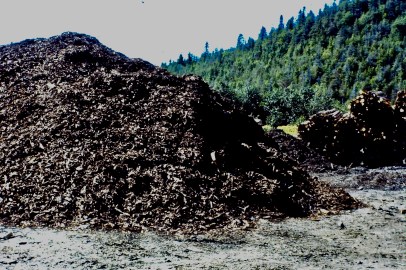
Bark & Wood Chips Make Good Coarse Mulch Material, As Such Material Takes Longer To Decompose.

The Organic Mulch Material is extremely important covering to hold in the Soil Moisture. The Plant Food is in an Aqueous or Water Solution that is available & readily absorbed by the Plant Roots.

The Mulch Material should extend outwards to the Drip Line of the Tree or to the extremity of the branches. This leaves the grass-legume cover crop growing between the Drip Lines of the Fruit Trees or between the rows.

The Cover Crop between rows in the Orchard should be a Legume-Grass Mixture like Alfalfa & Crested Wheat or Brome, or Timothy or Orchard Grass.

My beautiful picture

Wood Savings + Saw Dust Are Spread Over The Strawberry Plants Just Before Freezing Temperatures At The Start Of Winter To Insulate & Protect The Plants. The Woody Mulch Material Is Removed In the Early Spring & Placed In Between The Raised Beds Of Strawberry Plants As A Mulch To Keep Weeds Down & To Conserve Moisture In The Soil Plus Keep The Fruit Dry On The Surface To Reduce Disease & Mold Infection.

One of the advantages of the Alfalfa is that it is very Drought Tolerant. It’s root system can grow six feet down & across if the Soil Profile is friable & allows accessible penetration. The type of grass is depended on the amount of Soil Moisture available to plants in the Orchard with the type of grass listed first being the most drought tolerant & the others in decreasing order of drought tolerance.

The alfalfa is a Legume & thus is able to fix its own Nitrogen, enriching the Soil & providing a food source for the grass, reducing the need for additional fertilizer.
BarkWoodChipsOak

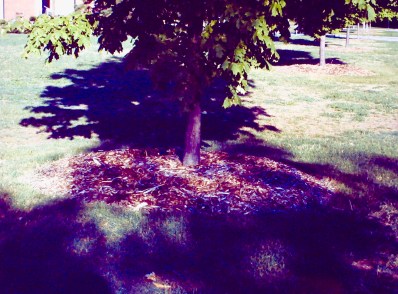
The Mulch Of Bark & Wood Chips, Extended To The Drip Line Of The Branch Extremities, Is Used For Improved Moisture Retention, Plant Food Uptake, Growth & Tree Health To better Withstand  Drought, Insect Pest Attacks & Disease Infections.

 With the lawn grass already present, Low White Clover, a Legume, can be seeded & incorporated into the grass between rows of the Fruit Trees. The White Dutch Clover comes in small packages that fit into the palm of the hand. The Clover Seed is very small. Each package of Seed can be mixed in a pail of dry sand when seeding to obtain a uniform distribution. The seeding of Low White Clover can be done in the late fall just before the ground freezes or before the snow flies, called Dormant Seeding. If the seeding is done any time after the snow is gone in the spring, it can be done just before a substantial rain to carry the seed down to make contact with the Soil.
img_1012

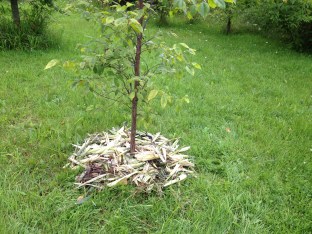
The Mulch Of Grass & Corn Husks Is Used To RetainValuable Soil Moisture Making Plant Food More Readily Available For Increased Tree Growth & Better Health Plus Able To Withstand Drought, Insect Pests Attacks & Disease  Infections.

Seeding is risky if done in the hot weather of summer when inadequate moisture predominates.

                                                                                                                                                                Cover Crop Maintenance In The Orchard

In the Tree Fruit Orchard, the Cover Crop is cut only two times a growing season or year, the first time when the plants are heading or in the bloom stage, that is, the latter part of June & in latter August. The intent of the cutting is to cut the buds, flowers & seed heads to prevent any Weeds from going to seed plus keeping the Cover Crop Plants in a juvenile or green vegetative state. The clippings can be left to rot & feed the Legume-Grass Cover Crop, put up for silage, dried for hay or utilized under the Fruit Trees as part of the Plant Food Source & The Mulch.
LowLimbsSpruceMulch>DripLine

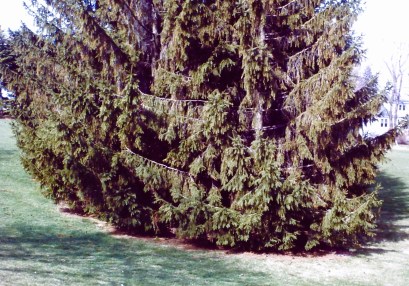
The Bottom Limbs Of The Spruce Trees Provide The Equivalent Mulch Cover Over The Feeder Roots For The Essential Retention Of Soil Moisture, Increased Soluble Food Up Take Promoting Better Health & Vigour  Of The Trees For Them To Better Withstand Drought Conditions, Insect Pests Attacks & Disease Infections.

 Irrigating In The Tree Fruit Orchard & Berry Fruits
Under dry or drought conditions, typical of the summer months in the Okanagan Valley, the Fruit Trees suffer as they cannot get the proper & adequate Plant Food. Continual Drip Irrigation at each fruit tree site between soaking rains is the most efficient way to supplement water for The Trees to grow & be healthy. This is extremely important in a Semi-Desert Type Climate where rainfall can be limited in the growing season. The trees need the Plant Food in a water solution in order to be picked up by the  tree roots.
Ed Kayler, P.Ag.
Thank You Letter:

WOW! Thank you soooo much Uncle Ed. I didn’t expect a professional assessment as follow-up, how wonderful ! I’ve started on the mulching project & will keep you posted on Health of the Fruit Trees as summer progresses. Zakk and Olivia love collecting dandelions!                                     Elisha, Kelly, Olivia & Zakk Kittson,   Okanagan North, BC.


Reply:  To Questions About Situating A Greenhouse  In The Garden & Growing Food, Okanagan Valley North, BC.      July10/13

Greetings Elisha,
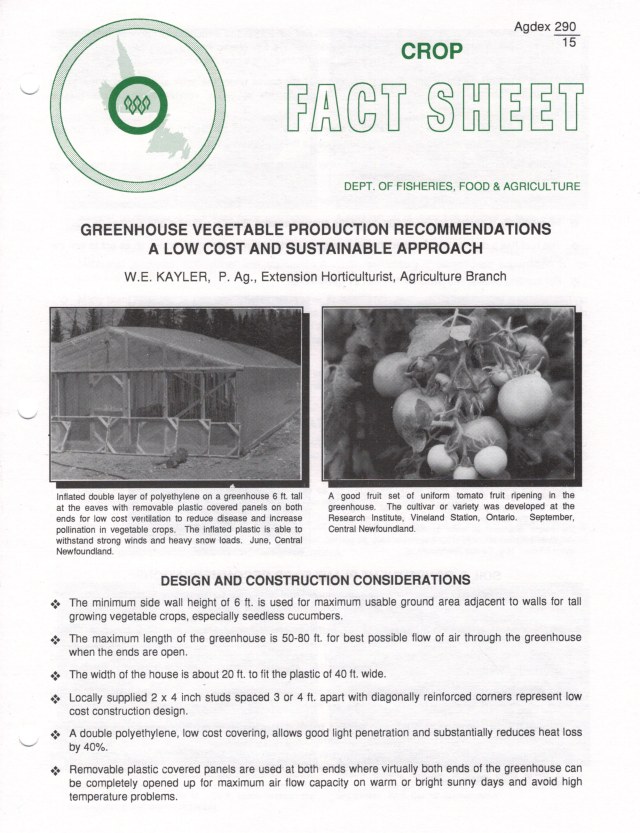
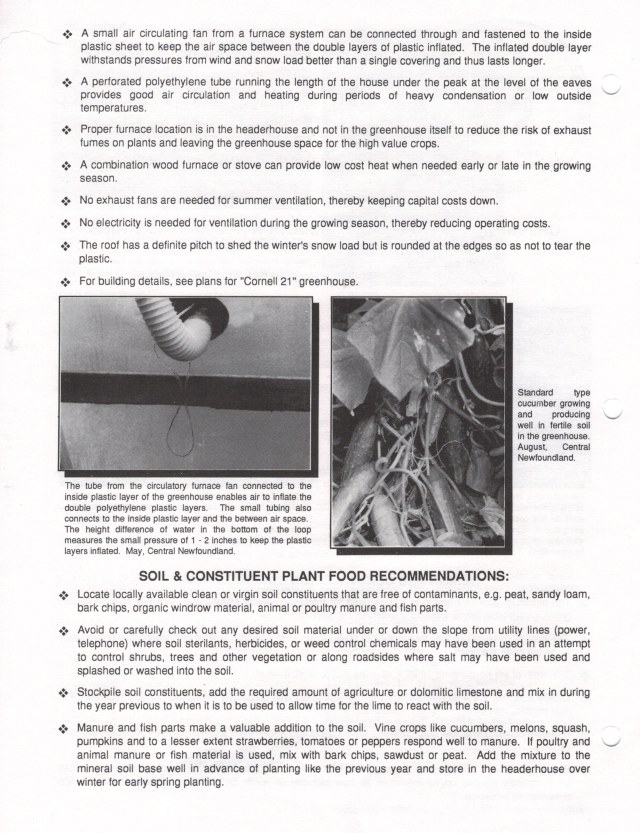
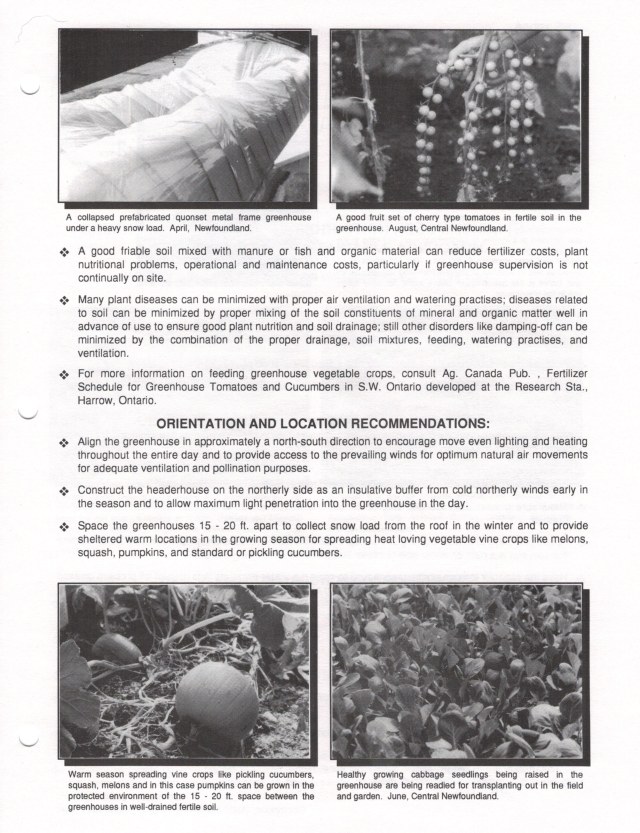
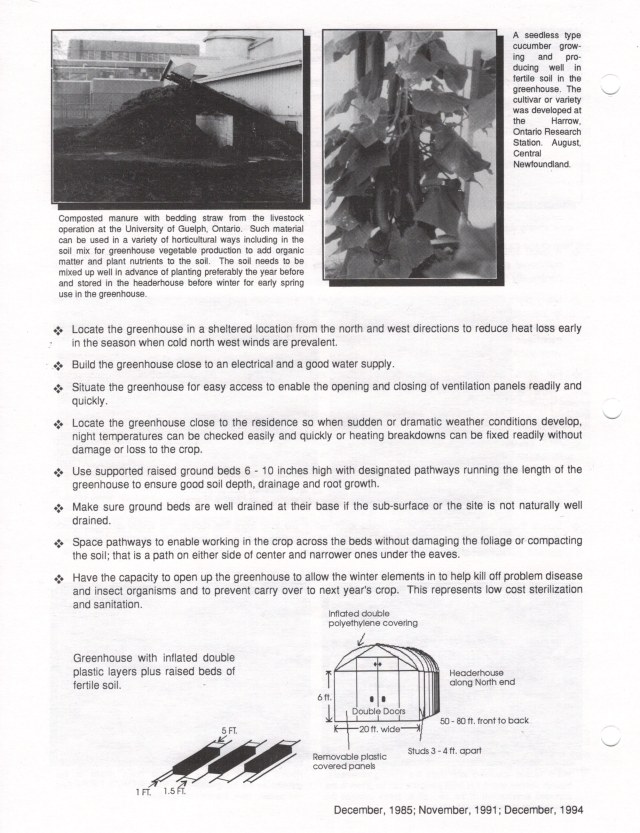
As indicated in the previous e-mail of July 7, 2013, Part ii, GreenHouse Orientation & Development Plus Garden Recommendations are attached;  The GreenHouse Crop Fact Sheet Authored earlier, appears below in four pages. Voila !

To help prepare the Garden & GreenHouse Site for the next  Growing Season,  the lawn grass needs to be brown & turned over so it has a chance to be decomposed before this time next season.

My beautiful picture

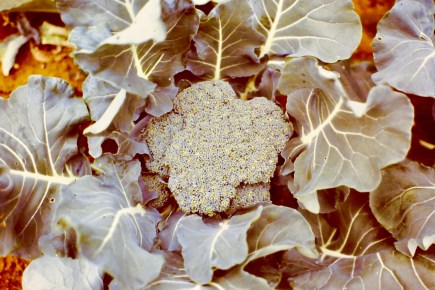
Broccoli Grows Well In The Cool Climate Near The Start & End Of The Growing Season. No Pesticides Are Needed In Central Newfoundland.

Available at garden supply/nursery outlets are rolls of black porous nylon/polyethylene weave material to cover the grass & weighted down with rocks/weights on top. The artificial porous mulch material blocks out the light but allows the rain water through. The artificial black porous plastic nylon weave mulch material is designed to prevent weed growth but not restrict water from reaching the Tree & Plant roots where it is being utilized. The additional area being covered during this summer would allow more time in the late summer early fall to turn in the  brown dead sod for the start of early decomposition in preparation for the next growing season.

Thank You Letter,   July10/13
Wow, wow, wow! I have yet to truly “dig” (hah,hah) into your e-mails here about the Vegetable Garden and Greenhouse but at first glance I can see I have just received “Gardening 101 by Uncle Ed”.

CabbageSeedlingsGHPoly

Cabbage Seedlings In The GreenHouse With Double Layer Polyethylene Plastic Covering Being Grown & Hardened Off  In Preparation For Later Trans-Planting In The Garden Or Field  After The Risk  Is Over Of Night Time Frosts. 

Have you thought about a Video series on your Sustainable Lawn Web Site? Your passion for your work would come through beautifully in video. Too bad you’re not here on an extended stay, we could work on the project together and record as we go !
Thank you, thank you for helping point me in the right direction (literally with Greenhouse orientation !) I just killed the potted strawberry plants on my deck.The kids are not pleased with me. Perhaps I will have better luck working directly with Mother Earth.
I will send pictures as I go. My Plans are to devote time in August to working up in the Orchard.  We leave next week for Vancouver Island and Kootenays for some much needed   R & R with Family.
Muchest Love To You Both !
Elisha, Kelly, Olivia & Zakk   Kittson,   Okanagan North,  BC.
GreenHouse Crop Fact Sheet  By  W.E. Kayler,  P.Ag.  Extension Horticulturist

Fact Sheet Greenhouse Veg.jpg

Fact Sheet Greenhouse Veg 2.jpg
Fact Sheet Greenhouse Veg 3.jpg
Fact Sheet Greenhouse Veg 4.jpg