Archive for April, 2017


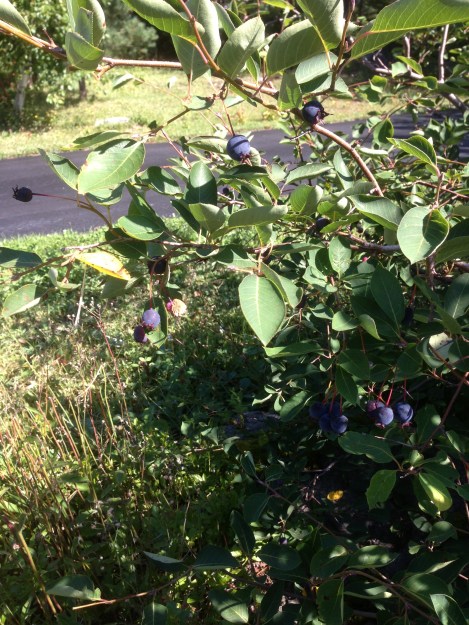
A] 1]  Question:  Hello, this is Andrew Osmond. I hope you’ve had a good summer! I’m moving to a new place in Port Blandford, Newfoundland, adjacent to the Terra Nova Park on the East Coast. In my yard I have found these Berries on a tall bush. I am curious if these may, in fact, be Saskatoon Berries, although they are noticeably longer and less oblate than Saskatoon Berry Images you have shown me in Grand Falls-Windsor, NL.   6Aug13

Answer:  Hi Andrew,      It is good to hear from you. I am still having a good summer !  I surly hope there are a few more weeks of summer left before a fall frost occurs.

The Saskatoon or Chuckley Pear in NL.,Service Berry in BC., Juneberry Shrub in Central Canada. With Deep Purple/Blue Berries this wide spread shrub  Exhibits Variations & Differences In The Range Of Regions Across The  Country. The Native Plant & Fruit Development  may not be quite the same in the Terra Nova area as in  The River Valley In Central Newfoundland with the different  environmental & climatic differences. In nature, there is invariably variability ! Despite Man’s attempt to categorize & group plants in very specific terms, there are discrepancies, grey areas & slight differences.
photo

Ripening Deep Blue/Purple Fruit Of The Native Saskatoon Shrub, Terra Nova National Park Area, Eastern Newfoundland, Early August.


The plant, leaves & fruit specimen shown in the photograph strongly resembles that of the Saskatoon Shrub even with all its variations across the country. This is also the time that the fruit ripens in insular Newfoundland. You are blessed to have  fully ripened dark blue/purple fruit. As soon as the fruit turns red here in the garden the robins are after them. They do not wait for the fruit to turn & fully ripen to the deep dark blue/purple colour.

The fully ripened dark blue fruit are good to eat fresh, in cereals, pancakes, fruit salad & yogurt. They are easily frozen to preserve for later use in the winter.

I am getting some good feed back on the Web Site. Thanks Again for your major contribution & assistance to this Web Site. It has gone all across the country to the Yukon & even over to Europe, Asia & the USA. To help prepare more posts with photographs, I now have an iPhone 4s with a good camera, thanks to our Son, Glen for his leadership & guidance  !

Have a good Saskatoon Harvest in Port Blandford ! All the best in your career path.             Ed Kayler,  PAg.

 B] 2] Question: I found some of these Berries in St John’s with Lisa & Family. The kids & I ate  & enjoyed them. The parents, Lisa & Michael did not see them. Michel would like to know, however,  what they are called ?
Sent from my iPhone,  Tana Kayler,  St John’s, NL.
SaskatoonRipe

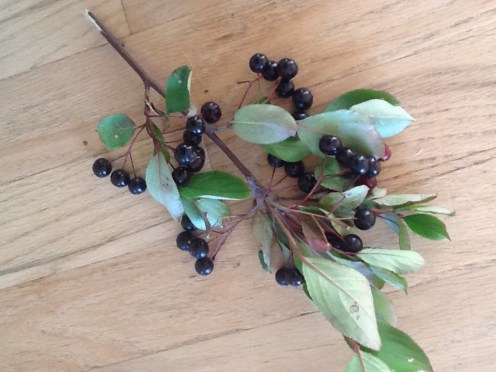
Edible Saskatoon Berries Fully Ripened in Southern Insular Newfoundland, Close To The Salt Water Where Temperatures Are Cooler & Ripening Is Later, Early Sept.

Answer:2]  The plant, leaves & fruit specimen shown in the photograph strongly resembles that of the Saskatoon Shrub even with all its variations across the country. This is also the time that the fruit ripens near the coast in insular Newfoundland. You are blessed to have  fully ripened dark blue/purple fruit to enjoy on your hikes in the country with Lisa, Michael & Family.

Ed Kayler, PAg.  Ecological Horticulturist For The Environment
Honeybees are crucial pollinators for many Food Crops & Flowering Plants including Orchard & Berry Fruit, Vegetables & Flowers.

image-11-25-15-at-11-20-am-1

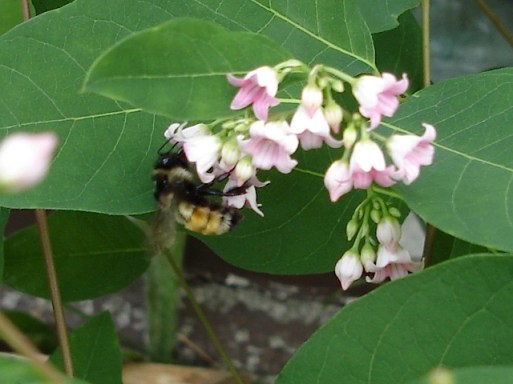
The Native Bee Pollinating The Sweet Fragrant Flowers Of The Flowering Dog Bane Plant, Central Newfoundland.

But stressors blamed for decimating hives around the world include invasive parasites such as the Varroa destructor mite, climate change and the use of pesticides.

The Canadian Honey Council has estimated that the bee population across the country has dropped by about 35 per cent in the past three years, since 2011.

A study of 800 research papers offers conclusive evidence that neonics sprayed as a preventive pesticide over crops or to coat seeds are killing bees and other insects on a massive scale.

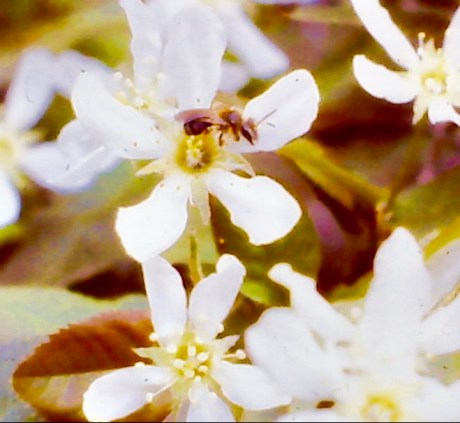
BeePollinatingBlossomSaskatoon

Native Bee Pollinating The Fruit Blossoms Of The Native Saskatoon Shrub, Central Newfoundland.

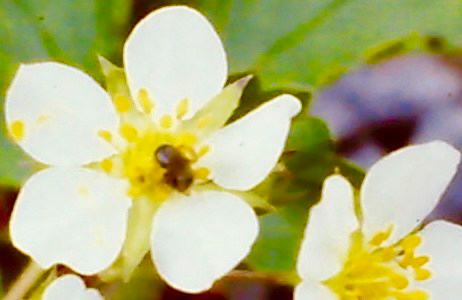
BeePollinatingBloomNativeStrawberry

Native Bee Pollinating The Fruit Blossoms Of The Native Strawberry, Central Newfoundland.

Growth in the use of systemic neonicotinoid seed treatment insecticides parallels the rising mortality rate in bees. Environmental Persistence of the neonicotinoids  has been found in irrigation water channels & soil. According to the The European Food Safety Authority, neonicotinoids pose an unacceptably high risk to bees. They have banned the use of certain neonicotinoids for the following two years in 2013.

A Bee Keeper from Elmwood Ontario in Sept. 2013, expressed grave concerns about what is happening to his bees. He lost 37 million bees in 2012 from Pesticide Poisoning which includes the contaminated dust from the corn seeding operations in the spring & later from contaminated corn pollen when the bees are foraging for nectar & pollen.

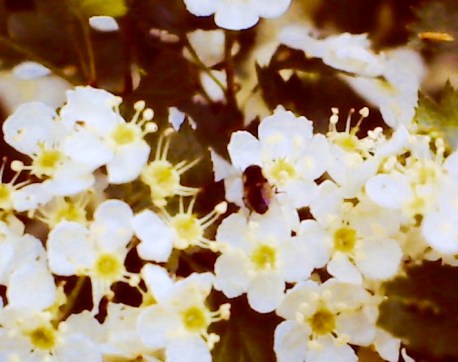
BeeLowBushCranberrySquashberryBloom

Native Bee Pollinating The Fruit Blossoms Of the Cranberry Low Bush Or Squashberry, Central Newfoundland.

It is estimated by bee keepers in Ontario that 80% of the bees are killed by Pesticide Poisoning. The Mites have been around for 20 years but the neonicotinoids wide spread use began in volume in 2004 to 2006 corresponding to the rise in bee mortality.

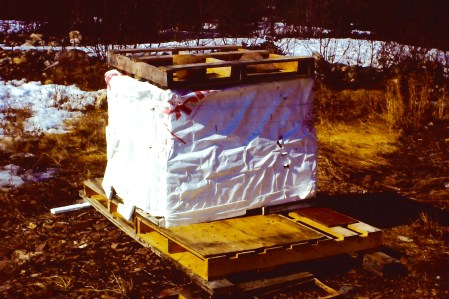
My beautiful picture

Over Wintering A Hive Of Honey Bees With Plenty Of Sweet Food & Water In A Weather Protected Insulated Shelter, Central Newfoundland.

Manitoba has lost half of their colonies in 2012. In North America between 2006 & 2007, 30% to 70% of the colonies were lost due to The Colony Collapse Disorder Syndrome. Similar heavy losses were also being reported from Western & Southern Europe, Asia  plus Central & South America.

The British Bee Keepers Association believe that the losses of bee colonies are not due to CCD. The Association maintains that most of the bee colony losses can be explained. Their approach is encouraging Integrated Bee Health Management. That means drastically reducing or eliminating stress factors which affect adversely the health status of the bee colonies.

FireFlowerBeePollinating

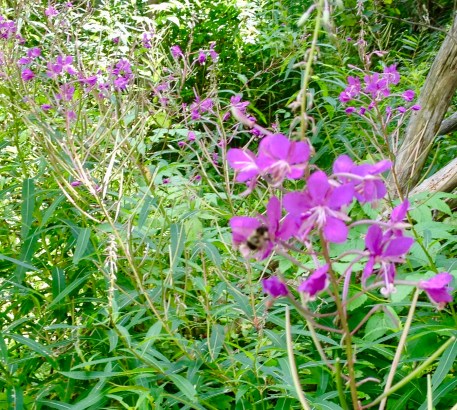
Native Bee Pollinating The Fire Flowers Which Make Premium Honey, Central NewfoundLand.

The Management Program entails expanding the skill level of bee keepers through increased training & education. More study & emphasis is needed on understanding & tracing habitat destruction plus its effect on bee foraging for nectar & pollen.

Increased applied research is needed on the incidence & distribution of diseases & insect pests to honey bee colonies that provide the bee keeper with solutions & steps to reduce the bee colony mortalities.

A Growing Industry With A Promising Future In Newfoundland & Labrador

BeePollinatingBloomJoePyePlant

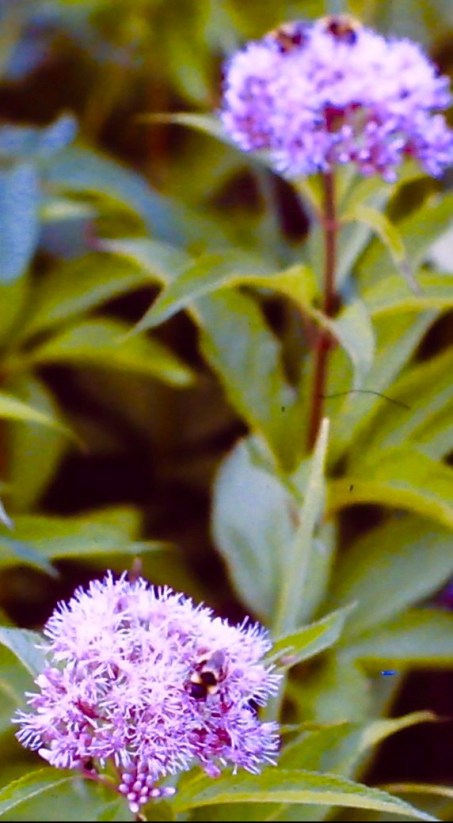
Native Bee Pollinating The Purple Blossoms Of The Native Joe Pye Plant, Central Newfoundland. Joe Pye From The Native Tongue, Jopi, Used By The Native Healer,                .

The Island of Newfoundland, however, is gaining attention as an increasingly rare haven. Newfoundland & Labrador produces a growing array of beeswax products.

The honey is a pure wildflower variety that is popular & sells out. Importation of honeybees into Newfoundland & Labrador needs a permit. The objective is to keep the insect pests & diseases out of this protected environment surrounded by ocean water.

The beekeepers control of bumblebee imports used to pollinate cranberry and blueberry crops is being closely monitored. Trevor Tulk, Honey Bee Keeper, Grand Falls Windsor, Central Newfoundland, says he can supply all the bees needed by the province’s cranberry farmers. They have to start planning properly. “The way it works around the rest of the world, the Growers & the Pollination Service Providers have contracts in place at least a year in advance.That way I know how many Hives the Berry Growers want. The Honey Bees are here, We can do it here locally,” said Tulk.

Geoff Williams, a senior research associate at the Institute of Bee Health at the University of Bern in Switzerland said,

BeepollinatingBloomDandelion

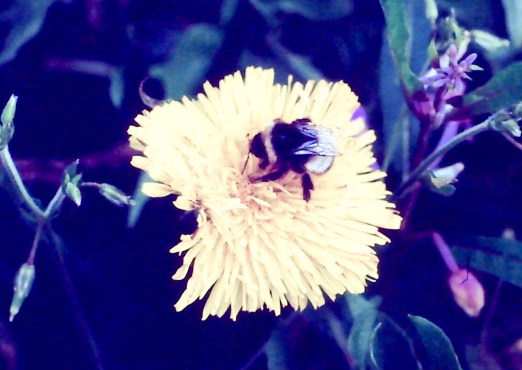
Native Bee Pollinating The Dandelion Flower Of The Medicinal & Food  Plant, Central Newfoundland.

“There’s really only a handful of locations across the globe that do not have this mite. It gives a great baseline data of what honeybee populations are like before Verroa.” 

‘Honeybees visit people’s lawns with clover and dandelions. So refrain from using pesticides, that would be great for the bees’, says Aubrey Goulding, Paradise Farms Inc.NL.                                                                         References;  1] The CBC News; The Canadian Press 21 July2014 1:19 PM NT. 2] The Advertiser,Grand Falls-Windsor,NL.Bees Buzzing By Patrick Murphy,Thurs.18May2017.

RutabagaPrecisinSeedingUniform

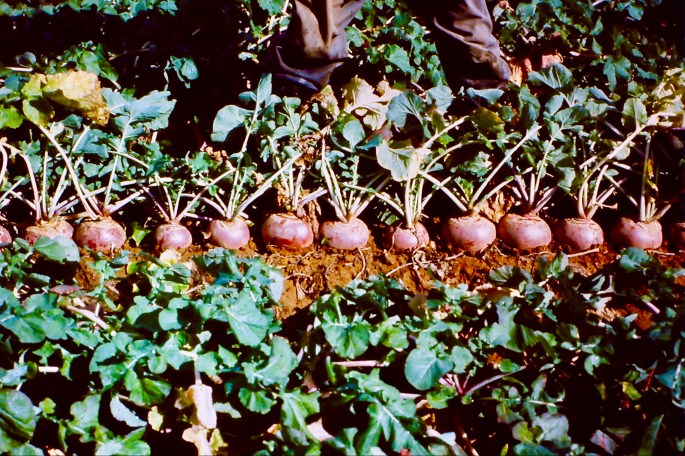
Precision Seeded Rutabaga For Uniform High Yielding Production In Fertile Soil & Moderate Micro Climate, Central Newfoundland. Good Pollination By Bees In Isolated Areas Is Needed For High Performance Vegetable Seed Production. The Rutabaga, With Its Distinctive Yellow Mild Crispy Flesh & Good Storage Ability, Was Formed From A Plant Breeding Cross With Cabbage & Turnip.

p1

My beautiful picture

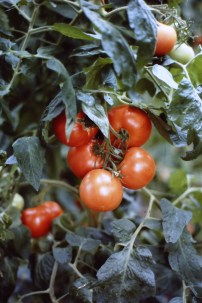
Tomatoes, Particularly Growing In The GreenHouse, Need A Vector Like Wind Through The Ventilation To Ensure Complete Pollination & Optimum Fruit Set.

Pumpkin>Yellow

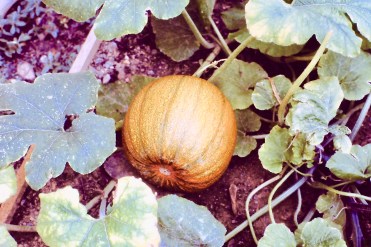
Pumpkin Growing, Riping, Turning Yellow & Maturing After The Flower Was Pollinated By Bees.

SquashZucchiniBloomBLPlastic

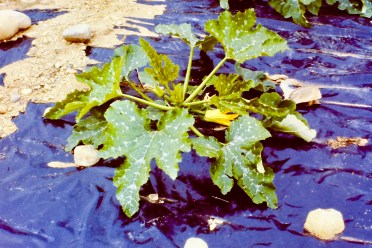
Zucchini Squash In Bloom Grown With Black Plastic Covering The Soil & Plant Roots To Increase The Temperatures For The Warm Season Plant To Grow, Fully Mature & Ripen The Fruit Before Early Fall Frosts.

LadyBirdBettle

Lady Bird Beetle, A Valuable & Beneficial Insect That Feeds On Aphids, The Leaf Sucking Insect Pest Of Many Vegetables, Spreads Virus Diseases Adversely Affecting Plant Health & Quality Production.

SquashZucchini

Zucchini Squash Fruit, Having Grown & Developed After Pollination By Bees Is Maturing For Harvest.

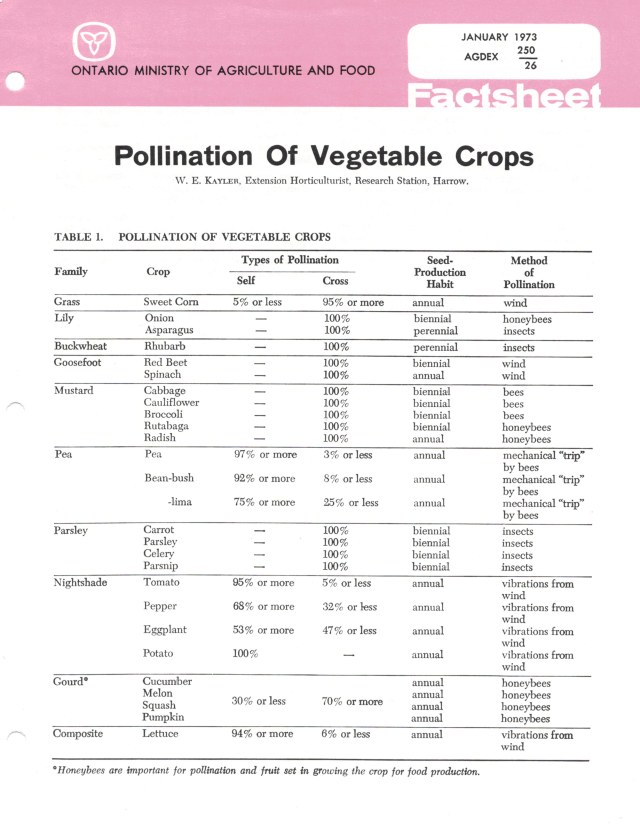
PollinationVegCropsWEKPAgP2

Refer To The Key Section: Under The Category, The Sustainable Lawn“The Objectives And Benefits To Positively Affect Climate Change And Health”