
The Unsustainable Carpet Syndrome
Under the guise of caring for the lawn, the following malpractices display a treadmill of destruction with unnecessary increased noise and air pollution with increased carbon exhaust emissions and poisonous cosmetic use pesticides.
These malpractices include the following:
- Cutting the lawn too short takes away the plants’ vital food manufacturing leaf surfaces; weakens and kills the plants.
- Cutting the lawn too frequently does not allow the plants to grow and develop properly to good health.
- Cutting the lawn on hot windy days during dry summer conditions is destructive. The health of the lawn is compromised. The plants become weak, turn yellow, brown, and die. Aggressive weeds move into the bare spaces that are left.

Bending Over For A Closer Examination, “This Monoculture Grass Only Unstable Lawn Desperately Needs More Attention, To Increase The Longevity & Reduce The Constant High Maintenance”, She Disappointedly Exclaims !
- Cutting the lawn at a set time each week, regardless of the weather and soil moisture conditions, is not allowing for adequate growth of the leaves before cutting. This weakens and kills the plants. All of this frequent cutting adds to the noise and air pollution, plus the quantity of toxic carbon exhaust emissions and increases the carbon footprint.
- The practice of not using organic mulches is wasteful and does not conserve moisture for the root systems around trees, shrubs, fruit and vegetable gardens and pathways.
- Discarding organic mulches of biological organic material includes leaves, grass, twigs, branches and limbs, bark chips, wood chips, wood shavings, sawdust and wood ashes plus material from the kitchen as plant food and compost. This material is discarded as waste at curb side.
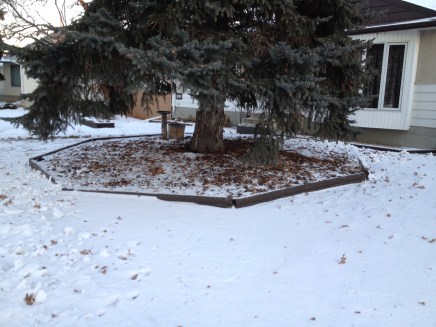
Exposed Ever Green Needle Trees Are Especially Sensitive To Dry Soil & Drought Conditions Especially In Desiccating Drying Winter Wind Conditions. Mulching With Coarse Fibrous Organic Material To The Drip Line Of The Branch Extremities Encourages Soil Moisture Retention Plus Plant Food Availability & Enhanced Plant/Tree Health.
- Discarding biological organic material from the kitchen and garden is considered as plant food, soil conditioner and compost. Presently two-thirds of the waste going to the land fill is biological organic in nature including paper, cardboard and compostable materials.
- The town’s potable drinking water paid for by the taxpayers of the community is used to water the short- cut lawns with sprinklers going continually. After mowing the lawn too short in the hot dry weather of summer, the grass takes on a yellow cast or appearance. Sometimes the sprinklers are going for four days and nights in the same setting with water running down the driveway, sidewalk and roadway. The grass clippings that can be utilized as plant food and soil conditioner or in the compost are hosed off the driveway and sidewalk onto the roadway with potable drinking water.
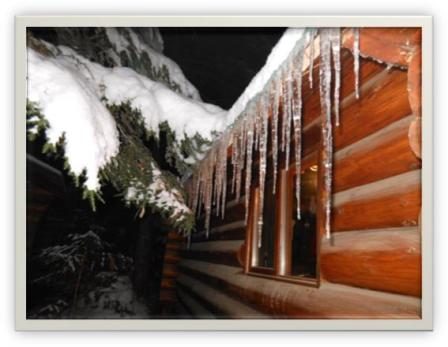
Icicles Dripping Off The Roof Signals That There Is Something Terribly Wrong Underneath The Roof That Needs Attention ! Like Why Are There Fewer Song Birds Around In The Garden & Neighbourhood ?
- Trees and shrubs can be used to shade parts of the lawn especially the severely exposed areas sloping to the south, east or western sides. In newer urban developments healthy trees and shrubs are noticeably scarce.
- The lower limbs and branches of the trees and shrubs are cut off to heights of eight to ten feet. By taking off the lower branches, the water table is reduced, the soil under the trees dries out and the plants become weak with dead and dying limbs. The trees and shrubs struggle to survive when the root systems are further reduced because of paved driveways, cement sidewalks, curbs and house foundations in the urban environment.
- Forming the elevated landscaped tabletop in which the lawn, trees and shrubs are trying to grow further aggravates the dry soil condition. The perceived look of a flat tabletop lowers the moisture regime in the soil and the health and nutritional requirements of the lawn, trees and shrubs growing in it. These are important factors in having a healthy lawn without the application of the town’s potable drinking water. This is especially true after cutting the lawn too short on hot, dry, sunny and windy days of summer. The lawn becomes yellow, brown and weak. Such conditions are right for weed infestations to occur.
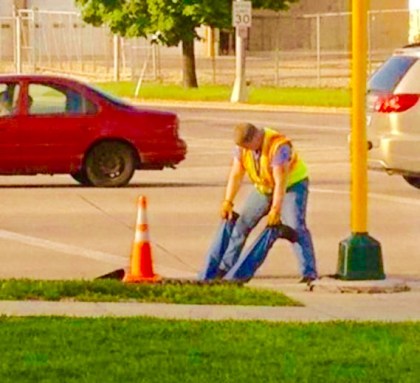
With A Closer Look To Access The Root Of The Problem Down There, The Big Question Is: “Can You See What The The Trouble Is & How To Fix It “? Like Why Poison The Soil, Air & Water That Nourishes & Feeds The Plants, Shrubs, Trees & Flowers Particularly Of Concern Are The Medicinal & Food Plants ?
- Using short cut grass, pavement, cement, gravel, stones and rocks under the trees and shrubs which greatly reduces the moisture holding capacity of the soil. Protection in winter is reduced and frost injury is increased.
- Using the “grass only” lawn that is a monoculture is unsustainable. The real insect pest infestation in the grass monoculture of the manicured lawn is the Chinch Bug. The Chinch Bug feeds on grass roots. The misguided attempt is made for cosmetic purposes to kill the bug with poisonous chemicals, jeopardizing the health of pets, children and the neighbors to try and maintain an artificial carpet outside the front door. These actions inflict poisonous fumes from pesticides and toxic carbon exhaust emissions from frequent cutting onto the neighbors. Pets and children who are most vulnerable should not be subjected to such harmful fumes. The rates of cancer are high in Central Newfoundland. The aim should be trying to reduce the exposure rate, both short-term and long-term, from poisonous pesticides and toxic carbon exhaust emissions. A healthier community trying to prevent these health issues including cancer can significantly reduce medical costs.

Native Healthy Ripe Red Currents Clusters Growing With No Pesticides. In The Ecological Sustainable Horticultural Garden.
- Spraying the lawn or spreading chemical fertilizers on the lawn containing herbicides or chemicals to kill weeds add significantly to the treadmill of destruction of the plants and the soil ecosystem. The herbicides or chemicals used to kill dandelions, also kill beneficial plants. By killing all the beneficial plants except grass plants, the lawn is left in a very vulnerable exposed position in relation to imported, aggressive weed infestations, insect pests, diseases and malnutrition. Not all grass plants suitable for the lawn are of the robust and healthy types that can withstand the environmental conditions of the Northeast Atlantic region.
- Gulls and crows open up plastic garbage bags at the curb side. They are attracted by food scraps and bits of food left in the containers and packaging. In the article from the Advertiser, Grand Falls-Windsor, Thursday, February 1, 2007, Minister Encourages Optimism for Province’s Recycling and Waste Management Initiatives, the Minister of Environment and Conservation, Clyde Jackman, stated “two-thirds of the total waste stream in the province is comprised of fiber and organic materials”. The success rate is dismal in reducing and recycling the equivalent of 2/3 of the waste. This can be accomplished by composting and utilizing the biological organic material as plant food and as a soil conditioner plus recycling the paper and cardboard. The present practices add drastically to the toxic carbon exhaust emissions for transportation in the waste management and disposal system to a land fill or incinerator for 100,000 people in Central Newfoundland.
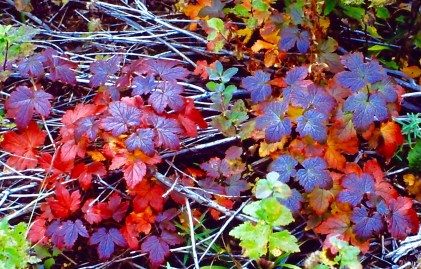
Colourful Fall Foliage With Red & Purple Leaves Of The Native Red Current Plants As Part Of The Border Ground Cover In The Ecological Sustainable Plantscape Of The Horticultural Garden.
- Frequently cutting and trimming of lawns by the gas powered engines in the hot dry windy weather of summer causes increased toxic carbon exhaust emissions and noise pollution. This unnecessary action can be lowered and thereby positively affect climate change by significantly reducing the carbon footprint. The tractor or riding lawn mower for a wide expanse of lawn is highly suspect considering the time involved in mowing, the amount of increased toxic carbon exhaust emissions and the variety of horticultural plantscape alternatives available with the use of mulches around their bases.
 The Sustainable Lawn