Category: Health Ricks-Identify & Mitigate


Question;  E-Mail from Liz and Gary Ward to Margie and Edward Kayler.  “Christine Ward would like to plant or seed wild flowers,” on the meadow rather than cutting a lot of grass. “Is there any advise you could give them as to what they should or could plant and how? They would appreciate any advise that you could provide.”

Christine & Chris Ward, Small Family Farm, Near Kingston, South Eastern, ON.

Reply; 2 Feb 12
fullsizeoutput_1da9

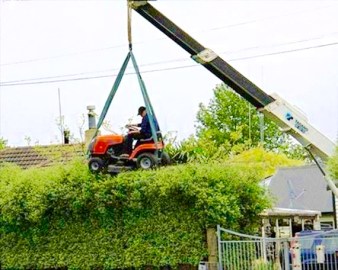
A Dubious Approach To Splintering The Top Of The Branches From The Growing Healthy Hedge In A Precarious Method.

 Option Not Recommended;  A Large Area of Regularly Mowed Lawn Grass ? 

This makes the growing of Lawn Grass from southern climatic zones for Cosmetic purposes beyond the immediate area around the house and swimming pool rather miss guided and not appropriate. There are problems with growing Lawn Grass from southern climates that are widely marketed and distributed in Canada.The Lawn Grasses are not hardy for the Northern Canadian winters and die off as “Winter Kill”. For example, Merlon & Kentucky Blue Grass that is used in Lawn Grass seed mixtures had trouble surviving the winter in Trials. Lawn Grass needs lots of water to grow. To water a Lawn with potable drinking water particularly using sprinklers that are left on for long periods of time and moved infrequently, is counter productive !

fullsizeoutput_220b

There Are Innocuous & Safe Alternatives To Cosmetic Use Pesticides On Lawns. Signs Don’t Have To Be Posted On The Lawn, SPRAYED  KEEP OFF THE GRASS, POISONOUS. Yes, Is this Demonstrating  ‘Think Safety First’ ?

What is the benefit of cutting a large amount of Lawn Grass on a farm or acreage each week especially on a riding lawn mower polluting the air with noise and Toxic Exhaust Emissions creating a huge Carbon Foot Print?!  If the Lawn Grass is fertilized & watered to grow more so it can be cut more often, then this adds significantly to the treadmill of destruction.

 Spraying Poisonous Cosmetic Use Pesticides to kill the “so called” Weeds and Insect Pests creates an unsustainable monoculture and contaminates the ground water, soil and air where children and pets are playing.

fullsizeoutput_28ab

SPRAYED     KEEP OFF THE GRASS !

Young children and pets are still developing and are very vulnerable to Poisonous Chemicals and their fumes.
SnapDragonBloomYellow

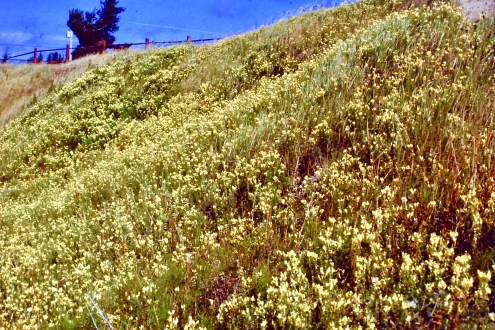
Colourful Wild Yellow Snap Dragon Or Toadflax Seeded By Mother Nature On The Slope Is Doing A Excellent Job In Prevented & Controlling Soil Erosion In Central Newfoundland & Thus Are Not Weeds.


There is a very strong association with Cancer and the Poisonous Cosmetic Use Pesticides. Allergies in young people are on the rise. The rural atmosphere becomes no longer quiet,  peaceful, pristine and safe! What are we as residents positively doing about the atmosphere and the environment in which we live to raise and protect our children and pets?

Option Not Recommended;  Wild Flower Meadow Seeded or Planted

Bloom

Fire Flower Seeded By Mother Nature With The Vibrant & Magnificent Bloom Flourishes Widely & Is Appreciated Across The Country For Its Premium Honey From The Yukon To Newfoundland & Labrador. The Beautiful Native Fire Flowers Are Actually A Food Producing Plant & Thus Are Not Weeds.

The planting or seeding of a Meadow to Wild Flowers is a move in the right direction because of the problem with the Toxic Exhaust Emissions or Carbon Foot Print and the bad effects from the Poisonous Cosmetic Use Pesticides associated with the growing of the Lawn Grass monoculture on an acreage or farm. The problem with Wild Flower Seed is that it  contains contaminates, Foreign or Weed Seeds. The grades are not as good as that of Certified Crop Seed. It would take only a small percentage or a few Noxious Weed Seeds to infest the field and Farm. Consider that most of the Noxious or problem Weeds in Ontario have been imported indirectly from other places notably from Europe.
IMG_0034

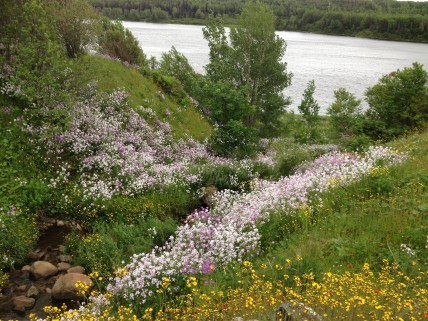
Phlox With The Mauve & White Blooms Plus The Yellow Hawk Plants Seeded By Mother Nature Provide A Colourful Addition To The Stream Banks & River Valley Plus Preventing Soil Erosion On The Slope, In Central Newfoundland & Thus Are Not Weeds.

The noteworthy examples are the Dandelion, Coltsfoot, Common Thistle, Quack Grass and Purple Loosestrife.

One Dandelion flower seed head produces 120 seeds and one healthy plant produces 40 flower stocks. It would take one viable healthy seed to produce many small seeds. That is, 120x 40= 4800 seeds from one good Dandelion plant could contaminate the field and Farm. Once the Imported Noxious Weed gets a foot hold, there is no looking back as the natural enemies are not here to keep them in balance. The buyer has no guarantee of what is being bought and  the quality of the Wild Flower Seed in the package.
LupinsBloomPurpleWhite

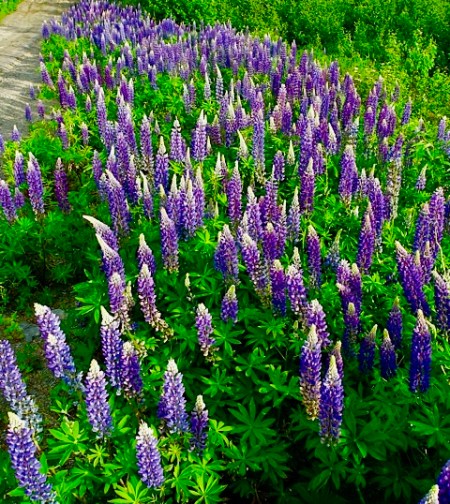
Lupins Being Legumes Enrich The Soil,  Provide Nutrition &  Increase Health  To Neighbouring Plants Plus Making A Colourful Addition To The Meadow Seeded By Mother Nature, Central Newfoundland & Thus Are Not Weeds.

For these reasons it is not a good idea to plant Foreign Imported Wild Flower Seed on the Farm.

Option Adoptable;  Wild Flower Meadow Seeded by Mother Nature On The Small Farm

To have Wild Flowers in a Meadow it is better to let Mother Nature do the seeding. It does a better job in the long run. The big advantage is that there are no Noxious Weeds introduced onto the  Farm from other areas. There should be a good soil base for the indigenous and the well adapted desirable plants to grow and develop.

For example, the rocks and large stones should be removed from the soil surface before and in the initial stages of the regenerative plant growth period that would interfere with cutting the field  with a forage / hay swather, cutter or mower to remove Dandelion seed heads and other Noxious Weed flower/seed heads before they mature and spread.
My beautiful picture

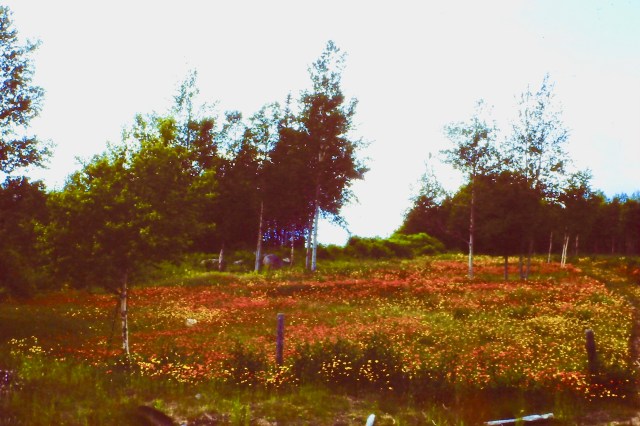
Native Orange & Yellow Hawk Plants In Full Bloom, Seeded By Mother Nature On The Meadow  Providing A Very Beautiful, Colourful, Non Polluting, Low Maintenance & Natural Ground Cover In Central Newfoundland & Thus Are Not Weeds, .

Any imported Noxious or problem Weeds can be removed, pulled or dug out in the initial stages of the field developing into the Wild Flower Meadow. In subsequent growing seasons  1 or 2 cuts are needed in the summer to rejuvenate the desirable plants, remove undesirable flower/seed heads before they fully mature and shed the numerous seeds into the Wild Flower Meadow.

Ed Kayler, P.Ag.


Dandelion  5July14

Question: Hi Ed, Very interesting

BloomDandelionBeePollinating

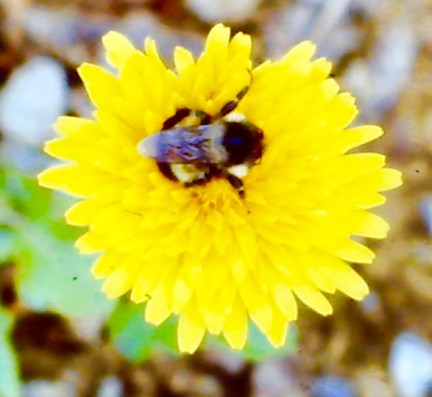
Native Bee Pollinating The Flower Of The Medicinal & Food Plant, Dandelion.

website, gives lots of food for thought. It’s not always easy to live with dandelions when they choke everything out. What is the best solution?                                                                           Janet Killawee,   Truro,  NS.

Reply: Hi Janet,   Attached are some Recommendations concerning The Infamous Dandelion Plant that you so aptly categorized plus including information on how to deal with it ! I trust the information attached sheds some light & interest on the subject !  Some additional information is provided on naturally occurring & seeded plants for Salad Greens Fresh From The Garden, especially selected for a Home Economist interested in Food & Nutrition ! There is more to a lawn & garden than grass & Dandelions.

Reply: Here are some alternatives attached, right in keeping for a Home Economist Specializing in Food & Nutrition ! Shall we call it, “The Home Maker’s Challenge With The Mac Grad Class Of ’64?”😀

After The Post, ReplyThe Request from Janet Killawee helped prompt the development   of  The  Published Post,  Titled,   The Dandelion Fix”  under  The Category,  “Working With Weeds & Beneficial Plants.”  on The Web Site,   thesustainablelawn.com     Thank You,  Janet. Look What Happened After You Asked About  Dandelions  !

My beautiful picture

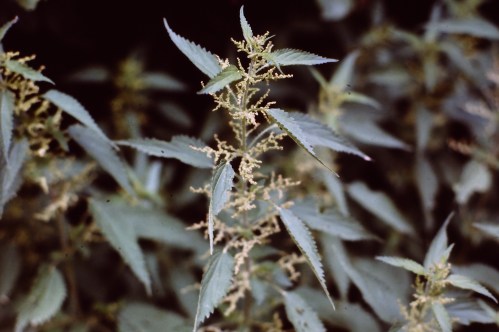
A Robust Stinging Nettle Plant In Full Bloom, A Very Valuable Food & Medicinal Plant. Beware Of The Tiny Fussy Nature Or Stinging Nettles Along The Stems & Leaves.

Thank You Letter:  Thanks Ed...lots of “Food For Thought” there. We do quite a lot of the things mentioned but I know we could do more. I like the bread bag trick to “cook” the seeds, among other things. We certainly have to learn to live with them and I don’t mind a few. I didn’t realize there were so Many Medicinal Uses.                    Janet Killawee,   Truro, NS.

Reply: Some More “Food For Thought”. Another Import From Europe, That Some Consider A Weed. The Dried Leaves Of The Stinging Nettle Plant Plus Green Tea, Mint, Lemon & Honey Are Helpful During  A Cold, Sore Throat & Or The Flu Season  With Its  Iron Content & Invigorating Properties.

Ed Kayler  PAg.

Refer To The Key Section: Under The Category, The Sustainable Lawn“The Objectives And Benefits To Positively Affect Climate Change And Health”

Say Yes To Organic Lawns

Say Yes To Organic Lawns is the title of a letter to the Editor by Linda C. King In the Grand Falls-Windsor Newspaper, Advertiser, Thurs. June 12,1997.  Ms.King was Head Physiotherapist & Owner of Aspen Physiotherapy. With a medical background she has reviewed the Medical Literature. She is alarmed & very concerned with the common practices to make the lawn prettier with Cosmetic Use Pesticides causing greater incidence of people becoming sick & dying. Ms. King quotes, Dr. June Irwin of Pointe Clair, QC.”Your Neighbour can kill You & it is legal !”

MountainAshBloom

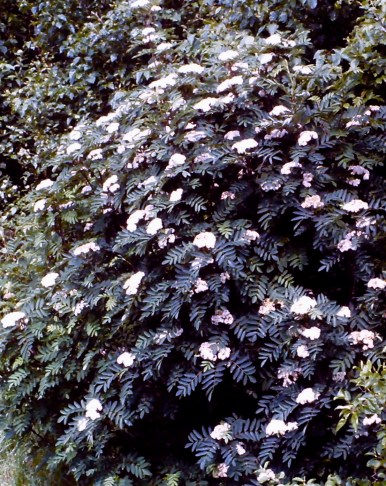
Mountain Ash, Dog Berry NL., In Full Bloom

Her research has led to the following startling revelations:

  1. Children in families of lawns treated with Cosmetic Use Pesticides have a 61/2x greater incidence of leukaemia verses those that are not exposed to the lawn Cosmetic Use  Pesticides.
  2. The following Medical Diseases & Disorders have been linked to Cosmetic Use Pesticides:  Allergies,  Asthma,  Genetic Mutations,  Neurotoxic Reactions,  Liver & Kidney Dysfunction,  Chemical Sensitivities,  Birth Defects,  Non-Hodgkins Lymphoma,  Cancer Clusters in Communities.

Not Satisfied That Pesticides Are Safe

A Letter To The Editor, titled, Not Satisfied That Pesticides Are Safe, in  the Advertiser Newspaper, Grand Falls-Windsor, NL. April 2,1998, by Ms. Linda C. King, Head Physiotherapist & Owner Of Aspen Physiotherapy wrote;

A Natural Lawn free of toxic chemicals, like Cosmetic Use Pesticides, is less expensive, just as beautiful & more satisfying, especially when you know that you have not been responsible for poisoning your family & neighbours according to Linda King.

Her son worked with a lawn care company. He was not trained in the use of these potentially dangerous chemicals. Jonathan was told, that,

  1. The Pesticides used on lawns were virtually harmless,
  2. Not to wear protective clothing as it would frighten the lawn clients.

Linda King stated emphatically, “Nobody can convince me that my son was not a victim of pesticide poisoning which led to his death!”

Jonathan King died Jan.1997 of leukaemia. A tribute was paid to him by a best friend & her sister in an article from the Advertiser, Mon.Jan.12, 2012.

Linda & Wayne King, Community Activists For The Banning Of Poisonous Cosmetic Use Pesticides On Lawns.

Linda & Wayne King, Community Activists For The Banning Of
Poisonous Cosmetic Use Pesticides On Manicured Lawns,                                         Grand Falls -Windsor, NL.

A Better Tomorrow, At First Glance

The following Chemical Pesticides, according to the Department Of Environment & Conservation, are no longer permitted for use on lawns in Newfoundland & Labrador as of May 1, 2012. The active ingredients include 2,4-D, Mecoprop, Dicamba, MCPA & Carbaryl or the chemical insecticide Sevin.

The regulations apply to everyone, including:

a] residences, houses, apartments & condos

b] commercial business & cemeteries

c] government office buildings, ball fields & parks

d] institutions of schools, recreational centres, hospitals & long term care facilities.

The news release of April 30, 2012 in the Grand Falls-:Windsor Advertiser indicated that the Department of Environment & Conservation, Government Of Newfoundland Labrador wants to reduce the unnecessary use of pesticides on lawns.

Not Yet Out Of the Woods

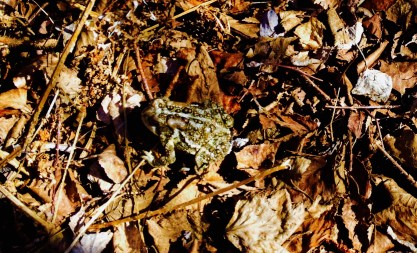
Frog

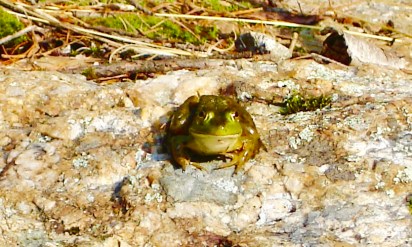
Amphibians Like Frogs Above Or Toads Represent ‘The Canary In The Coal Mine’ In Terms Of The Quality Of The Soil, Air & Water. Is the Environment Safe For Our Children & Pets Which Put Things In Their Mouths From The Lawn & Garden ?

Herbicide Use Is Unacceptable, The Provincial Government Has Other Options, is the title of a letter to the Editor of the Advertiser, Grand Falls-Windsor, NL. Mon. Aug.13, 2012 by  Dr. David Saltman, Chair, Oncology Discipline, Faculty Of Medicine, Memorial University of Newfoundland, St. John’s. He states that The Newfoundland & Labrador Government’s decision to continue with an indiscriminate spraying program using 2,4-D to control woody plants along roadsides is irresponsible & illogical. This is in the light of the recent amendment of the pesticide bylaws to ban the same chemical for Cosmetic Lawn Use in the province. The continued use by utility companies to control plants on utility right of ways is of equal concern. The government’s response is that the chemical is being used in a safe manner.

If the rationale is to ban the same chemical from the use on lawns because there are safety concerns, then why is the road side spraying a chemical with known carcinogenic potential that has the ability to negatively affect the health of many species, including our own, any less of a concern, questions the Oncologist.

Toad

The Toad Population Seems To Be On The Come Back In The River Valley Of Central Newfoundland In 2016, Since the Banning Earlier Of Cosmetic Use Pesticides On Lawns In The Province.

Herbicides, including 2,4-D have tremendous drift potential, which can result in the chemical showing up in food & feed producing areas, rivers & streams plus urban areas far from the initial road side applications.

This particular herbicide, like many others, has the ability to negatively impact hormone levels & the immune system in exposed humans. It is a suspected cancer causing agent  or carcinogen, according to the concerned Cancer Researcher.

The same chemical, when used on lawns, has been associated with bladder cancer & lymphomas in dogs & would be expected to have similar effects on foraging wild animals in & around the forests, according to the Oncologist.

fullsizeoutput_2acf

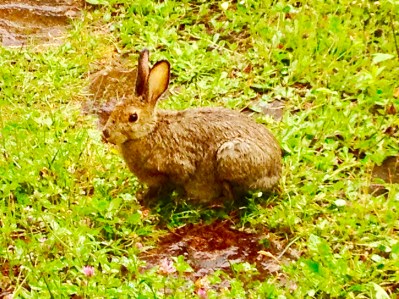
Snow Shoe Hare Having At His/Her Feet An Abundance & Variety Of Nutritious Greens Including Low Growing Clover As Part Of The Sustainable Lawn. In The Farming Community This Is Termed ‘Strip Grazing’ Where The Fence Is Moved Around To Keep The Grazing Animals Well Supplied With Fresh Greens, Forage Or Feed.

Although there is not a strong association between 2,4-D & toxicity in birds, it can impact the avian species by destroying plants they use to feed on, for nesting & shelter.

Other species that have been shown to be negatively affected by this chemical herbicide are fish & amphibians.

There are enough concerns regarding the effects the 2,4-D herbicide can have on our health & the health of other species, states Dr. Saltman, for the government to immediately halt this spraying program & start to look at less toxic & more innovative strategies to responsibly manage our road ways & utility right of ways.


We can reduce the Toxic CO2 Exhaust Emissions in the yard around the home where we, our children plus pets live, play & put things in their mouths plus the welfare & well being of the Elderly & Neighbours.

My beautiful picture

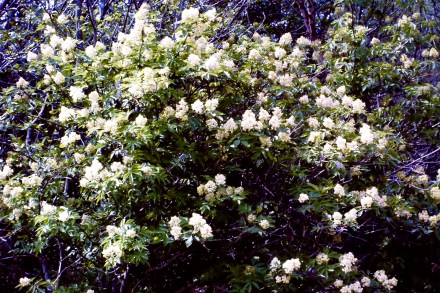
The Native Elderberry Shrub In Full Bloom About The Time The Schools Of Caplin Fish Migrate Into The Shore Along The Atlantic Coast Of Newfoundland & Labrador .

Consider the following Objectives:

  1. To reduce the contamination in the air, water & soil or lawn & garden,
  2. To maintain & improve the Quality of the Environment in the yard around our Home & in the neighborhood,
  3. To improve the health & safety of ourselves, our Young & Older Dependents plus to lessen the risk to the neighbours,
  4. To reduce the risk of suspect allergies, autism & mental challenges on the increase in our society, from continual exposure to Cosmetic Use Pesticides & Toxic Exhaust Emissions especially in the elderly, young people, newly born & soon to be born children.

    Elderberry Ripe Red Fruit

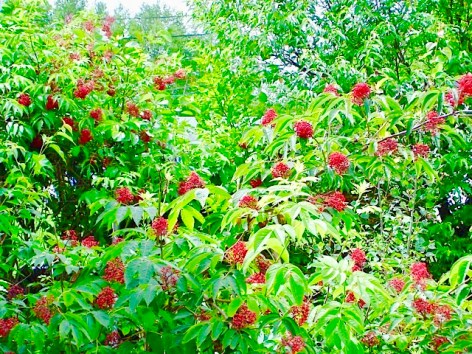
    Ripe Red Elderberries On A Healthy Native Shrub Free Of Pesticides, A Favoured Food Of Local & Migrating Song Birds In Mid August, Central Newfoundland.

Continual Exposure of Poisons & Toxins is Problematic to measure accurately. In the case of Pesticides or other Toxins, the Oral LD.50 & Dermal LD.50 are used to measure The Lethal Dose that Kill 50% of the rats in the sample from a single dose of the Poisonous Chemical from ingestion through the mouth as an oral dose or the single lethal dose absorbed through the skin as a dermal dose.

Continual Exposure of a Poisonous Chemical, includes applying a Pesticide without Protective Clothing & Equipment or with children & pets putting things in their mouths from the ground after it has been sprayed or dusted with a poisonous chemical over a period of time but is not measured.

fullsizeoutput_2b31-e1498503901799.jpeg

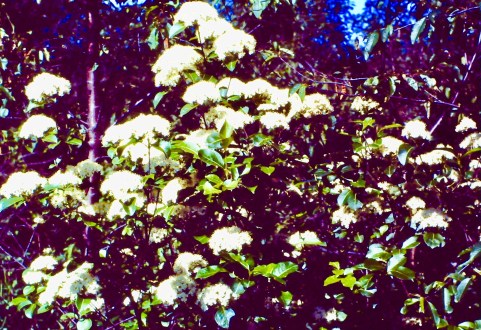
Native Northern Wild Raisin In Full Bloom As Part Of The Ecological Sustainable Plantscape Program, Central Newfoundland.

Even though a chemical is considered Safe & Non Carcinogenic by the Single Lethal Dose Methods, The Continual Exposure Rate is left out of the Analytical Diagnostic picture for the chemical !

The Safe & Non Carcinogenic Chemical over the long term could become Hazardous to the Health of Humans particularly to young children, pets & older people or to the Environment. For Example the wide spread use of DDT for Mosquito Control to reduce Malaria in Africa & in the Lake Country of Central Ontario where the diminishing populations of the Eagles, high on the Food Chain, was attributed to the spraying of DDT for Mosquito Control.

My beautiful picture

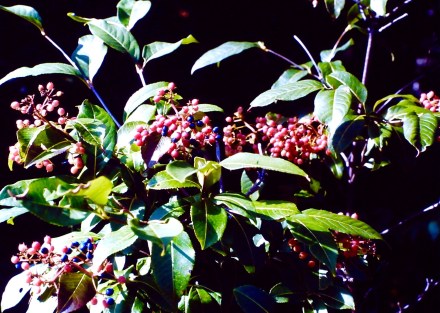
Berries Of The Native Northern Wild Raisin Ripening From Green To Red, To Very Dark Blue. The Song Birds Enjoy The Abundance With Many Missing Long Before the Berries Are Fully Ripened.

The accumulation of DDT in Mother’s Milk even in the Arctic where there has been no spraying of the Insecticide is a deleterious side effect.

In addition, the side effects to the Target Species plus to the Environment  may not become Fully Known until wide spread use shows what can happen & brings out the adverse consequences.

For example, thalidomide, a chemical taken for morning sickness in pregnant woman caused deformities in children whose mothers had taken the readily available chemical. The adverse effects did not show up in the beginning but when they did, it was catastrophe as many mothers & children were affected around the world.

OLYMPUS DIGITAL CAMERA

Are We Making Substantial Noticeable Sustainable Improvements To The Environment In Our Lawn & Garden Plus In Our Neighbourhood & Community For A Healthier Pesticide Free Next Generations ?

For many years this Drug, Thalidomide, was initially considered a safe chemical.

The Ways & Means that we can Reduce the Carbon Dioxide & the other Toxic Pollutants in the Exhaust Emissions are as follows:

  1. Increasing the cutting height of the lawn mower to the highest setting & prevent the grass from being cut too short in the hot weather of summer,
  2.  By not cutting the lawn at a fixed time each week regardless of the soil moisture & plant growing conditions,
  3.  Only cutting the lawn when there is adequate moisture from rainfall in the soil for the grass to regrow after cutting,
  4. Allowing the grass to grow between the cuts to its proper plant height for adequate leaf growth so the lawn does not turn yellow or brown after cutting,
  5. By not cutting the grass in the hot weather of summer as it is not growing under dry or drought conditions,
  6. Reducing the number of cuts per growing season over the lawn,

    fullsizeoutput_39c9.jpeg

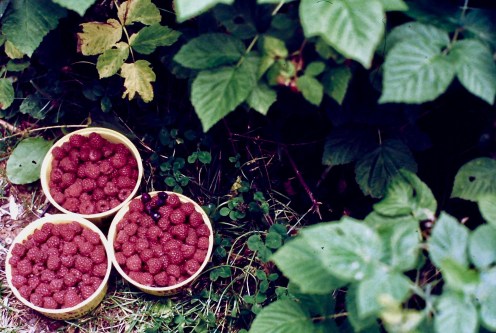
    Raspberries Ripe Red & Native Saskatoons Ripe Deep Blue Are Produced From Shrubs With Clover Living Mulch & Ground Cover That Add Nutrition To The Soil & The Neighbouring Fruiting Plants.

  7. By spreading Organic Mulch Material around the base of trees & shrubs, out to the drip line or branch extremities, there by reducing the surface area of total lawn to be mowed,
  8.  By planting Native Fruiting Trees & Shrubs around the lawn & garden plus Native Ever Green Trees along the North side, North West & North East corners of the yard shelter & protect from cold winter Arctic Winds .
  9. The absorption of Carbon Dioxide & the release of Oxygen is dramatically increased
    My beautiful picture

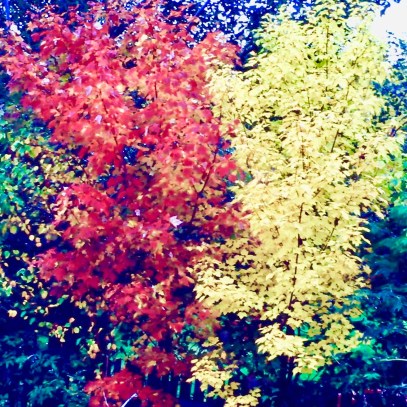
    The Many Leaves Of The Native Maple Trees Exhibiting The Characteristics Fantastic Fall Colours Add Significantly To The Ecological Sustainable Plantscape.

    by the expanded number of trees & shrubs through the Life Leaf Process Of Photosynthesis with the greatly increased amount of plant leaves in the vertical plane in addition to the horizontal ground level plane.

  10. The Additional Trees, Shrubs & increased foliage greatly aids in Purifying The Air In The Garden around the Home & Play Ground from the constant contamination of neighbouring Air Pollutants especially the ones referred to above associated with Manicuring The Lawn !

Refer To The Key Section: Under The Category, The Sustainable Lawn“The Objectives And Benefits To Positively Affect Climate Change And Health”