
Honeybees are crucial pollinators for many Food Crops & Flowering Plants including Orchard & Berry Fruit, Vegetables & Flowers.
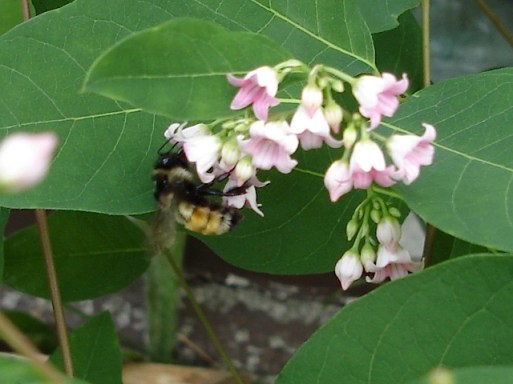
The Native Bee Pollinating The Sweet Fragrant Flowers Of The Flowering Dog Bane Plant, Central Newfoundland.
But stressors blamed for decimating hives around the world include invasive parasites such as the Varroa destructor mite, climate change and the use of pesticides.
The Canadian Honey Council has estimated that the bee population across the country has dropped by about 35 per cent in the past three years, since 2011.
A study of 800 research papers offers conclusive evidence that neonics sprayed as a preventive pesticide over crops or to coat seeds are killing bees and other insects on a massive scale.
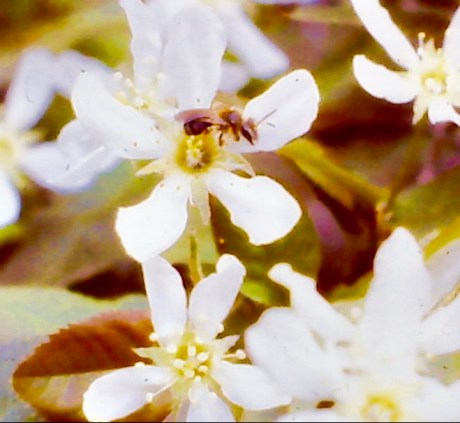
Native Bee Pollinating The Fruit Blossoms Of The Native Saskatoon Shrub, Central Newfoundland.
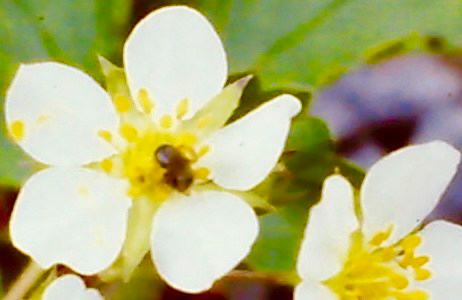
Native Bee Pollinating The Fruit Blossoms Of The Native Strawberry, Central Newfoundland.
Growth in the use of systemic neonicotinoid seed treatment insecticides parallels the rising mortality rate in bees. Environmental Persistence of the neonicotinoids has been found in irrigation water channels & soil. According to the The European Food Safety Authority, neonicotinoids pose an unacceptably high risk to bees. They have banned the use of certain neonicotinoids for the following two years in 2013.
A Bee Keeper from Elmwood Ontario in Sept. 2013, expressed grave concerns about what is happening to his bees. He lost 37 million bees in 2012 from Pesticide Poisoning which includes the contaminated dust from the corn seeding operations in the spring & later from contaminated corn pollen when the bees are foraging for nectar & pollen.
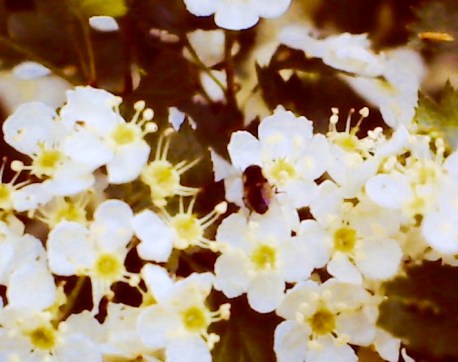
Native Bee Pollinating The Fruit Blossoms Of the Cranberry Low Bush Or Squashberry, Central Newfoundland.
It is estimated by bee keepers in Ontario that 80% of the bees are killed by Pesticide Poisoning. The Mites have been around for 20 years but the neonicotinoids wide spread use began in volume in 2004 to 2006 corresponding to the rise in bee mortality.
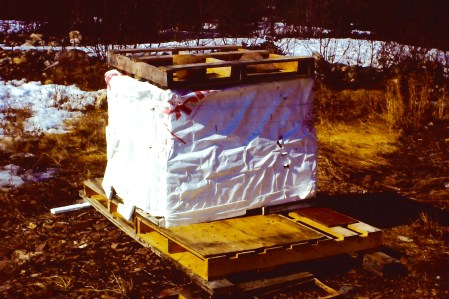
Over Wintering A Hive Of Honey Bees With Plenty Of Sweet Food & Water In A Weather Protected Insulated Shelter, Central Newfoundland.
Manitoba has lost half of their colonies in 2012. In North America between 2006 & 2007, 30% to 70% of the colonies were lost due to The Colony Collapse Disorder Syndrome. Similar heavy losses were also being reported from Western & Southern Europe, Asia plus Central & South America.
The British Bee Keepers Association believe that the losses of bee colonies are not due to CCD. The Association maintains that most of the bee colony losses can be explained. Their approach is encouraging Integrated Bee Health Management. That means drastically reducing or eliminating stress factors which affect adversely the health status of the bee colonies.
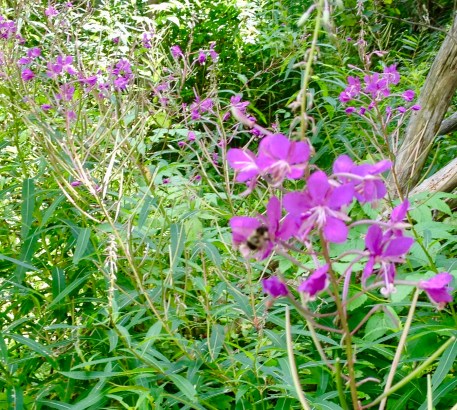
Native Bee Pollinating The Fire Flowers Which Make Premium Honey, Central NewfoundLand.
The Management Program entails expanding the skill level of bee keepers through increased training & education. More study & emphasis is needed on understanding & tracing habitat destruction plus its effect on bee foraging for nectar & pollen.
Increased applied research is needed on the incidence & distribution of diseases & insect pests to honey bee colonies that provide the bee keeper with solutions & steps to reduce the bee colony mortalities.
A Growing Industry With A Promising Future In Newfoundland & Labrador
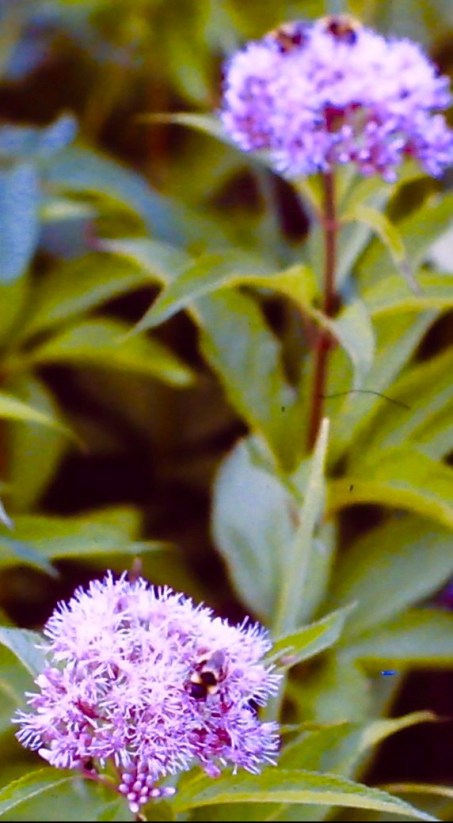
Native Bee Pollinating The Purple Blossoms Of The Native Joe Pye Plant, Central Newfoundland. Joe Pye From The Native Tongue, Jopi, Used By The Native Healer, .
The Island of Newfoundland, however, is gaining attention as an increasingly rare haven. Newfoundland & Labrador produces a growing array of beeswax products.
The honey is a pure wildflower variety that is popular & sells out. Importation of honeybees into Newfoundland & Labrador needs a permit. The objective is to keep the insect pests & diseases out of this protected environment surrounded by ocean water.
The beekeepers control of bumblebee imports used to pollinate cranberry and blueberry crops is being closely monitored. Trevor Tulk, Honey Bee Keeper, Grand Falls Windsor, Central Newfoundland, says he can supply all the bees needed by the province’s cranberry farmers. They have to start planning properly. “The way it works around the rest of the world, the Growers & the Pollination Service Providers have contracts in place at least a year in advance.That way I know how many Hives the Berry Growers want. The Honey Bees are here, We can do it here locally,” said Tulk.
Geoff Williams, a senior research associate at the Institute of Bee Health at the University of Bern in Switzerland said,
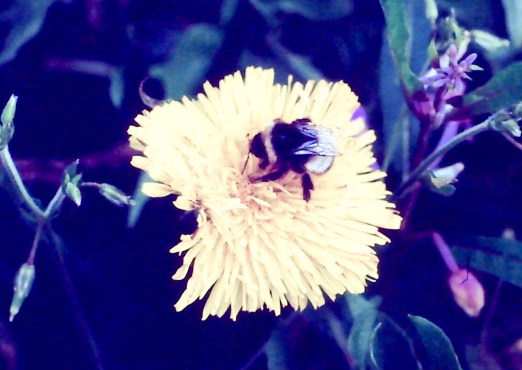
Native Bee Pollinating The Dandelion Flower Of The Medicinal & Food Plant, Central Newfoundland.
“There’s really only a handful of locations across the globe that do not have this mite. It gives a great baseline data of what honeybee populations are like before Verroa.”
‘Honeybees visit people’s lawns with clover and dandelions. So refrain from using pesticides, that would be great for the bees’, says Aubrey Goulding, Paradise Farms Inc.NL. References; 1] The CBC News; The Canadian Press 21 July2014 1:19 PM NT. 2] The Advertiser,Grand Falls-Windsor,NL.Bees Buzzing By Patrick Murphy,Thurs.18May2017.

 The Sustainable Lawn