Latest Entries »

Thanking You Letter:                                                                                                                                                                                                    For The Visit To The Garden & Providing The Recommendations For Growing  Healthy Fruiting Trees & Shrubs Plus Other Plants & Food.                                                                                                                                           Thank you Uncle Ed for sharing your beautiful appreciation For Living Systems. A glimpse of my Garden With Fruit & Ornamental Trees through your eyes was an incredible gift.                                                                🙂 Elisha, Kelly, Olivia & Zakk Kittson 🙂                                               Okanagan North,  BC

Reply: Greetings: Elisha, Kelly, Olivia & Zakk Kittson,   Okanagan North, BC.                                                               Orchard, Vegetable, Berry Fruit & Ornamental Plant Growing Recommendations                                                                                                                                                                                                                                                                                                                                                                                  Part A]  In The Tree Fruit Orchard~ Nutrition First                                   May 30,2013   2 pages  P1

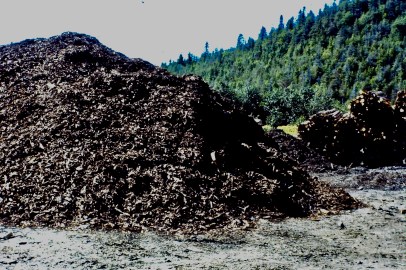
BarkWoodChipsFishBitsCompost

Bark & Wood Chips Plus Fish Meal & By Products Are Composted For High Fibre  & Organic Matter Soil Enhancement Plus Nutritious Plant Food.

           By far, the most important item on the to do list, is to build up the nutritional capacity around each Fruit Tree. Some of the Fruit Trees are having a struggle in extremely dry conditions. If the Tree is not healthy, the capability of the Fruit Tree to continue to grow plus develop & hold fruit is low. A Healthy Fruit Tree is able to withstand the pressures of Disease & Insect Pest Attacks.This Nutritional based system is the first course of action verses applying pesticides. Much like for humans, Nutrition comes first well before drugs.

Leaves>Compost

Decomposing Leaves & Grass Make The Rich Soil.

 The Main Objective is to improve & increase substantially the Health & the Fruit Capacity of each Tree. Feeding the Fruit Trees with locally produced Organic Plant Food  as a product of re-using & re-cycling of  the Biological Organic Material from the Kitchen, Garden & Workshop is the best, most economical, productive & sustainable method to improve the Health & Fruit Productivity of the Orchard. Biological Organic Material from the kitchen, chopped up for faster decomposition, is the key Plant Food Ingredient. Decomposed & Fresh Biological Organic & Compost Material chopped up with a shovel  goes down first.

GrassClippings>OMSoil

Grass Clippings & Leaves Make The Richest Soil.
 Lots of Grass clippings to go down next & mixed with the Biological Organic Material from the kitchen. When grass clippings heat up &  start to decompose , they substantially shrink in size.  Rotting Grass & Leaves make the richest Soil. Wet & dry leaves following to go down & mixed in. The Coarse Material like Corn Cobs, Cut Up Branches & Limbs, Wood & Bark Chips to go on top as The Organic  Mulch Material.
My beautiful picture

Bark & Wood Chips Make Good Coarse Mulch Material, As Such Material Takes Longer To Decompose.

The Organic Mulch Material is extremely important covering to hold in the Soil Moisture. The Plant Food is in an Aqueous or Water Solution that is available & readily absorbed by the Plant Roots.

The Mulch Material should extend outwards to the Drip Line of the Tree or to the extremity of the branches. This leaves the grass-legume cover crop growing between the Drip Lines of the Fruit Trees or between the rows.

The Cover Crop between rows in the Orchard should be a Legume-Grass Mixture like Alfalfa & Crested Wheat or Brome, or Timothy or Orchard Grass.

My beautiful picture

Wood Savings + Saw Dust Are Spread Over The Strawberry Plants Just Before Freezing Temperatures At The Start Of Winter To Insulate & Protect The Plants. The Woody Mulch Material Is Removed In the Early Spring & Placed In Between The Raised Beds Of Strawberry Plants As A Mulch To Keep Weeds Down & To Conserve Moisture In The Soil Plus Keep The Fruit Dry On The Surface To Reduce Disease & Mold Infection.

One of the advantages of the Alfalfa is that it is very Drought Tolerant. It’s root system can grow six feet down & across if the Soil Profile is friable & allows accessible penetration. The type of grass is depended on the amount of Soil Moisture available to plants in the Orchard with the type of grass listed first being the most drought tolerant & the others in decreasing order of drought tolerance.

The alfalfa is a Legume & thus is able to fix its own Nitrogen, enriching the Soil & providing a food source for the grass, reducing the need for additional fertilizer.
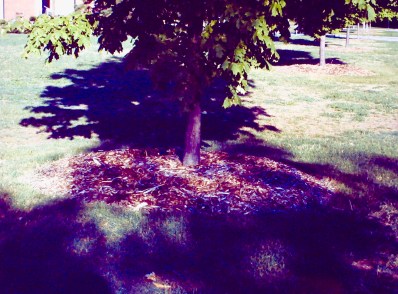
BarkWoodChipsOak

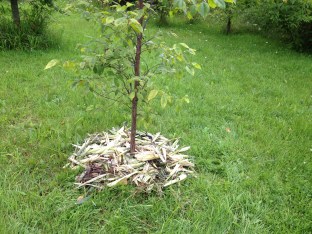
The Mulch Of Bark & Wood Chips, Extended To The Drip Line Of The Branch Extremities, Is Used For Improved Moisture Retention, Plant Food Uptake, Growth & Tree Health To better Withstand  Drought, Insect Pest Attacks & Disease Infections.
 With the lawn grass already present, Low White Clover, a Legume, can be seeded & incorporated into the grass between rows of the Fruit Trees. The White Dutch Clover comes in small packages that fit into the palm of the hand. The Clover Seed is very small. Each package of Seed can be mixed in a pail of dry sand when seeding to obtain a uniform distribution. The seeding of Low White Clover can be done in the late fall just before the ground freezes or before the snow flies, called Dormant Seeding. If the seeding is done any time after the snow is gone in the spring, it can be done just before a substantial rain to carry the seed down to make contact with the Soil.
img_1012

The Mulch Of Grass & Corn Husks Is Used To RetainValuable Soil Moisture Making Plant Food More Readily Available For Increased Tree Growth & Better Health Plus Able To Withstand Drought, Insect Pests Attacks & Disease  Infections.

Seeding is risky if done in the hot weather of summer when inadequate moisture predominates.

                                                                                                                                                                Cover Crop Maintenance In The Orchard

In the Tree Fruit Orchard, the Cover Crop is cut only two times a growing season or year, the first time when the plants are heading or in the bloom stage, that is, the latter part of June & in latter August. The intent of the cutting is to cut the buds, flowers & seed heads to prevent any Weeds from going to seed plus keeping the Cover Crop Plants in a juvenile or green vegetative state. The clippings can be left to rot & feed the Legume-Grass Cover Crop, put up for silage, dried for hay or utilized under the Fruit Trees as part of the Plant Food Source & The Mulch.
LowLimbsSpruceMulch>DripLine

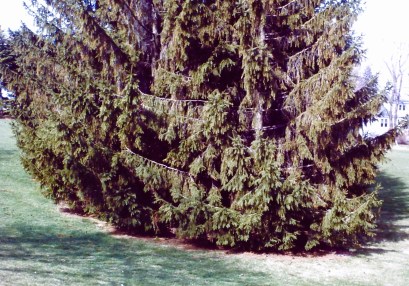
The Bottom Limbs Of The Spruce Trees Provide The Equivalent Mulch Cover Over The Feeder Roots For The Essential Retention Of Soil Moisture, Increased Soluble Food Up Take Promoting Better Health & Vigour  Of The Trees For Them To Better Withstand Drought Conditions, Insect Pests Attacks & Disease Infections.

 Irrigating In The Tree Fruit Orchard & Berry Fruits
Under dry or drought conditions, typical of the summer months in the Okanagan Valley, the Fruit Trees suffer as they cannot get the proper & adequate Plant Food. Continual Drip Irrigation at each fruit tree site between soaking rains is the most efficient way to supplement water for The Trees to grow & be healthy. This is extremely important in a Semi-Desert Type Climate where rainfall can be limited in the growing season. The trees need the Plant Food in a water solution in order to be picked up by the  tree roots.
Ed Kayler, P.Ag.
Thank You Letter:

WOW! Thank you soooo much Uncle Ed. I didn’t expect a professional assessment as follow-up, how wonderful ! I’ve started on the mulching project & will keep you posted on Health of the Fruit Trees as summer progresses. Zakk and Olivia love collecting dandelions!                                     Elisha, Kelly, Olivia & Zakk Kittson,   Okanagan North, BC.
 

Reply:  To Questions About Situating A Greenhouse  In The Garden & Growing Food, Okanagan Valley North, BC.      July10/13

Greetings Elisha,
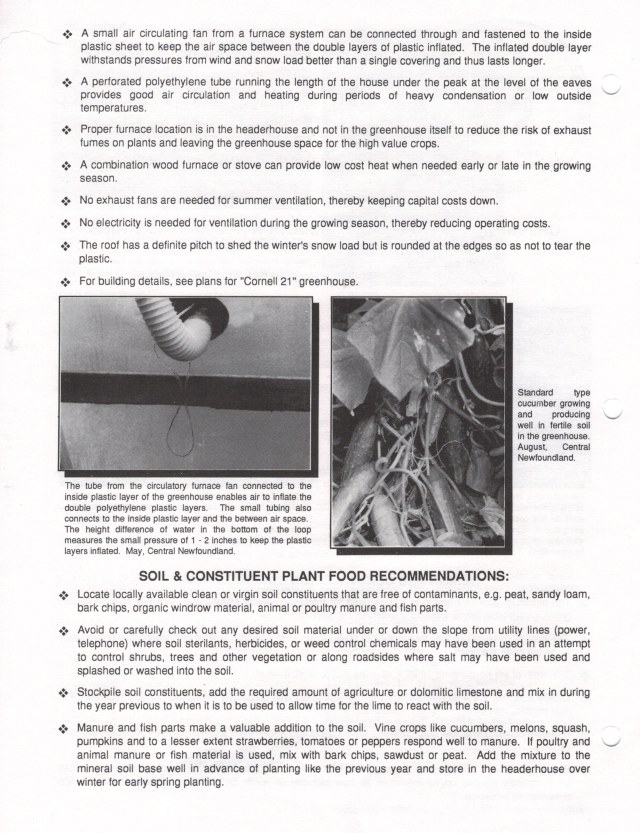
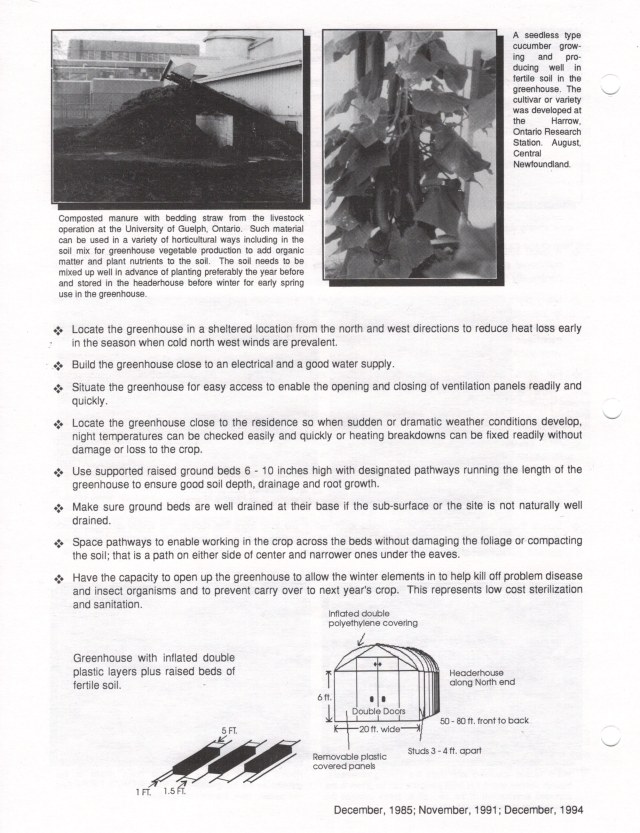
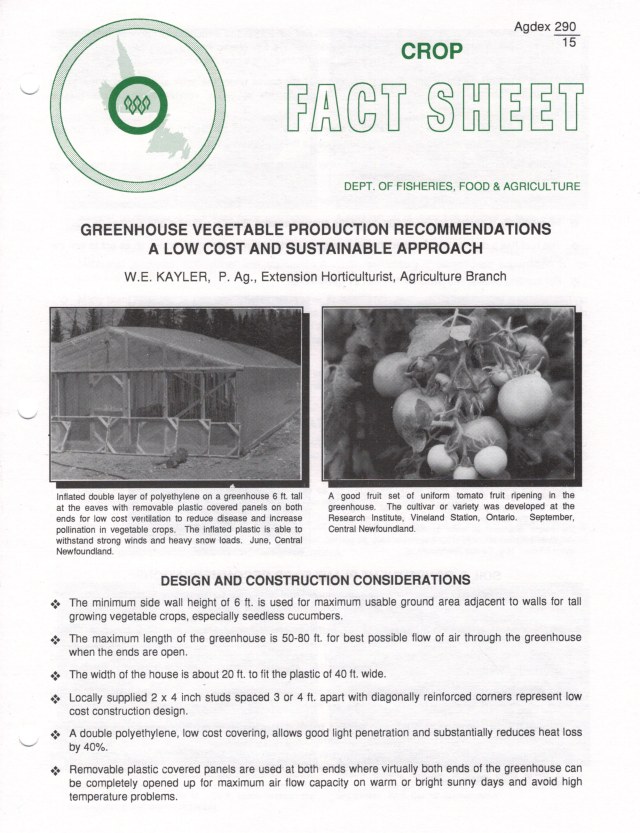
As indicated in the previous e-mail of July 7, 2013, Part ii, GreenHouse Orientation & Development Plus Garden Recommendations are attached;  The GreenHouse Crop Fact Sheet Authored earlier, appears below in four pages. Voila !

To help prepare the Garden & GreenHouse Site for the next  Growing Season,  the lawn grass needs to be brown & turned over so it has a chance to be decomposed before this time next season.

My beautiful picture

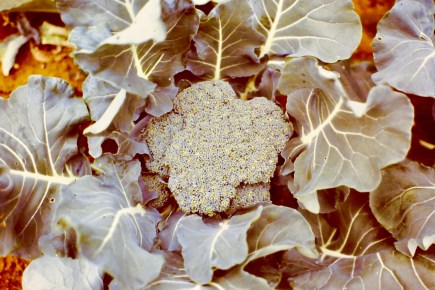
Broccoli Grows Well In The Cool Climate Near The Start & End Of The Growing Season. No Pesticides Are Needed In Central Newfoundland.

Available at garden supply/nursery outlets are rolls of black porous nylon/polyethylene weave material to cover the grass & weighted down with rocks/weights on top. The artificial porous mulch material blocks out the light but allows the rain water through. The artificial black porous plastic nylon weave mulch material is designed to prevent weed growth but not restrict water from reaching the Tree & Plant roots where it is being utilized. The additional area being covered during this summer would allow more time in the late summer early fall to turn in the  brown dead sod for the start of early decomposition in preparation for the next growing season.

Thank You Letter,   July10/13
Wow, wow, wow! I have yet to truly “dig” (hah,hah) into your e-mails here about the Vegetable Garden and Greenhouse but at first glance I can see I have just received “Gardening 101 by Uncle Ed”.

CabbageSeedlingsGHPoly

Cabbage Seedlings In The GreenHouse With Double Layer Polyethylene Plastic Covering Being Grown & Hardened Off  In Preparation For Later Trans-Planting In The Garden Or Field  After The Risk  Is Over Of Night Time Frosts. 

Have you thought about a Video series on your Sustainable Lawn Web Site? Your passion for your work would come through beautifully in video. Too bad you’re not here on an extended stay, we could work on the project together and record as we go !
Thank you, thank you for helping point me in the right direction (literally with Greenhouse orientation !) I just killed the potted strawberry plants on my deck.The kids are not pleased with me. Perhaps I will have better luck working directly with Mother Earth.
I will send pictures as I go. My Plans are to devote time in August to working up in the Orchard.  We leave next week for Vancouver Island and Kootenays for some much needed   R & R with Family.
Muchest Love To You Both !
Elisha, Kelly, Olivia & Zakk   Kittson,   Okanagan North,  BC.
GreenHouse Crop Fact Sheet  By  W.E. Kayler,  P.Ag.  Extension Horticulturist

Fact Sheet Greenhouse Veg.jpg

Fact Sheet Greenhouse Veg 2.jpg
Fact Sheet Greenhouse Veg 3.jpg
Fact Sheet Greenhouse Veg 4.jpg

Congratulations & Comments !

Outstanding Web Site !       Congratulations !               Kathleen  Browne,    The Canadian Cancer  Society,  Grand Falls-Windsor,  Newfoundland & Labrador

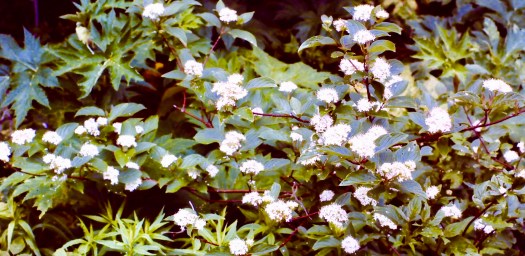
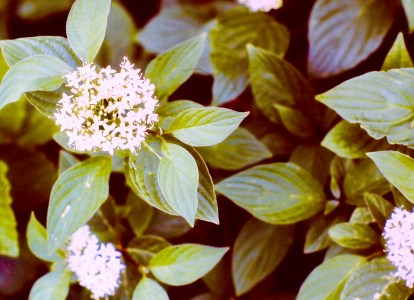
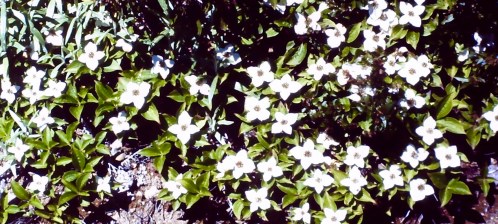
DogWoodBloomWhite

The Dog Wood Shrub In Full Bloom With Its Hard Wood & Red Bark Adds To The Bio-Diversity Of The Ecological Sustainable Horticultural Plantscape Garden.

Hi Ed,       So nice to hear from you. I thoroughly enjoyed working with you and Margaret and your never-ending enthusiasm. Thank you for inviting me to be a part of this endeavour.  I hope our paths cross again in the future.   Best of luck!                                                                              Judy Dobson,     Collage  Of  The North Atlantic,    GFW.  NL.

Ed,   Thank you so much for sending me this information of the Web Site.  I was thinking about you just yesterday.  Great job !   The Web Site is so Informative.   I only wish I could have done more.  I will certainly share your Site with other people who care about the Environment.                                                                                                                       Sheila Trask, BA, MA.,     Collage Of The North Atlantic,   GF.W.  NL.

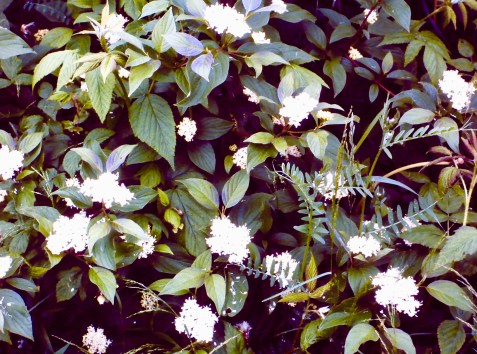
My beautiful picture

Healthy Dog Wood Shrub In Bloom Growing & Being Fed With The Legume Purple Vetch.

Dear Edward,   Congratulations !     Dr. David Saltman, Chair, Oncology Discipline, Faculty Of Medicine, Memorial University Of Newfoundland.

I have relocated to British Columbia. If I can be of any assistance in the future, please don’t hesitate to contact me.                                      Cancer Research, BC.

Ed,       This is a very Impressive   Web Site.  Thanks for sharing it with me. It strikes me as a reasonably well balanced approach. You won’t get everybody all at once. I think  the people that will be most focussed on this will be the private and the public who are trying to cut their carbon footprint.                                                 Bob Macdonald,   Niagara Peninsula,  ON.

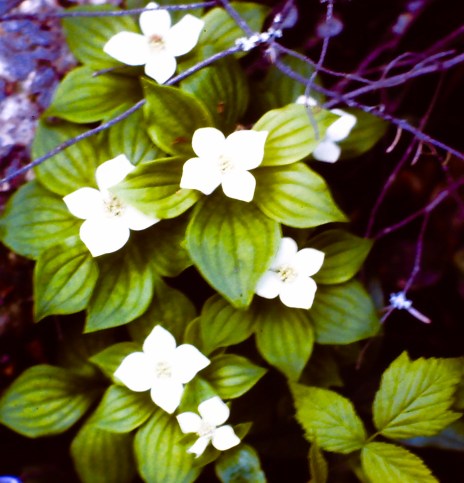
DogWoodBloomWhite

A Picturesque Close Up Of A Solitary Flower Of The Dog Wood Shrub.

Ed,       Fantastic job!  A very professional and informative Web Site. It will definitely change perceptions and create a Better Environment for all of us.  Thanks from a member of the human race.                                            Tony Grice,  Vancouver Isl.   BC.

Cool !      Dad said it best. We mere humans owe you a big high five. I’ll get after Kelly now for his lawn tractor activities in the summer months.                                                                                    Elisha, Kelly, Olivia & Zakk Kittson,  Okanagan North,  BC.
Hi Ed,        Thanks for your Web Site information.             Dave Spencer, Medicine Hat, AB.

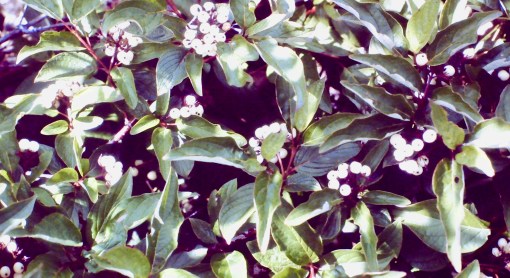
DogWoodBerriesWhite

The White Berries Of The Dog Wood Shrub With The Distinctive Red Bark Attract Song Birds In The Plantscape Of The Ecological Sustainable Horticultural Garden.

Dear Mr Kayler,   I am so happy you have your Web Site up and running. It was great showing you about on your mac lap top. I really enjoyed working with you.    I was on your Web Site and it looks incredible.   It is very informative.   I wish you all the best in the future.                                       Crystal Hurley,    Facilitator, ‘Hands On’ Computer Workshop, Harmsworth Public Library,   GF.W.  NL.

Hey Bud;    The Web Site looks good ! Lots of pictures makes it colourful and interesting to viewers.   Keep up the good work!                                       R.Kayler,             Edmonton, AB.

Wow !   Beautiful Web Site !   Congratulations !  I will take some time to digest the information and get back to you later.  I look forward to reading through the entire site.                                                            Pamela Ades, P.Eng.      Okanagan North, BC.
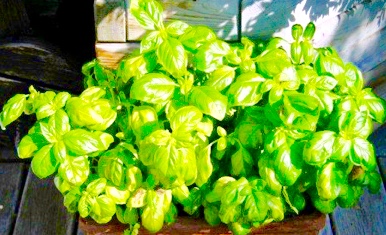
Sweet Basil Herb, Handy To The Kitchen & Meal Preparations.

Sweet Basil Herb, Handy To The Kitchen For Meal Preparations.

Thanks Ed,   for the very Interesting Web Site/Blog. I liked the photos of you, very snappy and Margie/Halle, very beautiful and gentle. I have already sent the entire information to Daughter,  Katrin who is involved in Environmental matters. One of the groups she works with regularly is LPCS….Learning Partnership for Creative Sustainability… Yes we have a huge Compost area and all our compostables get saved…….                                                Patty/Hans Lueth,                 Innsbruck, Austria

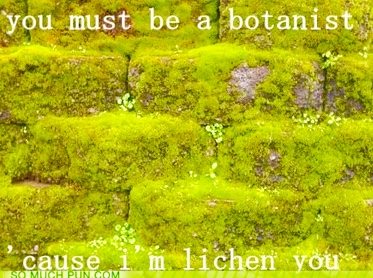
Lichen, Caribou or Reindeer Moss

Lichen, Caribou or Reindeer Moss

Dad,  Thank you for giving me such a great passion for nature, the love of the outdoors & an appreciation of all the plants, the edible ones that feed us & the medicinal plants that heal us.

Composting, reducing, reusing & recycling are great values for everyone to have & I am proud they are mine too.                                                                                                                                                                                                                   Tana Kayler,   MEd,   St.John’s,  NL.

Hello Edward and Margie,    That certainly is a major project and a daunting task for us to comment on the green lawn project.  We are impressed by the sheer magnitude and the details.  I think that you have been working on The Web Site for some time and it is exciting  to see it come to fruition. I will keep in touch and the Sustainable Lawn Web Site is on file here. Thanks Edward, we will watch your Web Site with interest.                                                         Diana Lanier,  Lethbridge,   AB.

BunchBerry

Bunchberry Ground Cover in Bloom, Central Newfoundland.

I forwarded your email on to our eldest  Son, Sean as he has a new address. I have started reading the Categories on your Web Site and enjoying it….lots to look through so will get back to you in a few days with a report!         Love,  Marilyn Grice

Hi Ed,     Such an Interesting Web Site and Blog on your Sustainable Projects, especially for us as Master Gardeners. I love the picture of Margie with your new grandchild.                   Linda/Sandy Grimwade,  Bala Cynwyd, PA

Ed,  You have certainly put a great deal of time and thought into your Web Site and it has given me a new perspective.  One convert at a time, right?

Distinctive & Colourful Spring Tulip Flowers In A Warm Moist Environment.

Distinctive & Colourful Spring Tulip Flowers Flourishing In A Warm Moist Lower Mainland Climate.

I have included a photo. I really like what you are doing Ed, and I think that the time has come when we all need to pay more attention to what we do. I am gradually turning our back yard into a Veggie Garden Area, but not good enough. You have got me thinking though and certainly I will be more cognizant of the timing of grass mowing in the summer. Guilty!!!!! Guilty!!!! The only good thing we do is that the mower throws the clippings back onto the lawn. It is interesting to see the front yards in East Vancouver.  One front yard was a dedicated garden and a big crop of asparagus and onions that were  adjacent to the sidewalk.  It was straw mulched and looked very healthy.  Community gardens are becoming very popular here.                                Jean & Ron Lewis,  Abbotsford, BC.
“Glad to have your message,”  Clem Fisher.          I will follow your Blog. Love to Margie.        Keep in touch.                                                                     Pam Fisher,   Simco,   ON.

BunchBerryBloom

Bunch Berry In Bloom Ground Cover, Close Up, Central Newfoundland.

Hello,   I found the contents of the Project on the Web Site you forwarded to us very interesting and noted, we are pursuing quite a number of those Recommendations. Keep up the good work.      Mavis & Tony Page,   Calgary,  AB.

Ed,   That is an Impressive work…..the Web Site.…bit of a prophet you are ……love the photos.                                               Di Barker,    Harmsworth Public Library,   GF.W.  NL.

Ed,   Excellent Web Site… spent an hour reviewing the various categories… actually learned a lot. Thanks for  the heads-up.  I’ll pass it on to others.                   Ian Barrett,   Niagara, ON.

Bunchberry FruitRipe

Bright Red Ripe Bunch Berries Ground Cover, Central Newfoundland.

Hi Margie & Ed,     We checked out Ed’s   Web SiteVery,  Very  Impressive!!!   Lew & Elaine Whitt,  Olympia, Wa.

Edward,  During my stay here at the Library I have learned a lot & have met so many new people, I am so glad you were one of them. Thank you for making my time here so enjoyable. I had a great time helping you through your digital technology struggles. I hope our ‘One On One Sessions’ helped you conquer the digital technology & make you more comfortable to carry on without me.

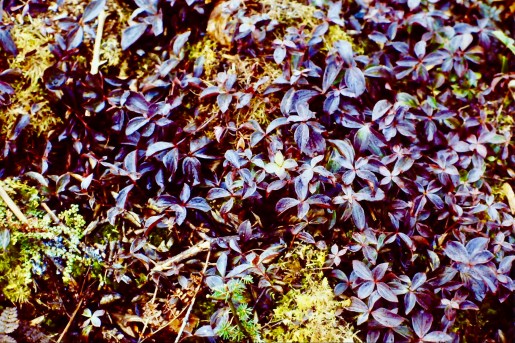
BunchBerryLeavesPurpleFall

The Foliage Of Bunch Berry Ground Cover Turns Colourful Deep Purple In The Autumn.

Thank You for being apart of my internship. I hope you learned as much from me as I have learned from you. I will make sure to keep up with your progress on the Web Site. Thanks.                       Mandy Healey,                       Facilitator, Hands On, One On One, Computer Work Shop, Harmsworth Public Library, Grand Falls-Windsor, NL.

A  Down To Earth Testimonial For A Sustainable Lawn Or A Low Carbon Footprint  Efficient Management Plantscape System 

For you, Edward Kayler, the “Garden Guru”.

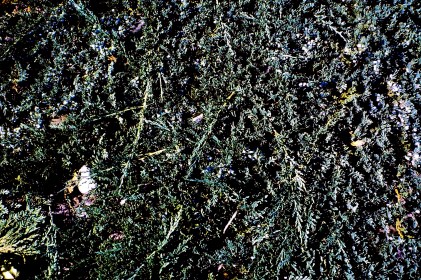
Low Growing Juniper Shrub, With Very Low Maintenance That Does Not Need Mowing !

Low Growing Juniper Shrub As A Ground Cover, With Very Low Maintenance That Does Not Need Mowing !

Our previous experience in Sherwood Park, out side of Edmonton Alberta, was a typical one for a rural acreage owner.  Loving the country, open spaces and a different, non urban lifestyle attracted us to this type of living.  The positives were not living in a mundane bland suburban subdivision, not living beside land with manicured lawns that incorporated industrial  landscaping including the use of pesticides, herbicides, chemical fertilizers,  freedom to live more freely without close scrutiny by neighbours & municipal authorities plus a safe and nurturing environment to raise children.  The negatives were that regular automobile use was required, the land developed for the acreage was farmland, many gasoline driven equipment, tools and vehicles were required to mow & trim the lawn.  One of the biggest polluters was the use of a  tractor to mow  2 acres of lawn around the house.

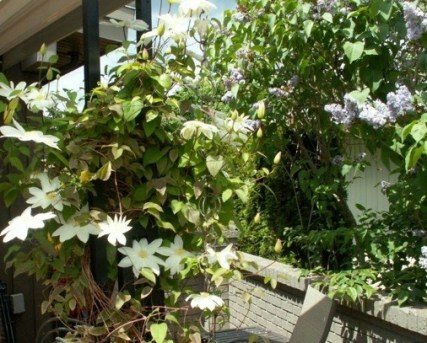
Clematis Tree Vine & Lilac With White & Mauve Flowers Around The Patio. The Flowers Of The Old Cultivar/Variety Of Lilac Have A Lovely Fragrance.

Clematis Tree Vine & Lilac With White & Mauve Flowers Respectively, Adjacent To The Patio. The Flowers Of The Old Cultivar/Variety Of Lilac Have A Lovely Spring Fragrance.

Although the lawn consisted of seeded & native grasses plus wild plants, it required 4 to 5 hours of mowing with a tractor every week to have a manicured lawn.  We found that the more the lawn was mowed, the more it needed to be mowed and the more it was mowed, the drier and browner the lawn became. Eventually we stopped bagging the lawn clippings,  allowing the grass clippings of natural mulch to stay on the lawn, reduce the mowing area and reduce the number of times of mowing the lawn to once every two weeks. The use of noisy and expensive machinery was still required resulting in a major cause of polluting. We resolved to avoid or drastically reduce all the expense, senseless repetitive work & pollution with our next house & surrounding lawn.

We were very fortunate to be able to move to Vancouver Island, BC and enjoy the warmer temperate climate. The culture in other parts of Canada that promotes industrial landscaping with manicured lawns in residential areas is not as prevalent here because the climate is so mild.  There are homes with grass lawns but many more that use alternative materials like gravel, beach stones, river rock along with species of low growing plants that are local to the area and do not require watering, fertilizers or mowing.

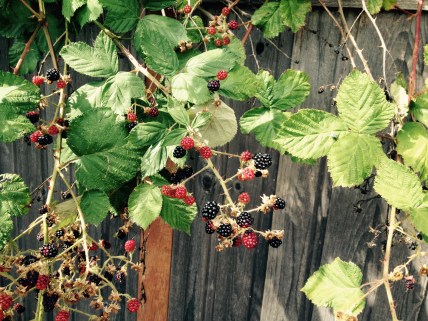
Blackberries Ripping On The Vine In Warm Sunny Weather.

Blackberries Ripening On The Vine In Warm Sunny Weather.

The land- & plantscaping around our home utilizes many local plants like heather, junipers, cedars, lilacs, flowering plants, trees  & shrubs incorporated adjacent to pathways, front and rear patio areas. Local flowering, ever green plants, shrubs & trees are strategically located in specific areas of the garden for aesthetic value, wind break protection, shade & shelter.

We consider the surroundings around our home to be much more interesting, vibrant and colourful than a house with a grass only monoculture lawn. It requires minimum maintenance, doesn’t turn brown if it doesn’t rain for a couple of days and saves a lot of money.  The best part in this transformation is not owning  a lawn mower !  We owe a debt of gratitude to Mr. Ed Kayler for his expert advice and the supply of human powered tools required to seasonally prune, shape or repair some of the plants, trees & shrubs.

OLYMPUS DIGITAL CAMERA

Marilyn Grice, Real Estate Agent, A Liason With Edmonton Police & The Public.

OLYMPUS DIGITAL CAMERA

Tony Grice Electrical Engineer For The Environment.


Parents of 3 boys & 1 girl plus Cub Leaders.

Vancouver Island, BC.
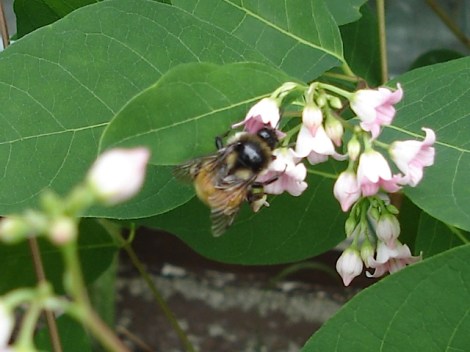
Image 2-16-16 at 12.12 PM


A Weed is a Plant in the Wrong Place Or Position. A Potato Plant in a newly seeded Forage Field could be called a weed in this particular case. The Potato, A Healthy Nutritious Cultivated Food Plant is not therefore normally a weed.

My beautiful picture

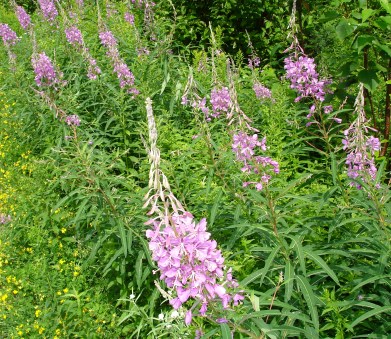
Fire Flower, The Floral Emblem Of The Yukon Territory, In Full Bloom. This Plant As Described Is Not A Weed !

The Fire Flower, Chamerion angustifolium, Great Willow Herb, a perennial herbaceous plant in the willow herb family Onagraceae is sometimes called a weed. The Fire Flower makes Premium Honey by Honey Bees in The Peace River Country of Alberta & British Columbia. The  Distinctive Bright Red/Pink Flower is commonly found in Newfoundland & Labrador plus it is the Floral Emblem of the Yukon Territory of North West Canada. For these Beneficial & Legitimate Reasons, The Fire Flower Is  A Beneficial Wild Plant & Is Definitely Not A Weed.

DSC05935

Fire Flower In Full Bloom.

The Plant Or Herb of Dill, Anethum graveolens, commonly used as a Herb  or Spice in pickling cucumbers, red beets or in sauces for different foods like salmon. For these reasons, When Used Beneficially As A Food Plant or Herb, The Dill Plant Is Definitely Not A Weed.

We have an array of alternative Beneficial Plant Utilization Categories  to be considered before designating a particular Plant a weed. What should be determined, is what kind of a Plant in what category a Plant truly belongs to?  Does the Plant belong to a Beneficial Plant Utilization Category as in the following:  Beneficial Plant Utilization Categories;              Examples:         Local Food, Herbs,

A] Indigenous/Wild/Native Plants Low Bush Blueberries;                                                                                                                                                                            Raspberries, Strawberries, Chives, Mint

My beautiful picture

Wild, Native, Indigenous Strawberries At Peak Harvest. These Strawberry Plants Are Growing With Other Indigenous Plants Which Are Natural, Beneficial & Are Companion Plants Not  Weeds.

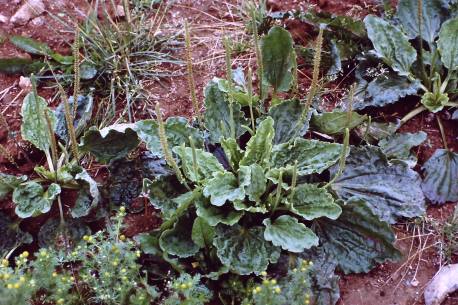
My beautiful picture

B] The Centre Plant With The Vertical Flower Heads & Seed Stocks Is Plantain, A Medicinal Plant. The Other Plants Growing Here Are Compatible Beneficial & Companion Ground Cover Plants & Are Not Weeds.


B] Medicinal  Plants: Plantain, Red Clover, A Legume.

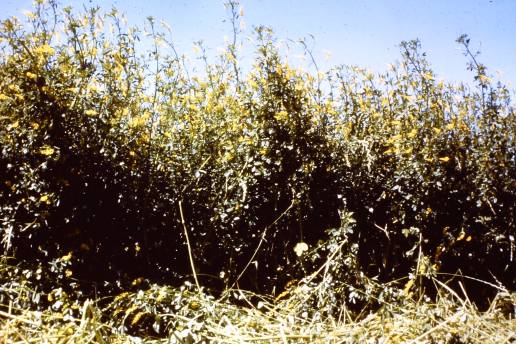
My beautiful picture

C] Yellow Blossom Sweet Clover 5-6 Feet Tall Being Cut For Feed To Dairy Cows.


C] Soil Enrichment Plants: Yellow & White Blossom Sweet Clover, Legume Plants.

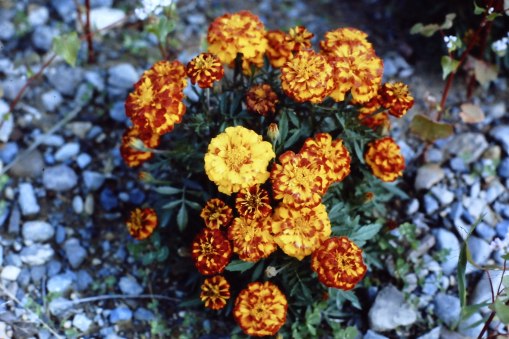
My beautiful picture

D] Marigold Flower Thwarts Off Sucking Insects For the Benefit Of The Neighbouring & Companion Plants.


D] Companion Plants Thwarting Off Insect Pests From Neighbouring Plants: Marigold, Onion, Garlic

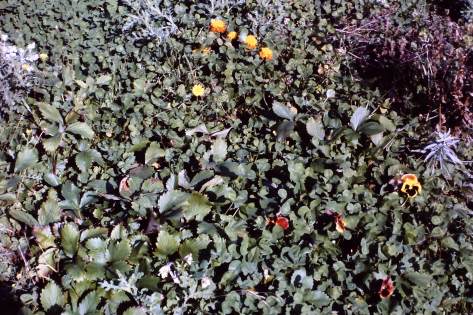
My beautiful picture

E] White Clover, A Legume  Nourishing The Native Strawberries, Marigolds & Pansies  Plus Growing As A Living Mulch Keeping The Weeds Down.


E] Living Mulch & Soil Fertility  Enhancement Plants: White Clover, A Legume.

My beautiful picture

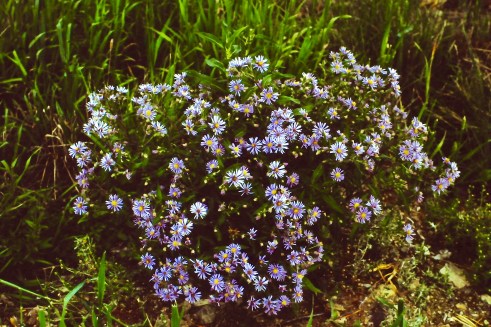
F] Native Purple Aster In Full Bloom.


F] Wild Flower/Native or Indigenous Plants: Rhododendron, Kalmia, Orchid, Purple Aster

My beautiful picture

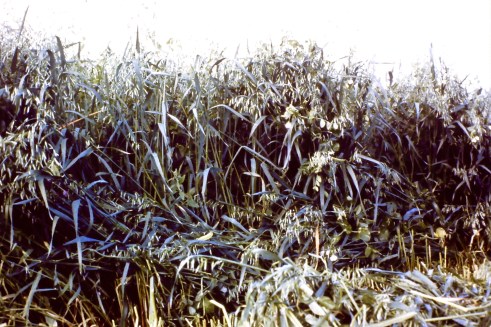
G] A Healthy Oats, Peas & Vetch Soil Improvement Combination Plus Feed For The Dairy Cows. A Sustainable Crop Fed By The Legumes Peas & Vetch With The Liquid Plant Food Of Dairy Manure & Milk Parlour Soapy Wash Water Irrigated By Sprinkler To The Soil Before Planting.


G] Soil Structure Enhancement Plants: Oats, Fall Rye, Alfalfa+Timothy

My beautiful picture

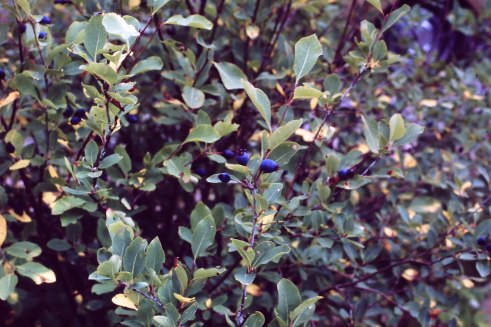
H] A Native Saskatoon Shrub With Edible Ripe Pear Shaped Blue Fruit.


H] Fruit & Ornamental Plants: Native Shrubs Elderberry, Saskatoon

My beautiful picture

J] The Queen Of Forages, Alfalfa, A Healthy Robust Legume Crop With No Weeds.


J] Drought Tolerant

AlfalfaRoot6'Down+Across

A Young Healthy Alfalfa Plant With An Extensive Penetrating Root System That Can Grow Down & Across 6 Feet In Both Directions.

Ground Cover Plants:

Alfalfa+Crested Wheat Grass.

DSC02153

K] Wild Bee Pollinating The Flower Of The Flowering Dog Bane Plant.


K] Honey Producing Plants: Fire Flower, Flowering Dog Bane, Pumpkin, Squash & Cucumber Flowers.

My beautiful picture

L] Bird’s Foot Trefoil, A Legume Plant Grows Well On The Slope After Land Alterations Where The Top  Soil Is Limited.


L] Soil Stabilization Plants On The Slope: Bird’s Foot Trefoil, Alsike Clover [Legumes] plus Annual & Perennial Rye+ Creeping Red Fescue Grasses.

My beautiful picture

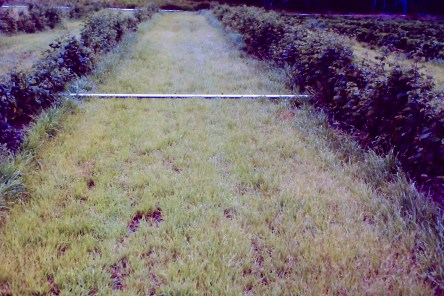
M] A Grass Cover Crop [Especially With A Legume To Feed The Grass] Growing In Between The Raspberry Rows, Clipped 2x A Year Keeps The Weeds Down.


M] There could be other examples of  the right Plant Utilization Categories being used  as we become more knowledgeable & familiar with a particular plant in our environment. Quite often a plant is called a weed because little is known about it or it is not common in a particular part of the world where we live.

My beautiful picture

N] The Native Orchid, Lady’s Trusses In Full White Bloom Is Growing Amongst The Native Strawberries In The Ecological Sustainable Garden. Because It is Not Mowed Like A Mono Culture Lawn, Nature Has Provided A Rare, A Little Known Or Appreciated Secret Blessing That Is Very Difficult To Grow Even In The Greenhouse. This Orchid, A Rare Species, A Companion Plant & Is Not A Weed Here!


N] Land has been cleared for development & with the clearing all the inconspicuous, small & even the Native Fruiting Trees & Shrubs get obliterated in the devastating process, particularly if it is done after the deciduous leaves have fallen. No Plants, Shrubs or Trees are healed in & put aside for later use in the Land- & Plant-scaping process as is done with the Rich Black & Dark Brown Top Soil in North & Central Alberta around Edmonton.


My beautiful picture

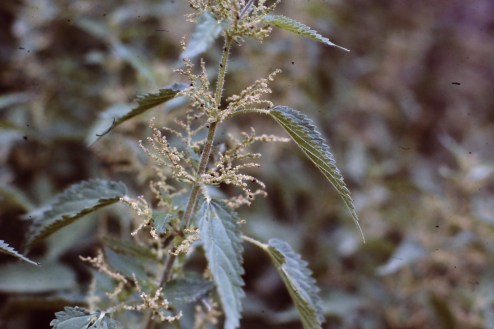
O] The Stinging Nettle Plant Is A Valuable Food & Medicinal Plant. Although It Originates From Europe, It Does Very Well Here. If The Beneficial Plant Is Not Utilized Or Its Attributes Are Unknown, It May Be Called A Weed.

O] If the plant is a Noxious or Invasive Species & is troublesome, then the term weed could legitimately apply. However, may be its purpose or the advantages are not completely or commonly known?

.


Refer To The Key Section: Under The Category, The Sustainable Lawn“The Objectives And Benefits To Positively Affect Climate Change And Health”

                               Bishop’s Falls Fighting Purple Loosestrife                                                                                                                                                                                          The Advertiser,  Grand Falls-Windsor, NL.  Mon. Sept  30, 1996, By Michelle Jesso

SCHOOL, SCOUTS HELP COMBAT INFESTATION

The battle against the Purple Loosestrife continues to be waged in the Exploits Valley. The latest attempt to control the Invasive Purple Plant is in Bishop’s Falls, where the plant was first discovered in Central Newfoundland more than four years ago. Ed Kayler, an Extension Horticulturist with the Department of Forest Resources & Agrifoods, has voluntarily taken up the plight of reducing & eventually eliminating the existence of the plant in this area & calls upon community groups to assist in the effort. The beautiful flowering plant can easily fool people into making it an addition to their gardens but that act would not help the fight to get rid of the botanical nuisance.

My beautiful picture

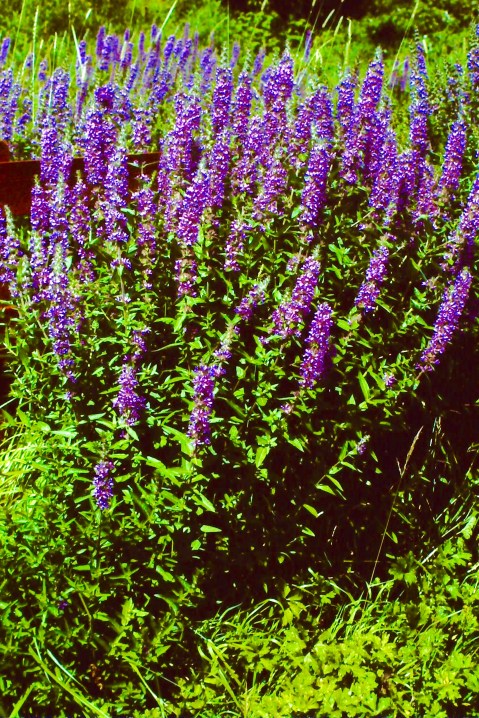
Purple Loosestrife In A Garden, Spread From A Drainage Ditch In A Residential Area Of Charlottetown, Terra Nova National Park, NL

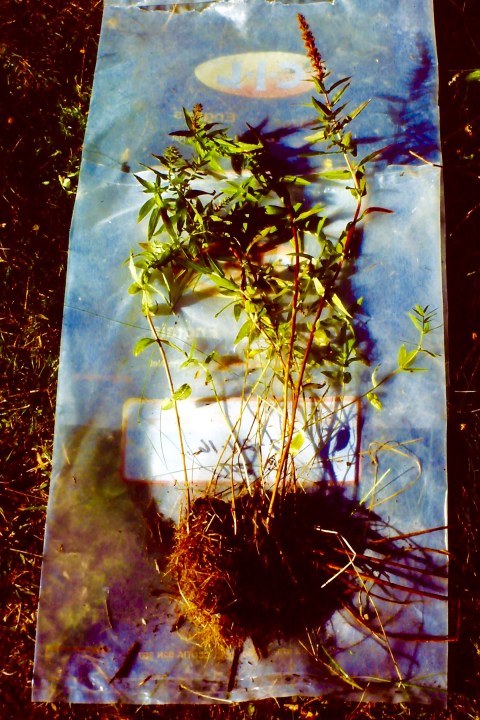
The Purple Loosestrife has distinguishing features upon close examination such as its height, which ranges from three to six feet; its stalk[s], which is square & woody; its leaves, which have smooth edges & are attached directly to the stalk; its flowers, which have long pink-purple spikes & bloom from June to September.

Once it gains a foothold in any wetland, it destroys the natural habitat.

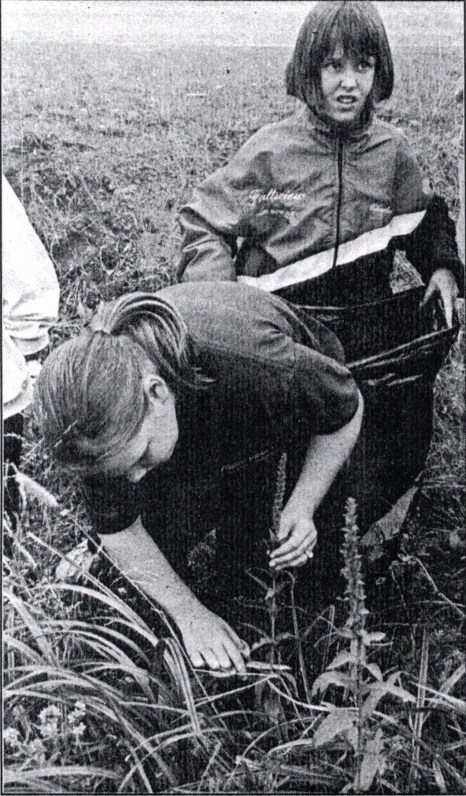
Kayla Walsh learned how to remove Purple Loosestrife Plants in Bishop's Falls area.

Kayla Walsh Learned How To Remove Purple Loosestrife Plants Including The Flowers With Seeds & Roots In The Bishop’s Falls Area, Central Newfoundland.

Local Efforts

The Horticulturist was joined by the Fourth Knights of Columbus Scouts & Ventures Troops plus  several Science Students of Helen Tulk Elementary School’s Global Education Program to nip the problem “in the bud” at the bottom of the middle access road leading into Bishop’s Falls. They were told by Mr. Kayler to keep an account of how many plants they dug up & were given Tally Sheets [See Bottom Of Page] for Recording The Number Of Flower Spikes & Plants plus shovels, scissors, garbage bags & crow bars to ensure the entire plant & root were recovered. “These are young plants which means we have a chance in controlling the population” said Mr. Kayler. “In some areas, the seeds have been there for a while. In this area, it is an intersection which has running water that can lead to spreading of seeds & infect other areas.” Mr. Kayler said the local effort displayed by the Scouting Group & the Schools’s Science Class is an education for them about the plant, what it does to the natural habitat & how it can be controlled.

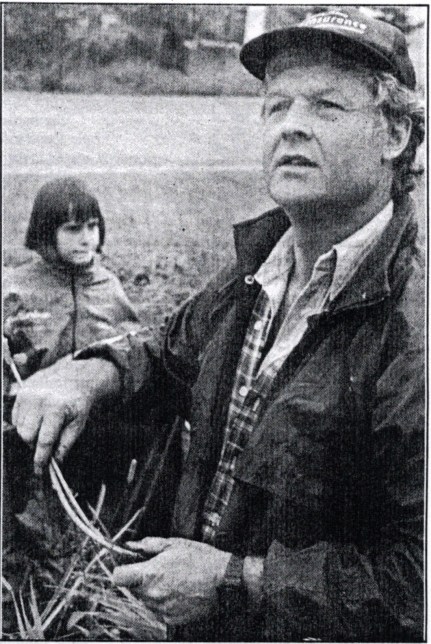
Ed Kayler, an Extension Horticulturist with the Dept.Forest Resources & Agrifoods, has been actively involved in trying to control & eliminate Purple Loosestrife in the area. His latest project,with the help of Scouting Troops & Helen Tulk Elementary Students, was to go into Bishop's Falls at the bottom of the middle access road to dig up the Plant & Prepare them for Composting.

Ed Kayler, An Extension Horticulturist With The Dept.Forest Resources & Agrifoods, Has Been Actively Involved In Trying To Control & Eliminate Purple Loosestrife In The Area. His Latest Project With The Help Of Scouting Troops & Helen Tulk Elementary Students, Was To Go Into Bishop’s Falls At The Bottom Of The Middle Access Road To Dig Up The Plants & Prepare Them For Composting.


He showed them how to remove the roots, which can grow as large as a football, dry them & place the plants in garbage bags to put into a compost pile, behind the local Catholic Church.”That way the Scouts can keep a close eye on the pile through out the year, ”said the Horticulturist. “The have their meetings there.”

By contributing to the efforts to control the plant population in that area, the volunteer groups benefit through education. The Scouts & Ventures usually have to complete Projects in order to earn Badges. In this case, they would be able to earn recognition for Community Service, Conservation, World Conservation & work towards their Chief Scout Badge.

For Helen Tulk Elementary, this is the fourth year it has been involved in the attack on Purple Loosestrife. Students involved in Global Education at the School, under Teacher Sandra Knight, plus three other Teachers, means they can work toward Earth Status in the Program. The School has already achieved Emerald Status, which means it has completed more than 600 Projects In Environmental Awareness. Their Aim is to complete 400 more to reach Earth Status.

Weed Control Research & Demonstration Program For Purple Loosestrife

                                                                Tally Sheet                                                        

Location                                                        Site                                               Date


No. of Spikes of Blooms Per Crown                                                                  Total

       1        2       3       4       5       6          6+                                                        

                 No. of Stems Per Crown                                                                     Total

        1        2       3       4       5        6          6+                                                         

                  No. of Crowns                                                                                      Total

       1        2       3        4       5        6          6+                                                            

Student Participants                                                                    Coordinator

Contributing Organization or Institution 

                                                                                                  NL AgriFoods, Bishop’s Falls 

My beautiful picture

A Well Established & Densely Populated Colony Of Purple Loosestrife In An Aquatic Environment.


Purple Loosestrife or Lythrum salicria of purple spikes or columns of flowers may look beautiful but it is an aggressive plant & is very troublesome. It is choking out many beneficial plants in wet areas including Bull Rushes or Cattails bordering lakes, ponds & canals so that water fowl & wildlife are deprived of their habitat.

A Robust Healthy Purple Loosestrife Main & Sister Plants Flowering & Setting Seed

A Robust Healthy Purple Loosestrife With Main & Sister Plants Are Flowering & Setting Seed.


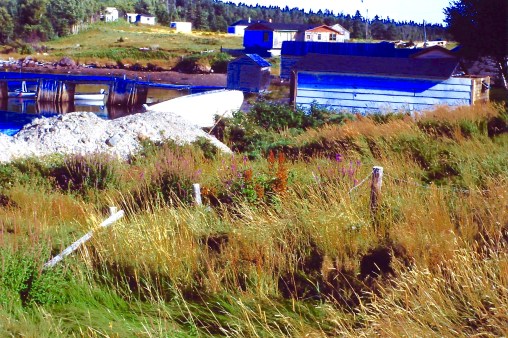
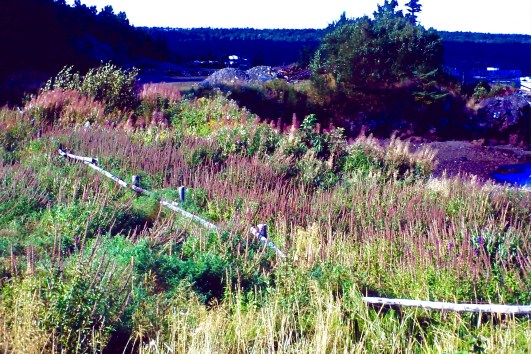
A few Purple Loosestrife Plants may be seen first along a ditch beside a road or highway & then they spread down stream into a lake or pond like in South Lake Okanagan, British Columbia.

My beautiful picture

The Tough Resilient Purple Loosestrife Plant With The Extremely Hard Root Needs To Be Dug Out In One Piece, Leaving No Root Pieces Behind To Continue The Infestation.


The Invasion from Europe to North America got started In The !800’s from the Eastern Sea Board of the United States along the Erie Canal near Buffalo, New York. Without it’s Native Predators in North America, Purple Loosestrife has spread across Canada & includes Saskatchewan, PEI & Newfoundland with heavy infestations in Quebec, Ontario & Manitoba. It is on The Noxious Weed List in Manitoba.

Early Infestations may be controlled by removing carefully the Flower Heads & placing them in plastic bags. The bags can be closed & placed in the sun near the Compost to ferment & render them not viable. At the end of the growing season after rotting, they can be Composted to the Bottom Of The Pile. The flower head removal can be done before mid growing season & before the seeds start to set & mature.

My beautiful picture

The Purple Loosestrife Plants With Roots Dug Out From The Drainage Ditch Are Left On The Gravel Shoulder To Desiccate & Freeze & Die Over The Fall & Winter.

The remainder of the plant can be removed by digging the whole plant up with a Soil Fork & Shovel without leaving any pieces of plant parts behind to Prevent new plants from starting. This operation is easier done with 2 people.The dug Purple Loosestrife Plants can be spread out near the Compost to dry out in the sun & wind plus to freeze during the winter months & composted afterwards.

DSC06540

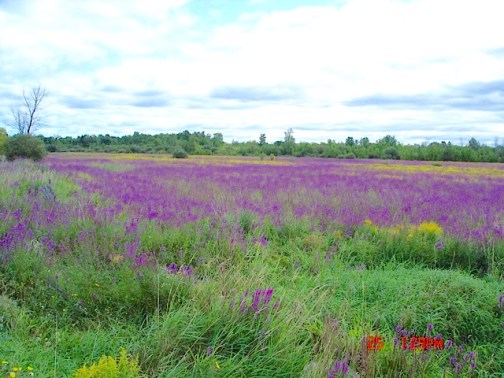
Starting From A Few Plants, The Infestation Of Purple Loosestrife Has Expanded To A  Densely Populated Field In Eastern Ontario, South Of Ottawa.


The Control Of This Invasive Species In An Aquatic  Environment is very risky & difficult but research is working on Biological Control Methods using The Plant’s Natural Insect Predators from Europe. They are a root weevil Hylobius transversovittatus, and two species of leaf eating beetles, Galerucella pusilla and Galerucella calmariensis. Testing has indicated that these species of insects feed only on L. salicaria or Purple Loosestrife and that the chance of a permanent host transfer is extremely low.

DSC06545

A Few Plants Of Purple Loosestrife Have Expanded To A Densely Populated Field Even Under Dryer Conditions  South Of Ottawa In Eastern Ontario.


The Biological Control Methods may reduce the severe infestations but may not eliminate the plant entirely because a certain number plants are needed to keep the Predator Insects in food & alive in enough numbers to maintain adequate control of severe populations of the Invasive Aquatic Weed Species, Purple Loosestrife.

My beautiful picture

The Purple Loosestrife Of Many Slender Purple Flower Stalks Stand Left Of Centre; The Very Similar Looking But Not To Be Confused With The Curled Dock Of Deep Reddish Copper Flower Stalks In Right Of Centre.


ENVIRONMENTAL IMPACTS OF PURPLE LOOSESTRIFE DEGRADING WILDLIFE HABITAT:

*displaces plants and animals

* replaces native wetland communities

*eliminates food and shelter for wildlife species

* reduces biodiversity

* impacts fish spawning habitats

My beautiful picture

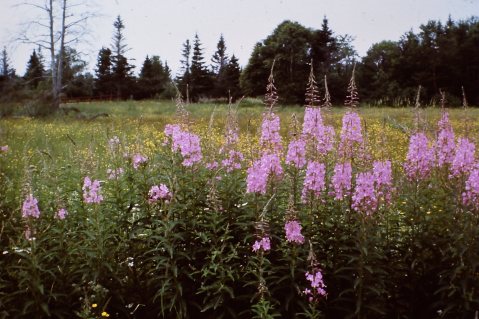
The Purple Loosestrife Of Deep Purple Slender Flower Stalks Are In The Foreground; The Very Similar Looking But Not To Be Confused With The Fire Flower Of Purple, Pink Flowers With White Seed Stalks In The Background.

* reduces available waterfowl habitats

* threatens marches, ponds, bogs & sloughs where a large portion of North America’s waterfowl breed

*impairment of recreational uses of wetlands

My beautiful picture

Similar Looking Plants To The Purple Loosestrife But Not To Be Confused Are The Fire Flower Of  Tall Pinkish Purple Flower Stalks Plus The Purple Vetch With Short Purple Flower Stalks.

DEGRADING AGRICULTURAL LANDS

* impedes water flow in drainage and irrigation ditches

* reduces crop yields and quality

* reduces agricultural land value

*threatens commercial wild rice production

My beautiful picture

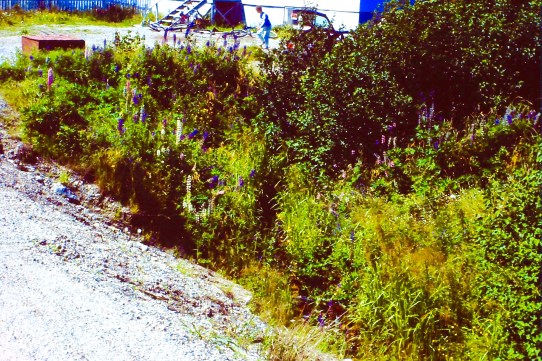
Flower Stalks Of Pink, Purple & White Lupins In A Drainage Ditch Of A Residential Area Of Charlottetown, Terra Nova National Park, Eastern Newfoundland. The Purple Pink Lupin Flower Stalks Could Be Confused With Purple Loosestrife Flowers !

With the support of Environment Canada, Canadian Wildlife Service, Canadian Wildlife Federation & The Canadian Nursery Trades Association, Ducks Unlimited  has spear headed an Public Awareness & Reporting Infestation Campaign complete with a colourful Brochure called “Purple Loosestrife”.

My beautiful picture

The Spiraea Plants With Purple Conical Flowers In The Current Year  Can Be Mistaken For Purple Loosestrife Flowers. The Brown Flowers Of The Spiraea Plant Are From The Previous Year. These Healthy Flowering Plants Were Found In Cornor Brook, Newfoundland.


Plant Killers or Herbicides are having a problematic & notorious effect on the environment that is wide spread & insidious with growing harmful side effects showing up not only to humans but to wild life.

My beautiful picture

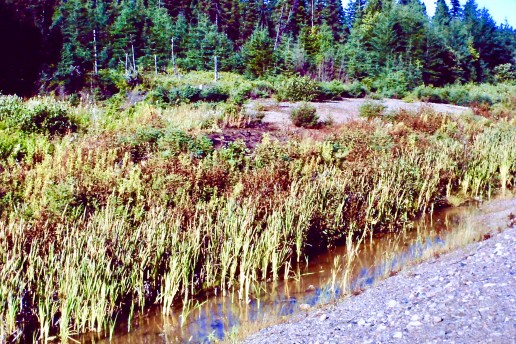
Local Pulp & Paper Co.Has This Area Sprayed With A Plant Killing Chemical Despite The Edible Low Bush Native Blueberries Ready For Picking.

With research focusing on the problems, more deleterious side effects to non-target species are being exposed. With the continued & increased use of Herbicides or Plant Killers, the contamination & harmful effects to humans & wild life is increasing substantially.

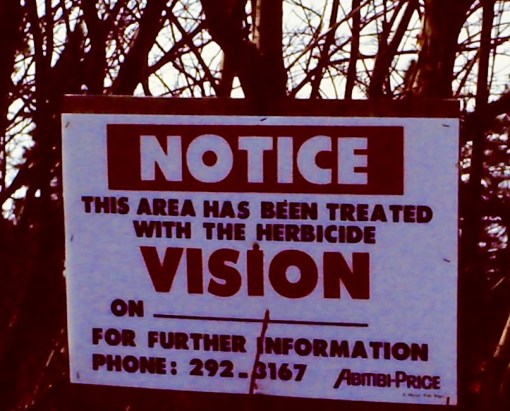
My beautiful picture

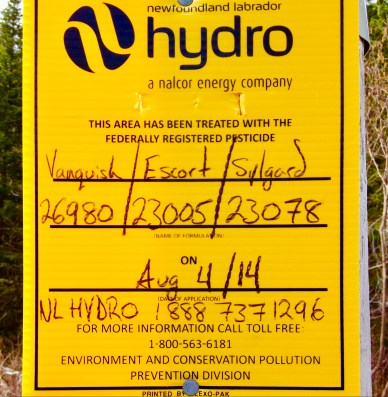
This Notice Of Chemically Sprayed Area In A Blueberry Picking & Moose Harvesting Area.


The experience in Vietnam with Defoliant Herbicides to Native Trees & other Vegetation revealed some startling & harmful effects on humans especially expectant mothers. In Canada, the Defoliant Herbicides or the Euphemism, Vegetation Management, is the term used with the application of such Herbicides. The main Chemical is called Brush Kill. The Product is used along fence lines, rights of way with power & communication lines, road & rail transportation routes.

At the time an alert came out from the chemical distributors to the Extension Crop Specialists with Agriculture in Canada that such chemical products were no longer recommended for use any where expectant mothers & children were active such as school & play grounds, recreational areas, parks, athletic & sports fields with no reason or explanation provided. Product information sheets were revised & product labels were changed.

My beautiful picture

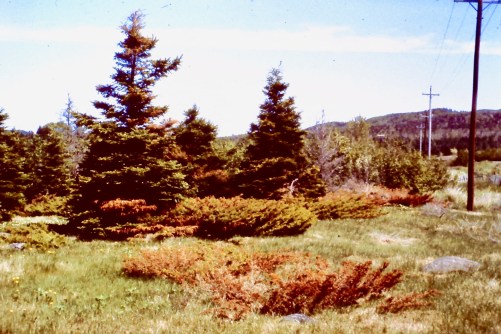
Under The Power Line Has Been Sprayed With Plant Killing Chemicals Including 2,4 D Where The Dark Soil & Peat Moss Has Been Dug For The Garden To Grow Fresh Vegetables.

The abrupt change in product recommended usage caught people by surprise in the field who deal with plant culture & growing concerns including chemical treatments like herbicide recommendations.

Agent Orange & Brush Kill Chemical Products are composed of the active ingredients of 2,4,5 T & 2,4 D. From the varied & increased use of these Wide Spectrum Herbicides under a different set of conditions & circumstances, some severe harmful side effects to non target species showed up because of the contaminate Dioxin. Dioxin is a highly dangerous Cancer Causing Agent.

Under The Power Line Has Been Sprayed With Plant Killing Chemicals Plus Non Target Low Growing Plants & Water Ways, Why?

Under The Power Line Has Been Sprayed With Plant Killing Chemicals Plus Non Target Low Growing Plants & Water Ways, Why? What About The Supervision & Accountability Of The Licensed Operator?

Unknown to people using the Herbicides, the Dioxin developed during the manufacturing process. The extent of Dioxin contamination differed amongst the different places in the world with the manufacture of these Defoliant Herbicide products.

It is of great concern that since then, the use of 2,4 D in Canada especially near expectant mothers, infants & young children continued on lawns & recreation areas with signs showing:

fullsizeoutput_28ab

Sprayed Poison ! Keep Off The Grass !

A skull & cross bones in black, a big red X through the centre, encircled with a big red O plus, Keep Off The Grass in bold print. Why do we continue to behave in away that indicates that we are not aware of the profound consequences of the use of Poisonous Chemicals that Kill Plants being used around our homes, green spaces, utility rights of ways, transportation routes, golf courses, recreational areas & sports fields?

My beautiful picture

Under The Power Line Has Been Sprayed With Plant Killing Chemicals Affecting Severely Non Target Low Growing Plants & Water Ways, Why? What About The Knowledge, Training & Competency Of The Spray Applicator?


In a letter to the Editor, The Advertiser, Grand Falls-Windsor, Monday August 13, 2012, Dr.David Saltman, Oncology Department, Memorial University, St. John’s, Newfoundland, NL. states emphatically, that the Government of Newfoundland & Labrador is Irresponsible & Illogical to continue with an indiscriminate spraying program using 2,4-D on Native Trees, Shrubs, Plants & Berry Fruits along roadsides & Rights Of Way.

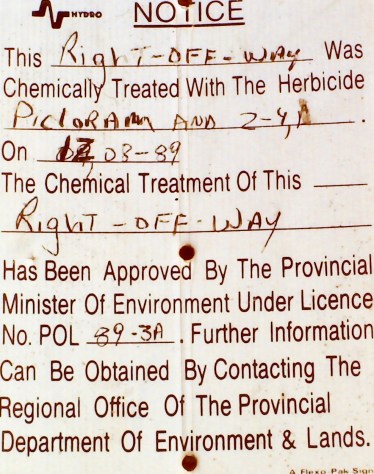
fullsizeoutput_29c4.jpeg

A Notice That The Power Line Area Has Been Sprayed With Plant Killing Chemicals In A Raspberry, Blueberry & Moose Harvest Area.

The Sprayed Succulent Vegetation of Shrubs & Trees, eaten by Wild Life like Moose are harvested for food & human consumption?

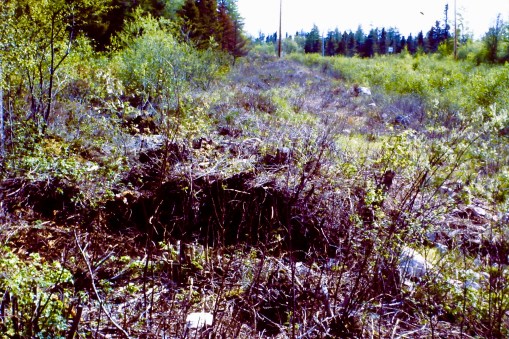
My beautiful picture

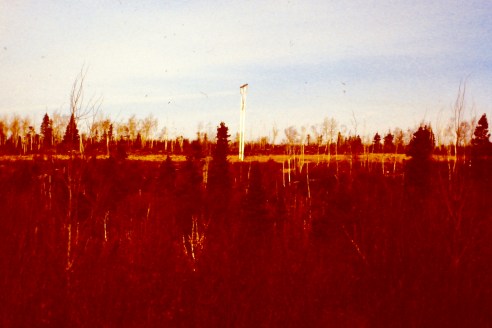
Under The Power Line Has Been Sprayed With Plant Killing Chemicals Over A Number of Years Destroying All Vegetative Growth In A Blueberry Picking & Moose Harvesting Area.

Of the Berry Fruits, Raspberries & Blueberries are the most commonly picked & harvested for food. In areas under power lines near road ways for easy access rich dark soil or peat that can be used in the garden to grow Food is often dug up with no knowledge the area has been sprayed with a weed killer.


A] Understanding The Ecological Perspective

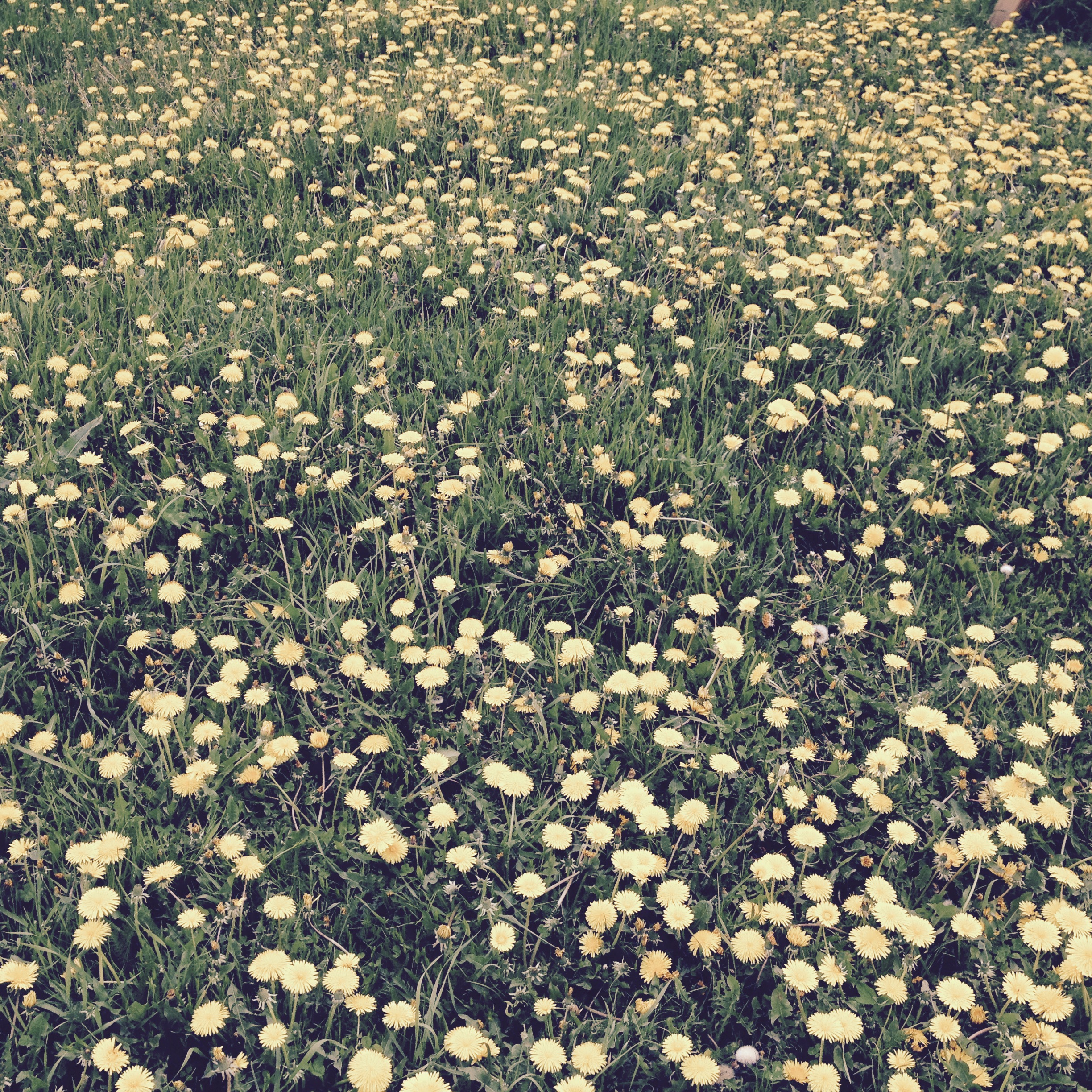
High Population Of Dandelions-Feast Or Weeds?

High Population Of Dandelions-Feast Or Weeds?

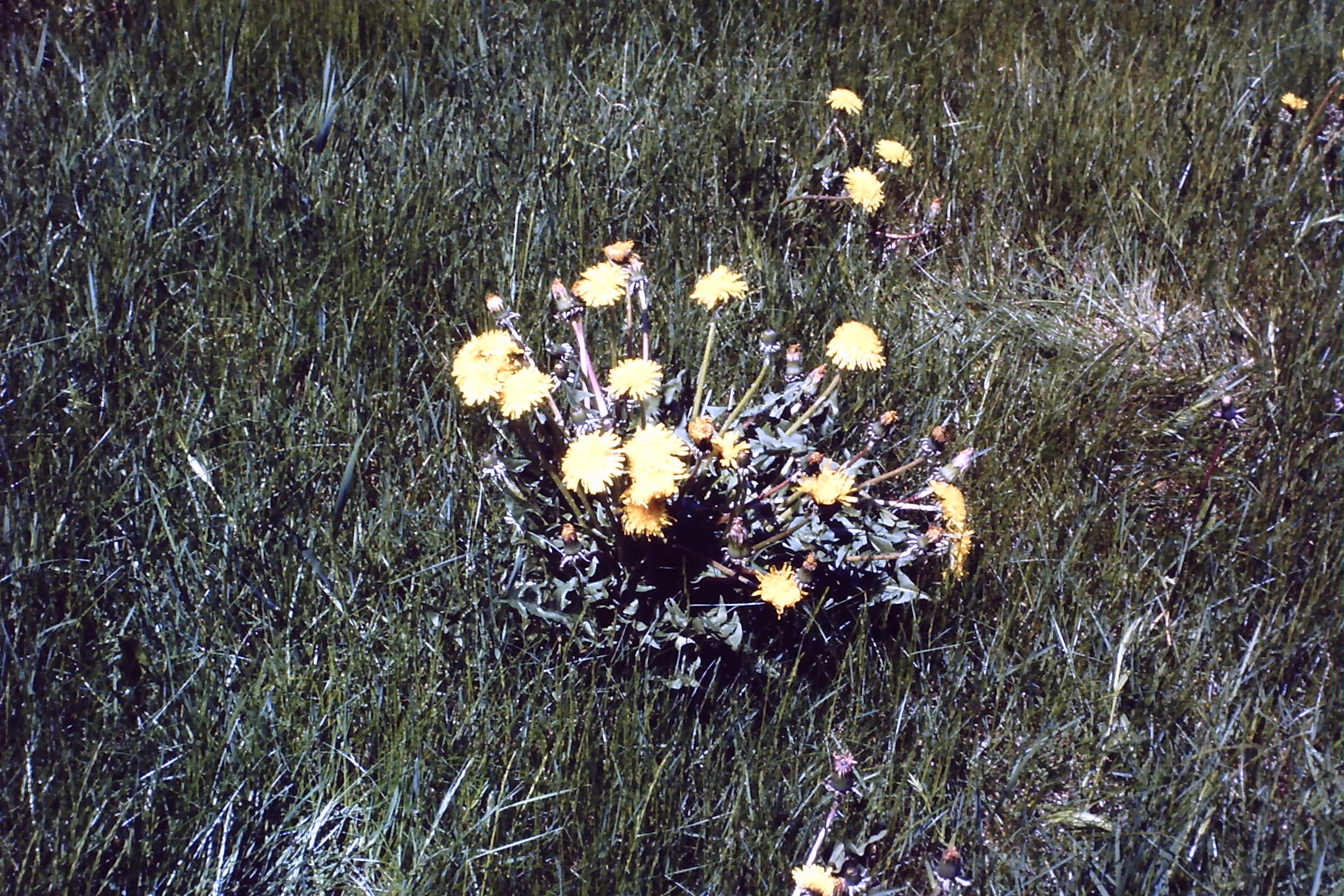
The Dandelion originates from Europe. Its natural enemies are not here in the same abundance to keep the invasive species in check. In a Robust Healthy Plant there are 120 Seeds per Flower Head plus there are 30-40 Stems with Flower Buds per Plant. By the shear numbers a new area can be infected very quickly & re-infected on a larger & larger scale a number of times.

A Dandelion Plant With 30 To 40 Blooms/Buds

A Dandelion Plant With 30 To 40 Blooms & Buds

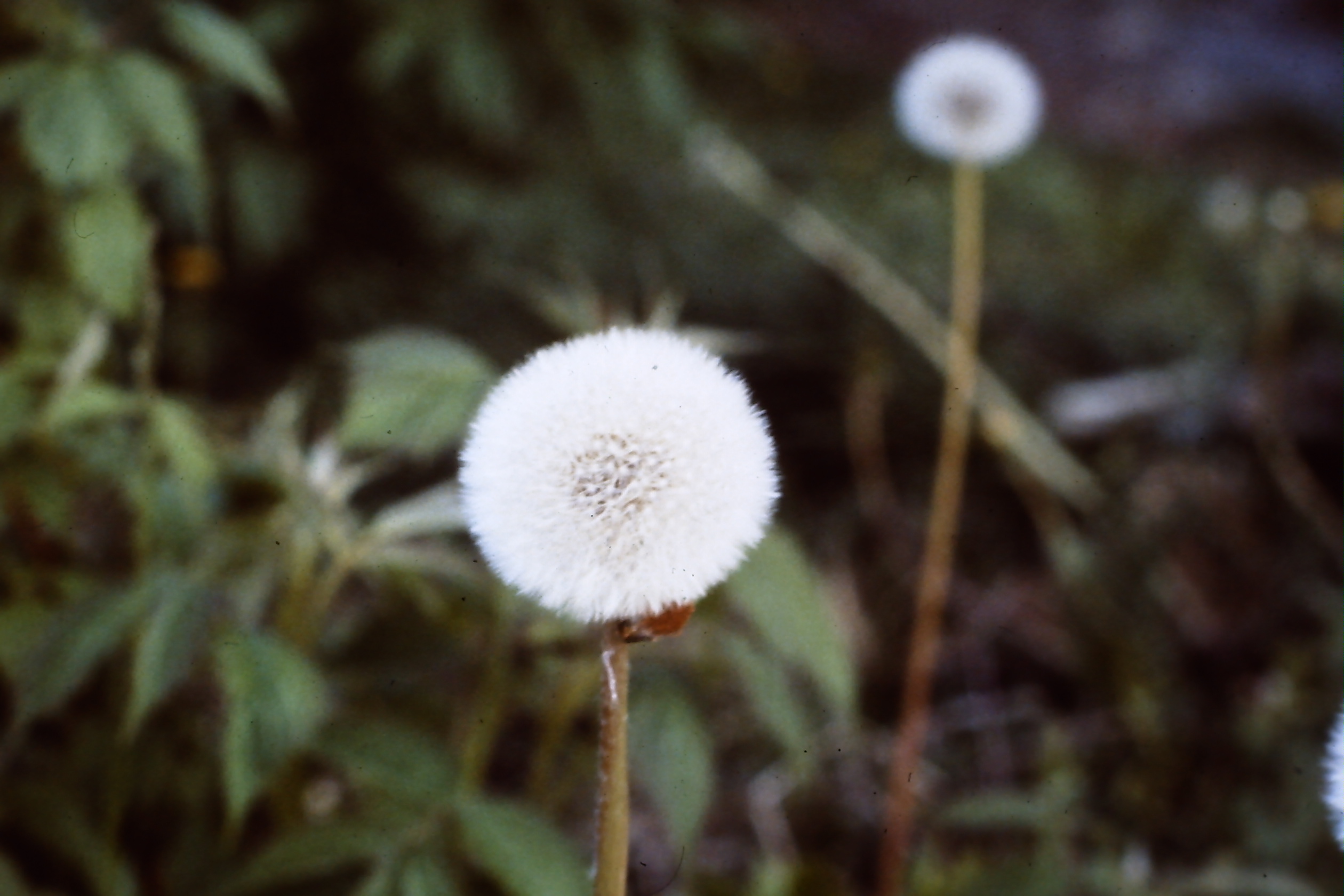
A Dandelion Seed Head Has 120 Seeds

A Dandelion Seed Head Has 120 Seeds.

B] Keeping Aggressive Imported

Plant Species Like Dandelion In Balance


All flowers/buds prominent in mid to the end of June in the Island Of Newfoundland can be picked off into an empty clear plastic bread bag & there by preventing the seed heads from developing.

  1. The first two steps can go along ways to minimize the same prolific spread of dandelion seeds.
  2. The plastic bread bag can be closed at the top & placed in the sun to cook & render the seeds, buds & flowers inactive.The contents can placed in the bottom centre of the compost pile at the end of the growing season or sooner if they have rotted.

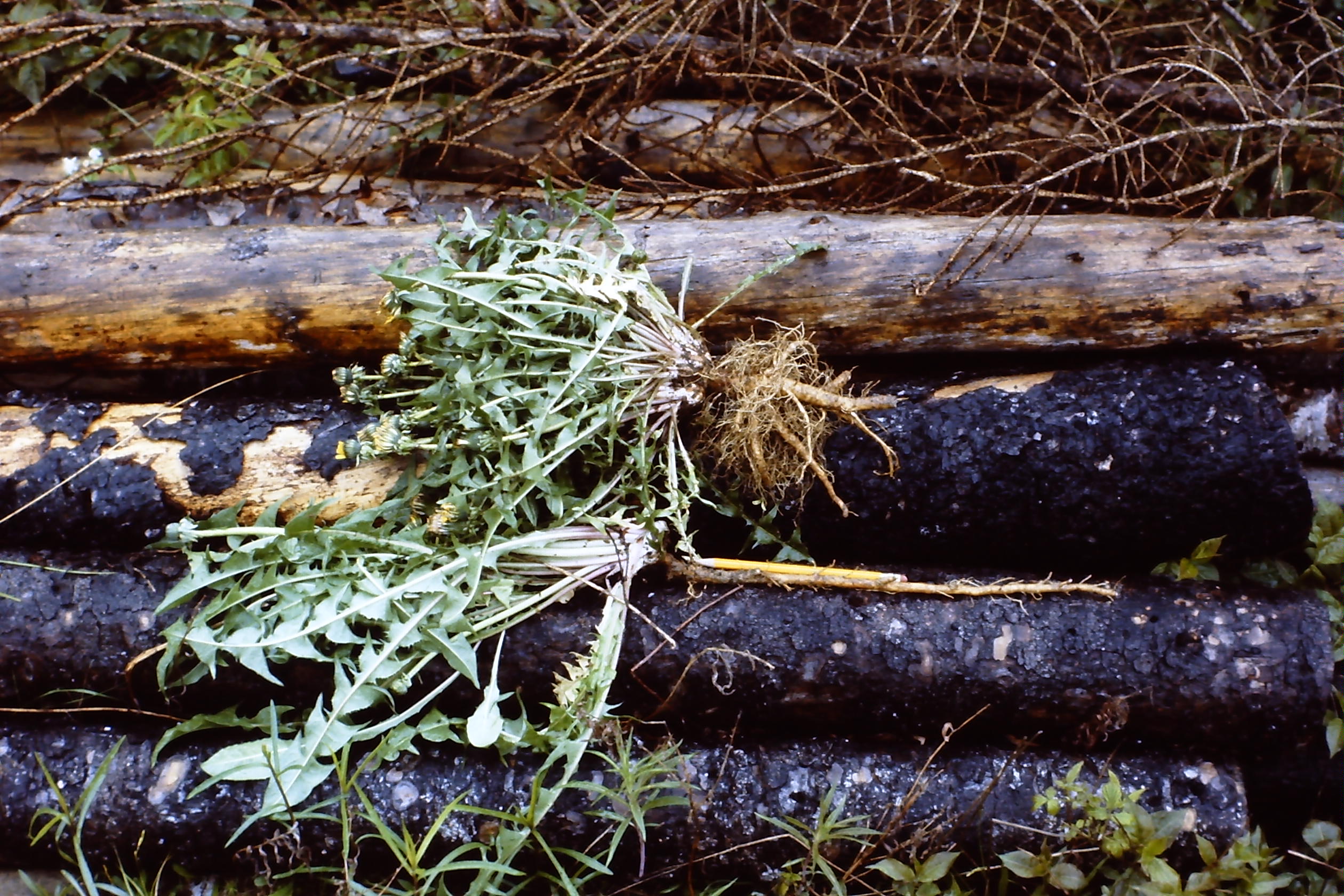
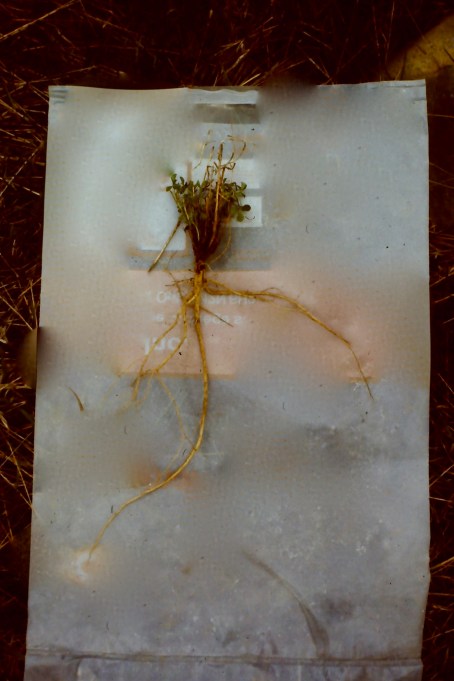
    The Dandelion Plant Has A Large Carrot Type Tap Root Allowing It To Store Food

    The Dandelion Plant Has A Large Carrot Type Tap Root Allowing It To Store Food Plus Giving It Staying Capacity & Great Resilience.

  3. The carrot like dandelion root can be dug out with a long handle trowel, screw driver, tire iron, narrow or pointed hoe just after a rain when the soil is soft & the root comes out more easily.
  4. Foot operated diggers specifically for the dandelion can be purchased at a hardware store.
  5. Most of the root has to come out or the tenacious plant will re-grow & come back again especially if a rain occurs on the exposed root lying on the soil.
  6.  The Dandelion Population Reduction Program In The Lawn & Garden can be used as an Out Door Health, Exercise & Stretching Program To Improve Cardio-Vascular Activity, Lower Blood Sugar & Cholesterol plus Improve General Health & Well Being with a little bit of Dandelion Management Reduction Activity each day.

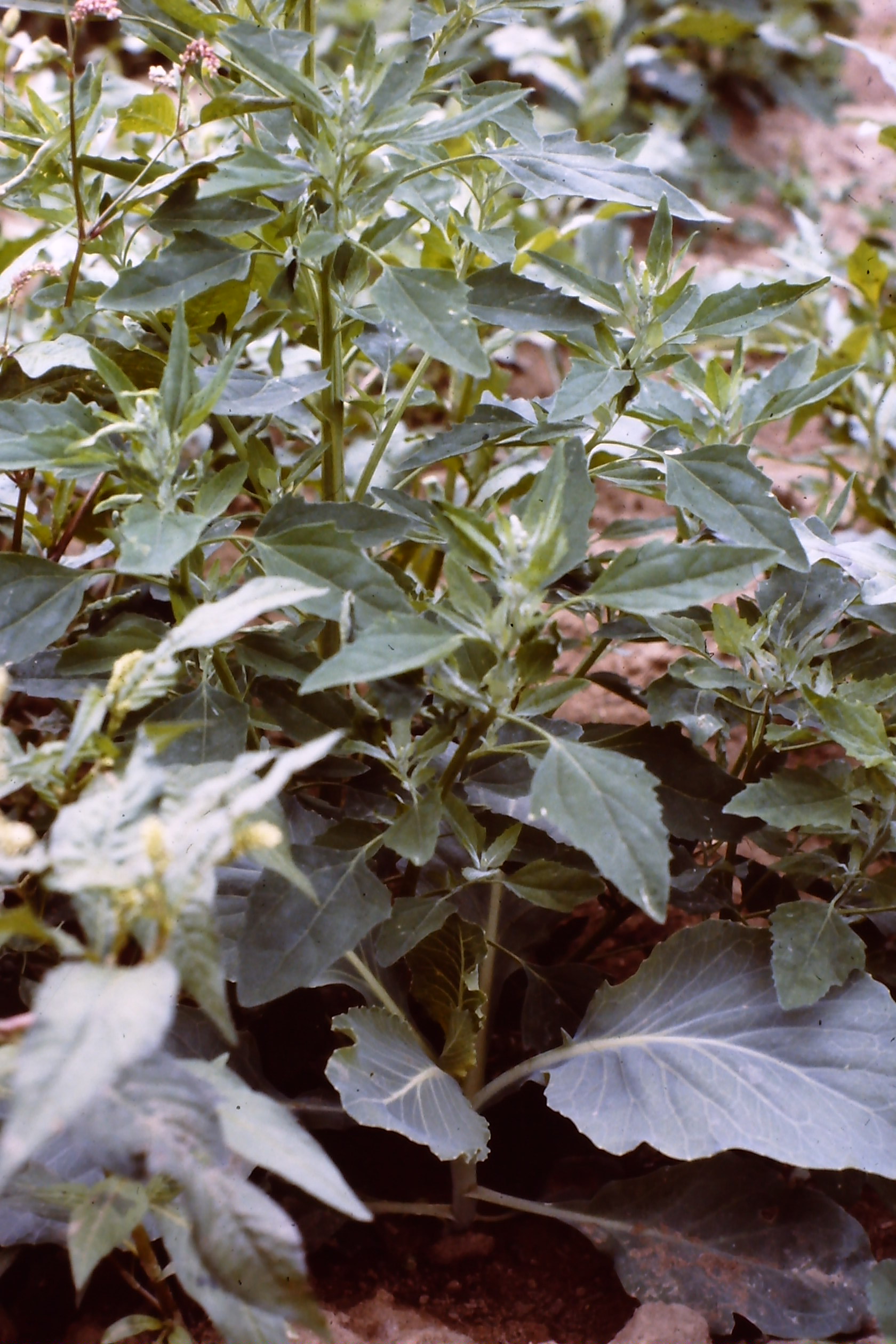
    Cabbage With Lamb's Quarters, An Edible Healthy Nutritious Spinach Like Crop.

    Cabbage With Lamb’s Quarters, An Edible Healthy Nutritious Spinach Like Crop.

C] Beneficial Uses For Dandelions

The Dandelion Plant has many uses including the following. The young leaves in the early spring can be used as salad greens.The flavour is similar to endive.The Plant has a hardy tap root like a carrot. The root harvested in early spring or late fall can be used in an infusion/tea fresh or dried.The flowers can be used in making a wine & a syrup similar in consistency to honey. The flower stems are particularly versatile in that they can be chewed after the flower has been removed especially useful for diabetics for increased energy & used in salads. The Dandelion is beneficial for the liver & gallbladder function & helps get rid of gall stones painlessly. As a blood purifier it brings relief in gout & rheumatism; glandular swellings subside with continued use in 3-4 weeks. In the treatment of itchy, scaly rashes & eczema plus jaundice, they are of value.  The Dandelion Plant is used as a Herbal & Medicinal Plant with a long history in Europe.

Rutabaga [Fall Turnip] & Lamb's Quarters, Both Excellent For Early Season Greens In Salads & Cooked As Spinach

Rutabaga [Fall Turnip] & Lamb’s Quarters, Both Excellent For Early Season Greens In Salads & Cooked As Spinach

 D] Other Plants For Greens With A Distinctive Flavour

In Newfoundland & Labrador there is a tradition of seeding & harvesting young leaves of Rape/Turnip/Rutabaga Tops in the spring & early summer for Greens with a distinctive flavour for use like Spinach cooked or fresh in salads.

A low growing plant from Eurasia called Sour Sallies/Sheep Sorrel commonly found & does well in acid soils has a unique flavour with a hint of Rhubarb.

Another plant from Europe commonly found in cultivated soils, that can be used like Spinach, is Lamb’s Quarters. It has a higher iron content than spinach.

Red Beets-Both Foliage & Root Can Be Eaten.Red Beet Leaves Are Excellent Spinach Greens With More Fibre.

Red Beets-Both Foliage & Root Can Be Eaten. Red Beet Leaves Are Excellent Spinach Greens With More Fibre.

E] Growing Alternatives

  1. Many people are looking for ways & means to drastically reduce large acreages & lawns of grass that are cut each week & maintained to look like a golf green but not being regularly utilized. The Objective is to Eliminate Poisonous Cosmetic Use Pesticides; Drastically Reduce Noise Pollution & Toxic Carbon Exhaust Emissions. If the area is not needed for Family Use, Sports & Recreation, more efficient & appropriate use of the land & soil can be realized. Dandelions can be more easily managed.
  2. Vegetable, Herb, Perennial Fruit Tree & Shrub Plant Alternatives are being considered. Besides gaining Fresh Food from the garden, the nutrition & quality is improved plus less poisonous pesticides are involved.
  3. Greater use of Mulch Material is needed in the Paths of the garden, around the base of trees & shrubs where the feeder roots are concentrated.The fibrous Mulch Material keeps weed competition down, Increases moisture conditions & the up take of plant food plus enhances nutrition & plant health.

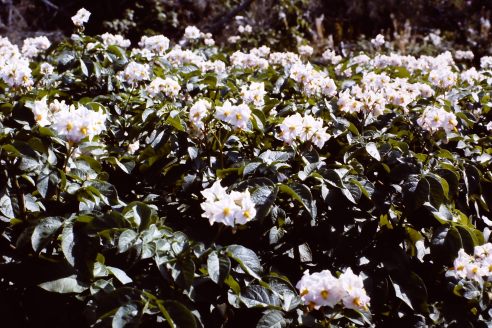
    Potatoes In Bloom-Blue Skin cv Blue Mac

    Potatoes In Bloom-Blue Skin cv Blue Mac. Enough Bloom For A Flower Bed & Easy To Grow Food.

  4. Mulch Material includes Fibrous Biological Organic Material like bark & wood chips, corn cobs & husks, cut up branches, limbs & twigs, leaves & grasses, shells of sun flower, peanut & tree nuts.
  5. Many people are concerned where their food is coming from & are welcoming the opportunity to grow & acquire more of their own food locally that is organically grown in their own garden, from the Community Garden & Local Farm/Fish Market.
  6. Refer To The Key Section: Under The Category, The Sustainable Lawn“The Objectives And Benefits To Positively Affect Climate Change And Health”