
The Horticultural Green Garden Project To Lessen The Carbon Footprint And Toxins In The Environment To Positively Affect Climate Change
To outline, promote & market a sustainable ecological horticultural system of management for the lawn and garden that:

Deep Blue Ripe Native Saskatoon Berries, One Of The Key Ingredients Of The Emerency Food Ration, Pemmican, Together With Meat & Fat From The Prairie Bison Used By The Native Plains Cree People. The Birds Especially The Robins Love The Pear Shaped Pesticide Free Fruit Too, Central Newfoundland
- substantially reduces the climate altering toxic carbon exhaust emissions.
- drastically reduces noise pollution.
- does not require the poisonous cosmetic use pesticides on the lawn.
- does not need the potable drinking water on the lawn paid for by the taxpayers of the community.
- utilizes the wet biological organic material from the kitchen, lawn and garden such as grass, leaves, cut up banana peels, tea bags and egg shells as a free plant food source directly to the soil or in the compost.
- recycles the dry fibrous biological organic material from the kitchen, lawn, garden, and workshop. These materials include bark and wood chips, wood shavings, sawdust, cut up branches, corn cobs and husks, leaves, grass, peat moss, peanut and sunflower seed hulls. Such material adds fibre and organic matter to the soil as a beneficial soil conditioner and as mulch around trees and shrubs to hold in moisture and allow nutrients to be readily available to improve plant health.
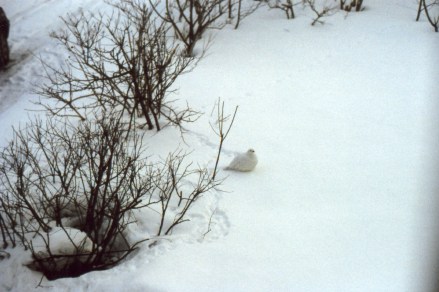
Ptarmigan Feed On Native Saskatoon Berries & Fruit Buds, In Winter, Central Newfoundland. Native Saskatoon Shrubs Chuckley Pear NL, Add Significantly To The Bio-Diversity Of The Plantscape In The Ecologically Sustainable Horticultural Garden.
The volume of waste to be collected by the waste management system is thereby reduced by two thirds with the composting and recycling of all the organic and biological material from the kitchen, garden and workshop. This is a sharp contrast to present practices of not composting and not recycling. Reaching these objectives through this education and technology transfer program represents a significant reduction in the carbon footprint in the lawn and garden. From the Green Garden Horticultural Project, it is estimated that the climate altering toxic carbon exhaust emissions reduction equivalent per household per year is 2,178.9 kg. This is a significant initiative to alter positively climate change in the lawn and garden.
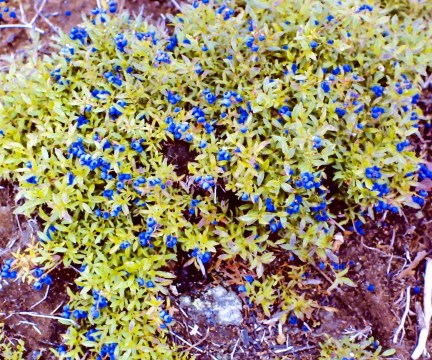
Native Low Growing High Yielding Ripe Deep Blueberries. The High Organic Matter Content Of The Nutrient Rich Top Soil Together With The Enhanced Micro-Climate Produces A Lovely Fresh Delightful Tasting Pesticide Free Healthy Berry Fruit, Central Newfoundland.
A pilot survey amongst an initial representative sample of householders in the region is expected to show that a positive change in the reduction of toxins and the carbon footprint is actually taking place one year, two years and three years after adopting and following the recommendations of the Sustainable, Ecological, Horticultural Green Garden Project.
The Green Garden Horticultural Project clearly demonstrates a commitment to addressing the positive climate change initiatives of the Action Plan as released July 13, 2005 by the Department of Environment and Conservation, Government of Newfoundland Labrador.
Refer To The Key Section: Under The Category, The Sustainable Lawn, “The Objectives And Benefits To Positively Affect Climate Change And Health”
 The Sustainable Lawn
Outstanding web site. Congratulations!